Eastern Africa Set for 5.8% Growth in 2026 Despite Fiscal Pressures

Eastern Africa is expected to remain Africa’s fastest-growing subregion in 2026, with economic growth projected at 5.8 percent, well above the continental average of 4.0 percent and the 1.6 percent forecast for developed economies. However, mounting debt, constrained public finances and growing global uncertainty continue to threaten the region’s economic gains, according to a new report by the UN Economic Commission for Africa (ECA).
The findings were presented during an online Policy and Programme Dialogue on the 2026 Eastern Africa Macroeconomic and Social Overview Report, titled Eastern Africa’s Balancing Act: High Growth, Tight Budgets, and Rising Uncertainty.
“Eastern Africa remains one of the world’s fastest-growing regions, but sustaining that momentum requires navigating increasingly tight fiscal conditions, elevated debt burdens and a highly uncertain international environment,” said Andrew Mold, Director of the ECA Office for Eastern Africa.
The report shows that growth remains strong across much of the region. Rwanda led the pack with 10 percent GDP growth in the first quarter of 2026, followed by Uganda (5.8 percent), Tanzania (5.7 percent), Kenya (5.3 percent) and Burundi (3.4 percent).
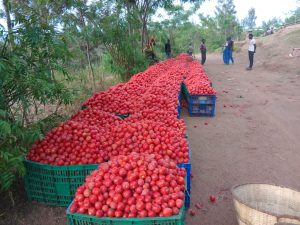
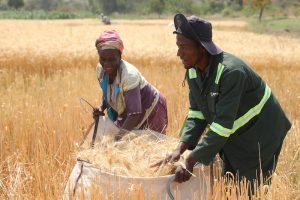
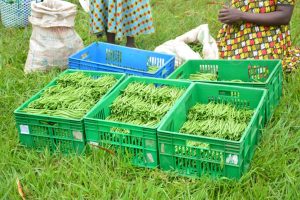
According to the report, the services sector continues to drive economic expansion, supported by robust growth in construction. In contrast, manufacturing has remained sluggish, while agriculture continues to underperform except for export-oriented crops.
The report also points to improving macroeconomic stability. Inflation has eased to single-digit levels in several countries, standing at 4.7 percent in Kenya, 4.2 percent in Tanzania and 3.2 percent in Uganda by mid-2026, while Ethiopia has also seen inflation trend downward. Nevertheless, ECA cautions that the region remains vulnerable to external shocks, including disruptions to global trade routes such as those linked to tensions in the Strait of Hormuz.
Despite the encouraging economic outlook, the report warns that social progress is lagging behind. Only 7 of the 234 Sustainable Development Goal (SDG) indicators are currently on track in Eastern Africa, highlighting persistent challenges in health, education and social protection.
The report further notes that Eastern Africa receives more than half of all Official Development Assistance (ODA) allocated to Africa, making the region particularly exposed to global aid reductions that could undermine essential public services.
Commenting on the report, Abbi Kedir, Acting Executive Director of the African Economic Research Consortium, described it as one of the strongest regional economic assessments he has seen, praising its timely data and analytical depth.
Kedir stressed that robust economic growth should translate into tangible benefits for citizens through greater job creation, improved food security, lower living costs and stronger social protection systems.
Participants at the dialogue also questioned whether the region’s heavy reliance on the services sector can sustain long-term economic transformation, underscoring the need for more diversified and resilient sources of growth.
About The Author


SUBSCRIBE TO OUR NEWSLETTER