Most Governments Unprepared for Resource Risks, New Report Finds

A new global report has found that governments around the world are failing to adequately prepare for ecological overshoot, a growing mismatch between humanity’s demand for natural resources and the Earth’s ability to regenerate them, despite mounting evidence that resource security is critical to economic stability.
The report, ‘Prepared for the Predictable? Overshoot and the Failure of Countries to Ready Themselves’, released by Global Footprint Network and Greenings to coincide with Earth Overshoot Day, concludes that no country’s national economic strategy fully recognizes ecological overshoot as a significant economic risk.
Researchers reviewed flagship national planning documents from dozens of major economies, including five-year development plans, national budget speeches and national security strategies, to assess how governments are addressing the challenges posed by increasing pressure on natural resources.
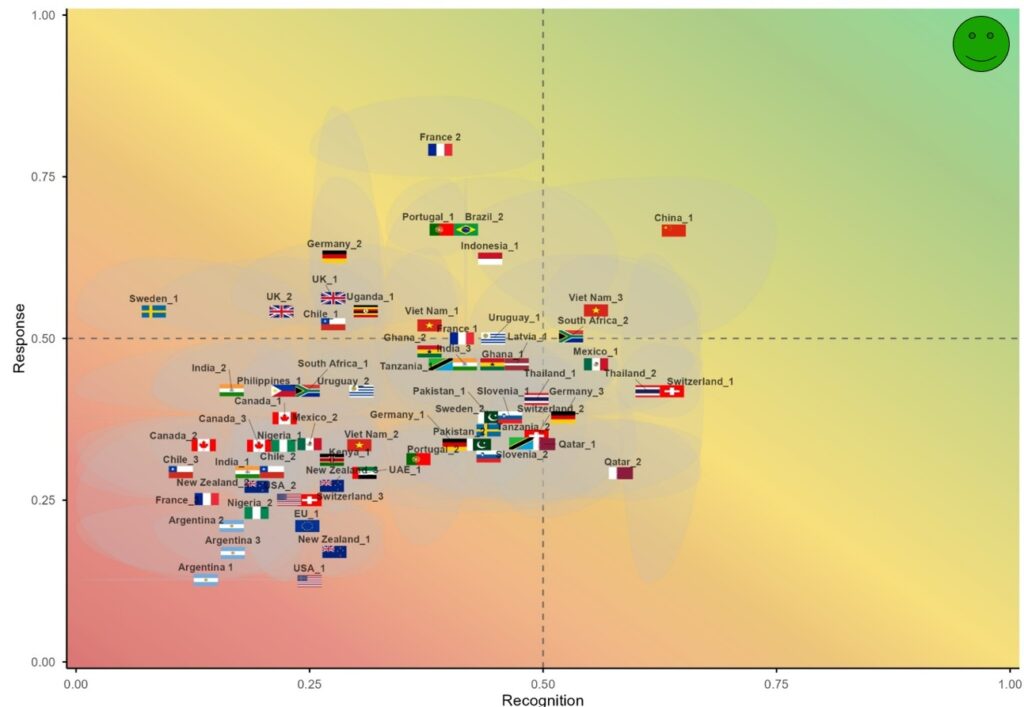
Using AI-assisted analysis, the researchers examined whether national strategies acknowledge ecological overshoot as an economic threat and whether that recognition is supported by concrete policies and investment plans. The assessment relied on a five-dimensional framework independently applied by four large language models, which produced consistent findings.
According to the report, none of the national strategies assessed meaningfully addresses the risks associated with ecological overshoot.
China’s current five-year plan received the highest score among the countries reviewed, although the report says it still falls short of the level of action needed to match the scale of the challenge. Argentina ranked lowest across all national strategy documents analyzed, while the European Union scored below expectations despite its strong sustainability reporting, suggesting a disconnect between public environmental commitments and long-term economic planning.
The findings indicate that although sustainability is increasingly featured in public policy discussions, it is not consistently integrated into the strategic decisions that shape national economies.
“Ecological overshoot is not a distant environmental concern; it’s a live economic risk,” said Dr. David Lin, co-author of the report.
He warned that countries’ heavy dependence on globally sourced natural resources is increasing their exposure to supply disruptions, pointing to shocks triggered by Russia’s invasion of Ukraine, the COVID-19 pandemic and the closure of the Strait of Hormuz as examples of how resource insecurity can disrupt economies.
To address these vulnerabilities, the report calls on governments to establish cross-partisan task forces to identify weaknesses in their economic strategies and develop more resilient approaches to resource management.
It also highlights emerging decision-making tools, including the Transition Valuation Project, which applies an ecological overshoot perspective to infrastructure planning, corporate strategies and investment decisions, with the aim of strengthening long-term economic resilience.
About The Author


SUBSCRIBE TO OUR NEWSLETTER