La Francophonie’s Leadership Contest: Continuity, Competition and the Stakes for African Multilateralism
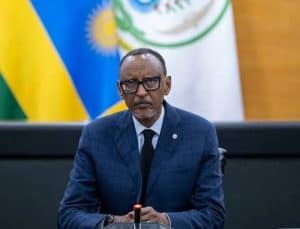
The Organisation internationale de la Francophonie (OIF) faces a decisive choice at its summit in Phnom Penh this weekend. Incumbent Secretary-General Louise Mushikiwabo has not withdrawn her candidacy. Rwanda’s foreign minister has stated clearly that she remains in the race, and Mushikiwabo herself has rejected suggestions that she should step aside under external pressure. The contest will be settled by the 53 full member states, under rules that now allow a simple-majority vote if consensus fails.
Several other candidates have emerged, including figures linked to European and African diplomatic circles. Reports of reluctance among some of them to challenge Mushikiwabo openly have fuelled speculation. The practical reasons are institutional rather than personal. She has held the post since 2019 and can point to a record of programme consolidation, annual financial certification, expansion of regional offices, and targeted initiatives on women’s economic participation and digital skills. In multilateral organisations, an incumbent who has delivered measurable reforms and retained broad support among member states is difficult to displace without a compelling alternative programme and a clear majority coalition. That is ordinary politics, not a sign of incompetence on any side.
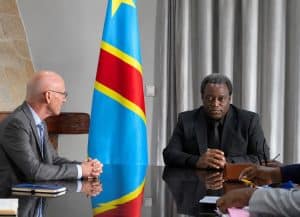
Geopolitical overlay is unavoidable. The Democratic Republic of Congo, home to the world’s largest French-speaking population, has raised concerns tied to its bilateral relations with Rwanda. Some French officials have explored compromise candidacies in private discussions. These tensions exist and affect voting calculations. They do not, however, rewrite the OIF’s institutional rules or erase the administrative record of the current secretariat. Member states ultimately decide whether continuity or change better serves the organisation’s mandate on culture, education, economic cooperation and digital transformation.
For African members, the outcome matters beyond symbolism. The OIF remains one of the few global platforms where African states hold significant numerical weight. A contested election that is resolved transparently, according to the organisation’s own statutes, strengthens that platform. A process dominated by bilateral disputes or external mediation risks weakening it. The test in Phnom Penh is therefore straightforward: whether the Francophonie’s members treat the selection of their secretary-general as an institutional decision or allow it to become a proxy for other conflicts. The result will be known after the closed session on 16 November.
About The Author


SUBSCRIBE TO OUR NEWSLETTER