Water Rises to the Fore at COP31 as Leaders Confront Climate Extremes
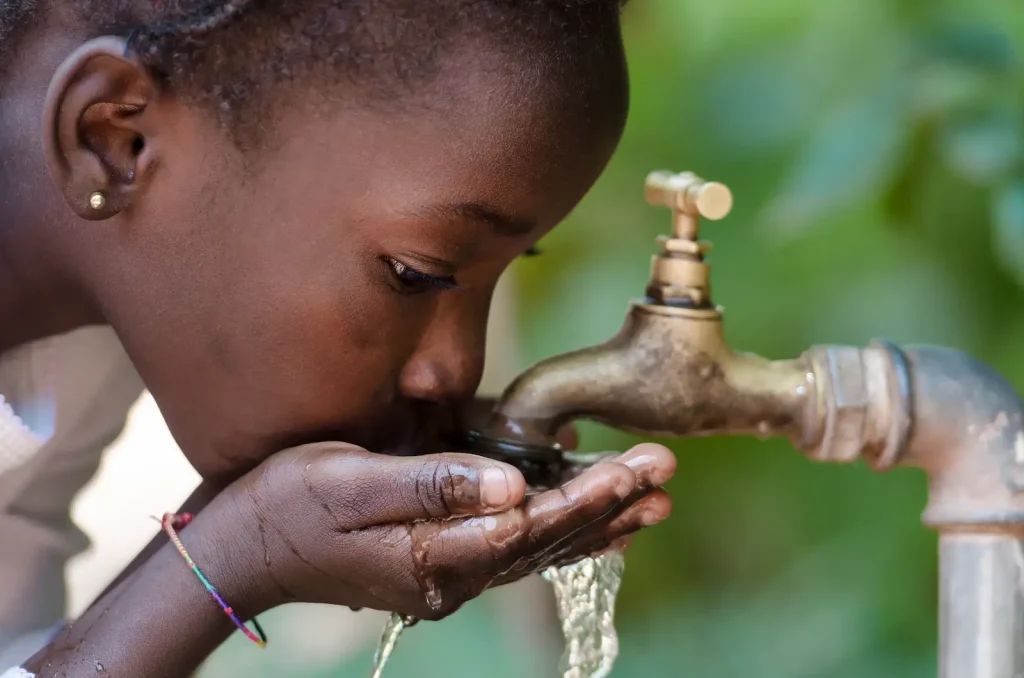
Antalya, Türkiye — As the UN climate talks enter their second week in Antalya, water has moved from a supporting theme to a central pillar of the agenda at COP31. Delegates and officials describe the conference as an “Implementation COP,” and water security, sanitation and climate-driven extremes are receiving dedicated high-level attention and a formal place in the Turkish Presidency’s Action Agenda.
For the first time, resilient water management and sanitation sit inside a Presidency priority track—Activation Group 14 under Axis 4 on cities, infrastructure and water. The move builds on earlier efforts, including the Baku Dialogue launched at COP29, and aligns with the Global Goal on Adaptation’s water target. Side events, a Water for Climate Pavilion, and sessions linking water to food systems, urban resilience and transboundary cooperation have filled the programme.
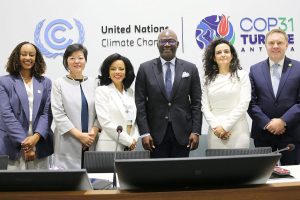
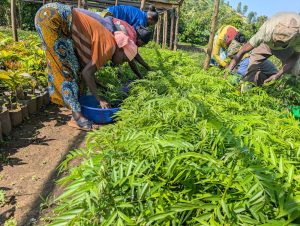
WMO Secretary-General Celeste Saulo underscored the stakes at a Presidency high-level event on water, agriculture and food security. Citing joint analysis with the FAO, she said heat has cut the productivity of the world’s farms by a fifth since 1961—“seven years of progress, gone.” Rice farmers now face nearly twice as much extreme heat as a generation ago, with similar increases for maize and wheat. When heat and drought coincide, crop losses can be nearly three times higher, she noted, with farmers potentially losing one sack of grain in every four.
“Our measurements also show that the water farmers rely on is running low,” Saulo said. “In a normal year, about one in four places on land holds less water than it should. Last year, it was more than four in ten.” She pointed to climate information as a practical tool, highlighting farmers in Burkina Faso who used tailored seasonal forecasts to raise sorghum yields by 35 percent while cutting fertiliser use in half. “Heat, water scarcity and excess rains have already taken seven years of progress from the world’s farms,” she said. “Today’s revolution can win them back.”
In a separate Leaders’ Summit intervention, Saulo noted that ice and snow reserves—“the water we save for dry years”—are diminishing, and that 2025 ranked among the driest years for global rivers in 35 years of records. “We are supercharging our weather,” she said.
Host-country officials linked the global discussion to national realities. Turkish Agriculture and Forestry Minister Ibrahim Yumakli warned that projected temperature rises of up to 6 °C, combined with higher evaporation, could reduce Türkiye’s available water resources by around 25 percent by the end of the century. “Our approach is clear: We must manage risks in advance rather than respond to crises,” he said. Türkiye has begun implementing its National Water Plan for 2026–2035, backed by more than $1.4 billion in projects, including World Bank-supported irrigation modernisation and separate flood-and-drought management efforts.
Pakistan’s Prime Minister Shehbaz Sharif raised the issue of water in geopolitical terms, cautioning against its “weaponisation” and insisting that water-sharing agreements must be honoured so that downstream populations are not put at risk. He tied the point to broader calls for grant-based climate finance.
Advocates and analysts acknowledge progress but highlight remaining gaps. Water appears as a core theme in the large majority of recent Nationally Determined Contributions, yet sanitation and wastewater still account for only a small fraction of planned activities. Financing shortfalls for safe water and sanitation remain large, and many plans lack clear implementation pathways or strong roles for local utilities. Separate briefings circulating at the talks argue that climate policy continues to treat floods and droughts largely in isolation rather than addressing the full water cycle—including moisture stored in soils and vegetation.
UNEP and partners are scheduled to host a high-level session on applying a “water lens” across the COP31 agenda, linking efforts on NDC updates, adaptation planning and coherence with biodiversity and desertification conventions. Organisers say the timing is deliberate: COP31 falls ahead of the 2026 UN Water Conference, offering a chance to carry momentum from Antalya into broader global water discussions.
With formal negotiations continuing through 20 November, observers will watch whether the elevated profile of water produces concrete decisions on finance, indicators and national planning, or remains largely in the realm of side events and declarations. For now, the conference has made clear that many of the most immediate climate impacts people face—scarcity, floods, agricultural losses and strained infrastructure—arrive through water.
About The Author


SUBSCRIBE TO OUR NEWSLETTER