East Africa Calls for Greater Investment in Nature-Based Solutions to Strengthen Climate Resilience
ANTALYA, Türkiye — The East African Community (EAC) has called for stronger partnerships and increased investment in nature-based solutions to address climate change, water insecurity, biodiversity loss and ecosystem degradation across the region.
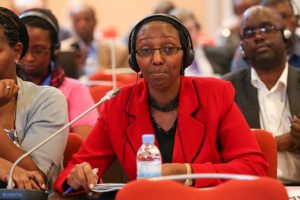
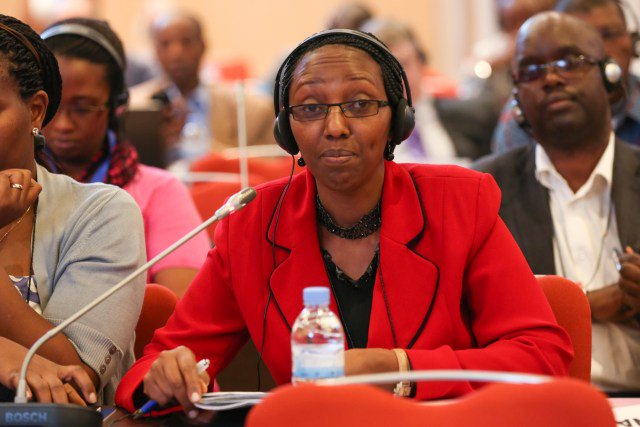
Speaking at a COP31 side event in Antalya on November 12, 2026, Eng. Coletha U. Ruhamya, Deputy Executive Secretary of the East African Community’s Lake Victoria Basin Commission (LVBC), said East Africa has established regional policy frameworks and developed a pipeline of climate-resilient projects that can attract investment and deliver practical benefits to communities.
The event, titled “Harnessing Nature-Based Solutions to Build Climate Resilience in East Africa: From Regional Priorities to Investment,” brought together government representatives, development partners, civil society organisations, financial institutions and private-sector stakeholders to discuss how regional priorities can be translated into investment and implementation.
Eng. Ruhamya said nature-based solutions have become an important pillar of the EAC’s climate agenda because healthy ecosystems play a critical role in strengthening resilience.
“Nature-based solutions have become an important pillar for the EAC’s climate agenda, recognising the critical role of healthy ecosystems in building resilience,” she said.
She explained that the EAC has integrated nature-based solutions into regional policy instruments, including the East African Community Climate Change Policy, the EAC Climate Change Strategy and the EAC Nationally Determined Contributions (NDC) Implementation Framework.
Through institutions such as the Lake Victoria Basin Commission, working with Partner States and development partners, the regional bloc has supported the restoration and sustainable management of watersheds, wetlands, forests and other transboundary ecosystems.
The initiatives also include regional cooperation on integrated water resources management, ecosystem-based adaptation and the development of climate-resilient projects designed to attract investment.
According to Eng. Ruhamya, these interventions demonstrate that nature-based solutions extend beyond environmental protection and can contribute directly to economic development and community livelihoods.
“Nature-based solutions are not only good for the environment, but are also investments in water security, climate resilience, biodiversity, livelihoods and sustainable economic growth,” she said.
She noted that the COP31 discussion provided an opportunity to showcase progress in East Africa while building partnerships capable of turning regional commitments into practical action.
East Africa seeks to move from pilot projects to scale
Eng. Ruhamya emphasised that the effectiveness of nature-based solutions should be assessed through measurable improvements in ecosystems and communities rather than the number of policies adopted or meetings held.
“The success of nature-based solutions will ultimately be measured not by the policies we adopt or the discussions we hold, but by the ecosystems we restore, the communities we strengthen, and the climate resilience we deliver on the ground,” she said.
She added that East Africa already has the policy frameworks, regional cooperation mechanisms, technical expertise and a growing pipeline of investable projects required to expand these interventions.
“What is needed now is stronger collaboration and increased investment to move from pilot to scale and from commitment to implementation,” she said.
Her appeal comes as countries and development institutions face increasing pressure to translate climate commitments into projects that can protect communities, restore degraded landscapes and strengthen the resilience of water and food systems.
She invited governments, development partners, civil society organisations and private-sector investors to work together to unlock the potential of nature-based solutions across the region.
“Let COP31 be remembered not only as a moment of dialogue, but as a moment when we forge the partnership and mobilise the investment needed to restore our ecosystems and secure a resilient future for the people of East Africa,” she said.
Regional cooperation at the centre of climate action
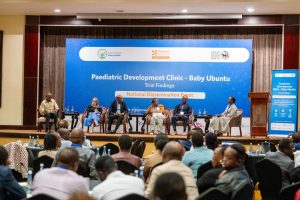
The side event was hosted by the East African Community’s Lake Victoria Basin Commission and moderated by Theoneste Sebihogo Ntakiymana, Senior Monitoring and Evaluation Officer at LVBC.
The panel included Eng. Sowed Ssewagudde, Commissioner for International Water and Transboundary Affairs at Uganda’s Ministry of Water and Environment; Julius Mwabu, Ag. Integration Secretary at Kenya’s State Department for East African Community Affairs; Kenneth Kasigila, Head of Policy Advisory and Climate Finance at CRDB Bank; and Christian Mukama, Head of Communications and Marketing at the Albertine Rift Conservation Society (ARCOS Network).
The discussion brought together perspectives from regional governments, financial institutions and conservation organisations on the opportunities and challenges involved in financing nature-based solutions.
For East Africa, the next step will be to strengthen collaboration, mobilise resources and ensure that regional climate priorities translate into projects that deliver lasting benefits.
“Together, let us invest in nature-based solutions and build a climate-resilient and prosperous East Africa for generations to come,” Eng. Ruhamya said.
About The Author


SUBSCRIBE TO OUR NEWSLETTER