Kinyinya’s Housing Horizon: A Decade of Transformation on Kigali’s Northern Hills

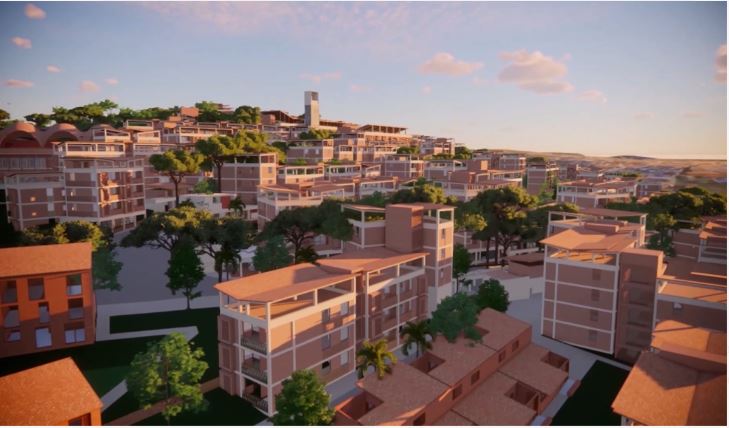
Aerial View of a modern Housing in Kinyinya/Kigali. Photo: Emmanuel Kwizera
KIGALI — Kinyinya Sector is poised to become one of Kigali’s most significant urban growth stories over the next ten years. What is today a mix of existing neighbourhoods, emerging estates and long-planned green development sites is expected to evolve into a more compact, mixed-use and climate-conscious community by 2036.
Planners and developers already have several large pieces in motion. RSSB’s Heza Estate in Batsinda is nearing completion with hundreds of new homes. The $400 million Kinyinya Park Estate project aims to deliver around 10,000 units in phases, while the Green City Kigali initiative on Kinyinya Hill envisions a broader sustainable neighbourhood spanning hundreds of hectares.
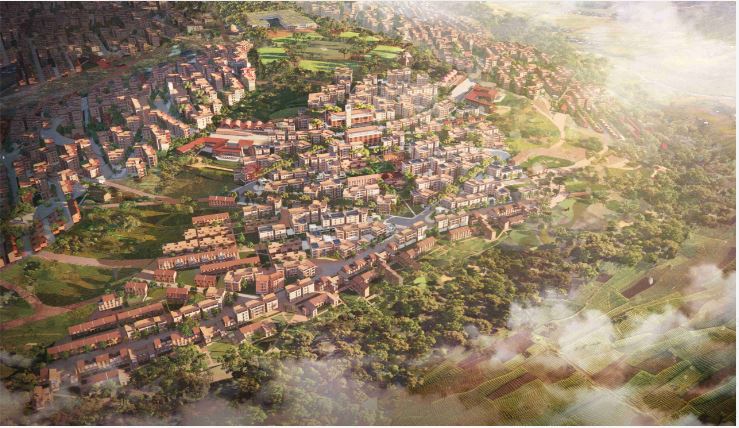
By the mid-2030s, these efforts could add tens of thousands of residents to the area. Officials and project partners describe a future of walkable streets, green roofs, solar-ready buildings, improved drainage and public spaces that reduce the pressure of informal growth. An eco-park and tree-lined corridors are part of the long-term picture, intended to preserve some of the hill’s character even as density increases.
Residents who have waited through planning delays hope the coming decade brings clearer land-use rules and actual construction rather than continued uncertainty. If compensation and infrastructure questions are resolved, the first major Green City phases and Park Estate blocks could be occupied well before 2036, with later stages filling in schools, shops, markets and community facilities.
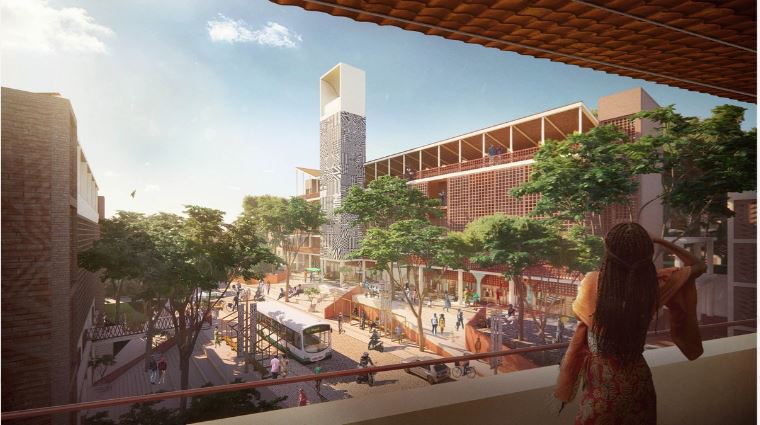
The visual language already circulating in project renderings shows mid-rise buildings in earth tones, clustered around courtyards and pedestrian routes rather than isolated high-rises. Streets are designed for buses, cycling and walking. Commercial ground floors and small public squares aim to create daily-life convenience so people do not need to travel far for work or services.
Affordable units remain a central goal. Government and private partners have repeatedly stated that Kinyinya should help ease Kigali’s housing shortage while offering a mix of prices. By 2036 the sector could host a combination of completed RSSB-style estates, large-scale Park Estate apartments and Green City pilot neighbourhoods that demonstrate lower energy and water use.
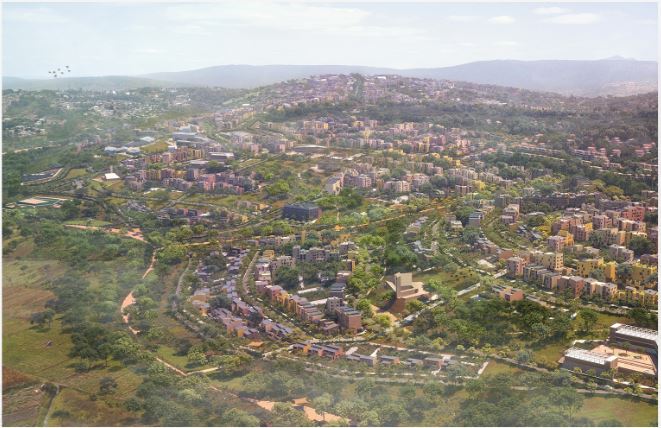
Challenges will not disappear overnight. Land valuation, infrastructure financing and the need to upgrade existing settlements will require steady coordination between the City of Kigali, national agencies and residents. Power reliability, road connections and water systems will need to keep pace with new construction.
Yet the direction of travel is clear. Kinyinya is shifting from a peri-urban hill with scattered development toward a planned urban district. If current projects stay on track, a visitor in 2036 would see far more completed housing, greener public spaces and a more connected community than exists today.
The next ten years will test whether Kinyinya can deliver both quantity and quality — enough homes for a growing city and a liveable, sustainable neighbourhood that residents actually want to call home. The foundations being laid now will determine how that vision looks on the ground.
About The Author


SUBSCRIBE TO OUR NEWSLETTER