In the Shadow of Goma: Kabila’s Rebel Alliance Deepens Congo’s Fractured War
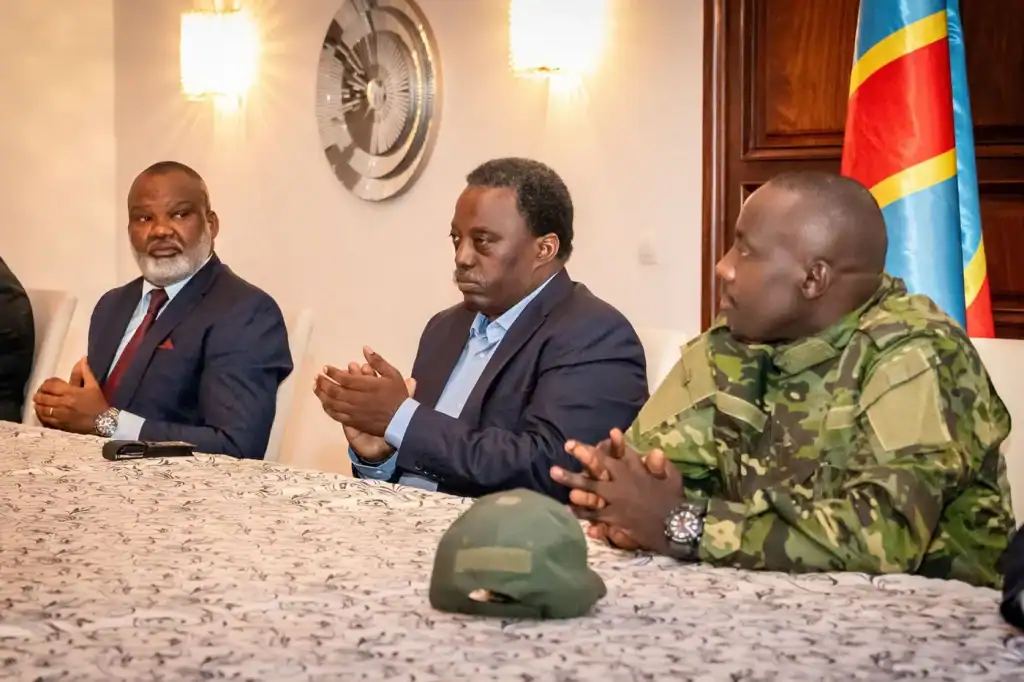
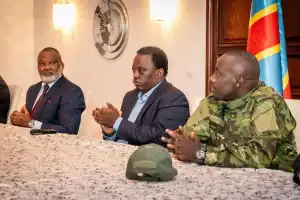
From a residence in the rebel-held city of Goma, former President Joseph Kabila stepped into the open this week and declared himself the leader of a new political-military movement. The Front pour la Refondation de la Nation, or FRN, absorbs the structures of the earlier Alliance Fleuve Congo and its armed core, the M23. Standing alongside longtime rebel figures including Corneille Nangaa and Bertrand Bisimwa, with Sultani Makenga retaining command of the military wing, Kabila framed the project as a national effort to end what the group calls tyranny in Kinshasa—by any means necessary, including force.
The announcement, made on October 12, lands in territory the rebels have held since early 2025. Goma and Bukavu remain under their control, along with large stretches of North and South Kivu and key border crossings. On the ground, the fighting never stopped. Congolese forces, backed by Wazalendo militias and Burundian troops, continue to clash with the rebels across Masisi, the highlands near Minembwe, and other contested zones. Both sides have turned to drones and artillery. Tactical gains are reported and then contested; the front lines shift but the rebels retain the advantage in most sectors, sustained by external support that Kinshasa and international observers attribute to Rwanda. Kigali continues to reject the charge of direct backing while acknowledging coordination on security issues.
The timing sharpens the stakes. President Félix Tshisekedi’s second term is due to end in 2028 under the existing constitution. Legislation advanced through parliament this year eases the path to a referendum that could reset term limits or open the door to a broader constitutional overhaul, potentially a “Fourth Republic.” Opposition groups and civil society have rejected a government-managed national dialogue process, viewing it as controlled from the top and aimed at extending power rather than resolving the crisis. Protests in Kinshasa have turned violent. Kabila’s move supplies the eastern rebellion with a high-profile Congolese face and a language of national refoundation that could appeal beyond the Kivus, including in Katanga, where residual networks and resentments still exist. Several former allies have already distanced themselves, but the political calculation in Kinshasa is now more complicated.
Diplomatic tracks run in parallel and largely fail to match the reality on the ground. A U.S.-brokered understanding between Kinshasa and Kigali, alongside the Qatar-mediated Doha process that produced ceasefire commitments with the rebels, has not produced a lasting halt to hostilities. African Union mediators have shuttled between Goma, Kigali, and Kinshasa in recent days, urging respect for existing agreements. The FRN has said it assumes the prior commitments of the dissolved alliance, including the Doha framework. Yet clashes continue, verification mechanisms struggle, and each side accuses the other of violations. The rebels portray themselves as a Congolese political alternative; the government continues to treat them as a foreign-backed insurgency.
Beyond the main front, the map of violence is crowded. The Allied Democratic Forces, linked to the Islamic State, keep killing civilians in Ituri and parts of North Kivu. Local militias exploit the vacuum. Over one hundred armed groups remain active across the east. The humanitarian cost compounds daily: millions displaced, acute food insecurity affecting a large share of the population, and a major Ebola outbreak (Bundibugyo strain) spreading through Ituri, North Kivu, and neighboring provinces. Confirmed cases have climbed into the thousands with a high fatality rate; insecurity and displacement hinder treatment centers, contact tracing, and safe burials. Cholera moves through the same corridors of movement. Health workers and aid groups operate under severe constraints.
Resource politics sits underneath much of the fighting. Control of mining areas in the Kivus supplies revenue and leverage. The formal economy in the east is distorted by the conflict; smuggling routes and taxation by armed actors persist regardless of which side holds a given road or hill.
The new alliance does not instantly transform military balance. Rebel advances toward national power remain distant, and Kinshasa retains the formal apparatus of the state plus external military partnerships. Yet the political signal is clear: a former head of state, already sentenced to death in absentia for earlier alleged complicity, has now publicly fused his name and networks with the dominant eastern force. That fusion complicates mediation, raises the domestic political temperature, and risks drawing more actors into an already regionalized conflict. Peace processes that treat the war as primarily a bilateral Kinshasa-Kigali problem, or a purely local insurgency, now face a sharper test. On the ground in the Kivus, the immediate reality remains the same—artillery, drones, displacement, and disease—while the political architecture of the war has just been rewritten from Goma.
About The Author


SUBSCRIBE TO OUR NEWSLETTER