U.S.-Israel Partnership Enters Most Uncertain Phase in Decades
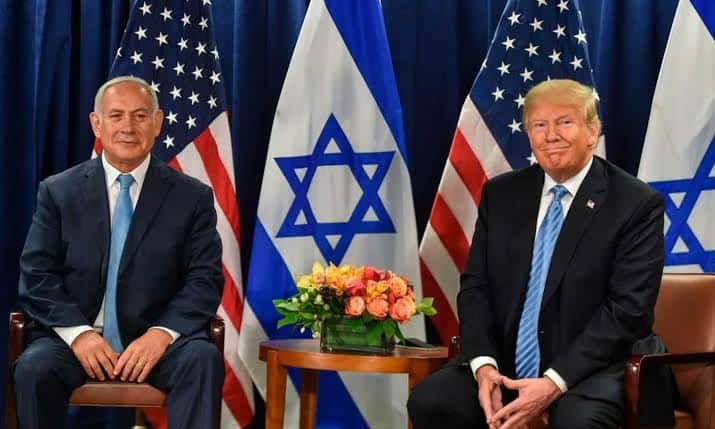
The long-standing security relationship between the United States and Israel is facing its sharpest political and strategic test in generations. Simultaneous electoral setbacks for both countries’ governing coalitions, an unfinished war with Iran, and an abrupt shift in U.S. aid policy have combined to place the alliance under sustained scrutiny from Washington and Jerusalem alike.
In the U.S. midterm elections, Democrats captured control of both the House and Senate. Voter frustration over the joint American-Israeli campaign against Iran—particularly its contribution to elevated energy prices—played a significant role in the Republican losses. Vice President JD Vance publicly attributed the outcome primarily to the war and to a broader desire among former Trump supporters to recalibrate the U.S. relationship with Israel. Cost-of-living pressures and calls to prioritize domestic concerns ranked alongside these foreign-policy grievances.
On Election Day itself, President Donald Trump announced that he and Israeli Prime Minister Benjamin Netanyahu had agreed to terminate roughly four billion dollars in annual U.S. security assistance by the end of 2026, well ahead of the existing multi-year framework. Weapons sales would continue. The announcement caught elements of the Israeli bureaucracy by surprise, as fiscal planning had assumed continuity of the prior arrangement.
Israel’s own political landscape remains unsettled. In the late-October parliamentary election, Netanyahu’s right-wing bloc secured approximately fifty-three seats, short of the sixty-one required for a governing majority. The main opposition camp, led by Gadi Eisenkot, likewise lacks a clear path to power. Netanyahu continues as caretaker prime minister while coalition negotiations proceed or a possible second election is organized. Arab parties recorded strong results and now hold meaningful leverage in any future government-formation process.
These domestic developments unfold against the backdrop of the Iran war that began with joint U.S.-Israeli strikes in February. The death of Supreme Leader Ali Khamenei early in the campaign has not produced a decisive settlement. Iran has intermittently disrupted shipping through the Strait of Hormuz, sustaining upward pressure on global oil prices. Limited U.S. defensive strikes continue, including recent operations against facilities on Qeshm Island, while indirect talks mediated by Qatar and other parties have yet to yield a durable agreement. The risk of renewed escalation remains open.
The cumulative effect is an inflection point with consequences that extend well beyond the bilateral relationship. For decades, large-scale U.S. grant aid and broad bipartisan backing formed the political foundation of American support for Israel. That foundation is now more conditional. Progressive Democrats in the newly constituted Congress have greater capacity to attach conditions or reduce assistance, while segments of the Republican electorate have signaled discomfort with open-ended commitments. Other U.S. partners will watch closely for indications of how durable American security guarantees remain when domestic politics shift.
Energy markets already reflect the conflict’s reach. Any further constriction or negotiated reopening of the Strait of Hormuz would move oil prices and, by extension, inflation and growth trajectories in importing economies worldwide. The episode has illustrated how quickly a regional war involving the United States and Israel can transmit into global commodity markets and domestic political calculations.
Israel’s prolonged political deadlock further complicates the picture. A caretaker government or a second election cycle limits Jerusalem’s ability to set clear long-term positions on Gaza, Lebanon, the West Bank, and the Iranian front at the precise moment the aid relationship is being renegotiated. Regional actors—Iran, Hezbollah, Gulf states, and Turkey—will incorporate this uncertainty into their own planning.
More broadly, the midterm results and the post-election commentary reinforce constraints on expansive U.S. foreign engagement. Emphasis on ending costly conflicts and addressing domestic economic pressures narrows the political space for new military undertakings. Allies may respond by accelerating hedging strategies, seeking deeper ties with alternative powers, or investing in greater self-reliance rather than assuming continuous American underwriting.
In the Middle East itself, the environment is likely to become more multipolar and less automatically U.S.-centric in the near term. Reduced grant aid and a more contested domestic consensus in Washington do not create an immediate vacuum, but they do open space for other actors—China’s economic presence, residual Russian military ties, Gulf hedging, and Turkish activism—to expand influence. Whether the outcome is greater regional stability or intensified competitive maneuvering will depend on the trajectory of the Iran negotiations, the resolution of Israel’s coalition impasse, and the priorities of the new U.S. Congress over the coming months.
What is already clear is that the traditional framework of the U.S.-Israel security partnership is entering a more conditional and politically contested phase while the Iran conflict remains unresolved and Israel lacks a stable government. The immediate global repercussions will be felt most sharply in energy markets and in the willingness of other states to rely on long-standing American security commitments.
About The Author


SUBSCRIBE TO OUR NEWSLETTER