Climate Crisis Is a Crisis of Power: Why Governments Must Confront the Systems Exploiting Women and the Earth at COP31
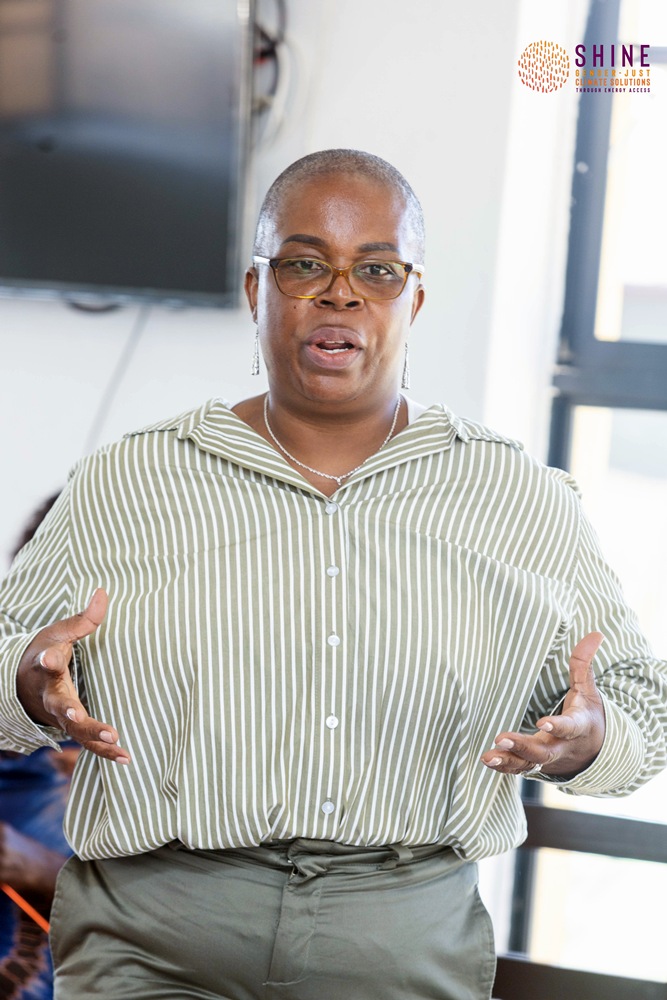
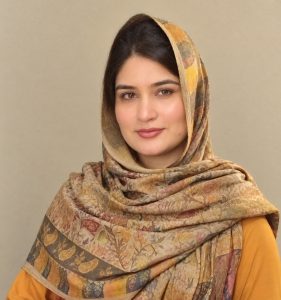
Dr Melania Chiponda
The climate crisis is often presented as an environmental problem requiring technological solutions, financial commitments and international cooperation. But this framing overlooks a fundamental truth: the climate crisis is also a crisis of power. It is rooted in an economic and political system that treats nature as an endless resource for exploitation and women’s labour as an inexhaustible source of unpaid care.
These are not separate injustices. They are interconnected forms of extraction that sustain an economic model built on accumulation, inequality and the concentration of power in the hands of a few.
As governments gather in Antalya, Türkiye, for COP31, the question should not simply be how much money will be mobilised or how many emission-reduction targets will be announced. It should be whether world leaders are prepared to confront the systems responsible for the destruction of ecosystems and the marginalisation of communities.
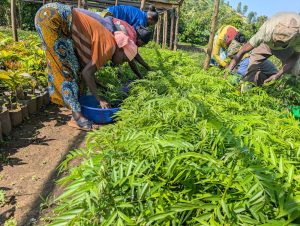
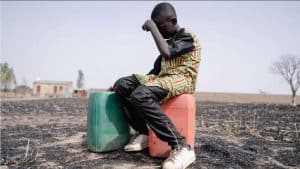
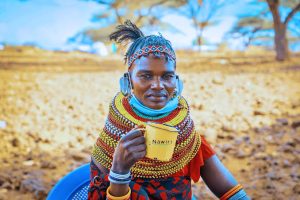
For millions of women across Africa and the Global South, climate change is not an abstract discussion about temperature thresholds. It is the loss of farmland, disappearing water sources, declining food production and the growing struggle to sustain households in increasingly hostile environments.
Approximately 1.5 billion women and girls live in climate hotspots. As climate shocks intensify, women experience disproportionate economic losses, food insecurity and livelihood disruptions.
By 2050, as many as 185 million additional women and girls could face hunger. Yet these are the same women whose knowledge, labour and leadership sustain local food systems, protect biodiversity and support community adaptation.
The contradiction is glaring: women are expected to carry the consequences of a crisis they contributed least to creating, while their solutions remain inadequately financed and politically marginalised.
The invisible economy sustaining life
One of the greatest failures of mainstream climate policy is its inability to recognise care as essential economic and climate infrastructure.
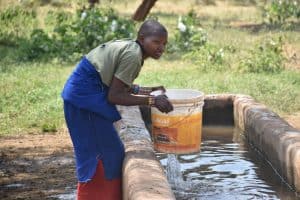
When droughts intensify, rivers disappear and public services collapse, women absorb the consequences through additional unpaid labour. They travel longer distances to collect water, spend more time securing food and take on greater responsibilities for children, older people and vulnerable household members.
Women already collect water in approximately two-thirds of households without access to it. This burden could increase significantly as climate pressures deepen.
Yet national economic calculations rarely account for this labour. Forests are valued for their timber, minerals for their commercial potential and land for its investment returns. The unpaid work that sustains families and communities remains largely invisible.
An economy that measures the extraction of minerals but ignores the labour required to sustain life cannot credibly claim to be sustainable.
A green transition must not reproduce the injustices of the fossil-fuel economy
The transition away from fossil fuels presents an opportunity to transform economies and redistribute power. But replacing one energy source with another does not automatically produce justice.
Across Africa, the expansion of renewable energy and the global demand for critical minerals are creating new pressures on land, water and community livelihoods. Lithium, cobalt, copper and other minerals are increasingly positioned as strategic resources for the global green economy. Yet the communities living on these mineral-rich territories do not always have the power to determine how their resources are extracted or how the resulting wealth is distributed.
Women are particularly vulnerable to displacement, livelihood losses and environmental degradation associated with extractive projects.
A transition that takes land without meaningful community consent, destroys local ecosystems and concentrates profits among corporations and political elites is not just because its products are labelled green.
The challenge is not simply to green the economy but to transform the relationships of ownership, decision-making and distribution that determine who benefits from economic activity.
There is, however, an opportunity. With deliberate investment in care infrastructure, social protection, skills development and inclusive employment, women could access approximately 68 million of the 104 million new jobs projected in green sectors by 2035. Without intentional interventions, their participation risks remaining marginal.
Climate finance must repair injustice, not deepen dependency
The question of climate finance is equally political.
African countries and vulnerable communities are being asked to adapt to a crisis they did little to create, often through financial arrangements that deepen their economic vulnerability. Almost 70 per cent of climate finance reaching developing countries has been provided as loans rather than grants.
This approach risks transferring the financial burden of climate destruction onto populations already struggling with debt, inadequate public services and declining livelihoods.
Climate finance should not become another instrument through which powerful economies and financial institutions exercise control over the development choices of poorer countries.
Africa needs predictable, accessible and grant-based climate finance that recognises historical responsibility and prioritises adaptation, loss and damage, locally led solutions and ecological restoration.
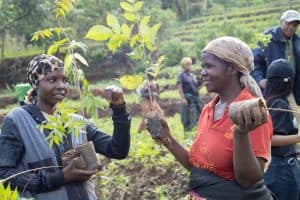
Crucially, resources must reach grassroots women’s organisations, feminist movements, Indigenous communities and local initiatives already developing practical responses to climate change. These actors should not be treated merely as beneficiaries of international funding. They are knowledge holders, organisers and decision-makers.
Defending the Earth must not cost women their lives
Climate justice also requires confronting the growing threats facing women environmental and human rights defenders.
Women who challenge destructive mining, defend community land rights, protect forests and resist environmental degradation increasingly face intimidation, criminalisation and violence. Between 2015 and 2025, 751 women human rights defenders were reportedly killed, with killings of women defenders increasing by 66 per cent.
Their struggles expose the political and economic interests behind environmental destruction. Their voices are therefore not peripheral to climate negotiations; they are central to understanding what meaningful climate action requires.
COP31 must recognise that protecting environmental defenders is inseparable from protecting ecosystems, democratic participation and community rights.
COP31 must move beyond promises
For grassroots women and ecofeminist movements, the demands at COP31 are clear.
First, governments must operationalise the just transition mechanism in ways that recognise gender justice, community ownership and the rights of people whose land and resources sustain the global economy.
Second, the Belém Gender Action Plan must receive full and meaningful financing, with measurable accountability for implementation.
Third, climate finance must be accessible, grant-based and gender-responsive, with direct funding pathways for grassroots women’s organisations and community-led initiatives.
Finally, women must have genuine decision-making authority in climate governance. Consultation without power is tokenism. The fact that women occupy only a small proportion of energy ministerial positions illustrates how far political representation remains from meaningful equality.
COP31 should not become another diplomatic gathering where ambitious declarations conceal the continuation of business as usual.
Its success must be measured by whether it challenges the structures that commodify nature, exploit women’s labour and concentrate economic power. The transition must restore ecological balance, protect community sovereignty and recognise care, solidarity and collective wellbeing as foundations of a sustainable future.
The climate crisis is not simply a crisis of emissions. It is a crisis of whose lives matter, whose knowledge counts and who has the power to decide the future of the planet.
There can be no climate justice without gender justice. There can be no just transition built on the dispossession of communities, the exploitation of women and the destruction of the Earth.
The future cannot be green if the foundations of the transition remain extractive.
About the Author
Dr Melania Chiponda is an ecofeminist scholar and climate activist. This article is published in the context of SHINE Collab’s advocacy for gender-just, community-led climate action at COP31 taking place in Antalya, Turkey.
About The Author


SUBSCRIBE TO OUR NEWSLETTER