What Rwanda Can Learn from Gabon’s 6-Million-Tonne Carbon Credit Deal with Germany

KIGALI, Rwanda — Gabon’s agreement to commercialise approximately six million tonnes of forest carbon credits with Germany’s state-owned energy company SEFE is drawing attention to a question with growing importance for African climate policy: how can countries turn the environmental value of their ecosystems into transparent financial returns without weakening their own climate commitments?
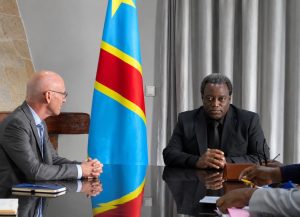
The agreements, announced by Gabonese authorities on November 3, 2026, concern jurisdictional carbon credits linked to the preservation of the country’s forests. Gabon is represented in the transaction by the Agency for the Development of the Green Economy (AGADEV), while SEFE is the German state-owned energy company formerly known as Securing Energy for Europe.

According to the Gabonese Press Agency, the transaction covers about six million tonnes of carbon dioxide, with the first deliveries expected no later than the first quarter of 2027. The authorities say the credits are subject to verification and traceability mechanisms and are eligible for the Carbon Offsetting and Reduction Scheme for International Aviation (CORSIA).
The government has emphasised that Gabon is not selling its land or forests. Ownership and management of the national forest estate remain with the state; the agreements concern carbon units associated with conservation results. The financial value of the deal, including the price per tonne and expected total revenue, has not been publicly disclosed.
Why the Gabon deal matters
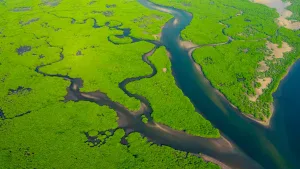
The agreement is significant because it is structured around jurisdictional credits — carbon results accounted for across a national or subnational territory, rather than credits generated only by an individual project. Gabonese authorities describe it as the first African commercialisation of jurisdictional forest credits eligible for CORSIA.
But the volume alone does not reveal the deal’s financial value. Without a disclosed price, delivery conditions and net revenue figures, it is not possible to calculate how much money Gabon will receive. The government has said state revenues will be ring-fenced pending the entry into force of a national regulatory framework that is also expected to provide for benefit-sharing with communities.
That distinction is important: a large carbon-credit transaction is not automatically proof of large public revenue or improved local livelihoods. The final test will be what is paid, how the proceeds are managed and whether communities that contribute to conservation receive measurable benefits.
Rwanda already has a carbon-market foundation
Rwanda is not starting from zero. The country launched its National Carbon Market Framework in 2023, established procedures for implementing Article 6 of the Paris Agreement, developed a national carbon registry and introduced independent verification requirements.
Figures reported by Rwanda’s Ministry of Environment in September 2026 show that the Rwanda Environment Management Authority (REMA) had registered 29 carbon-market projects at different stages of development. The projects cover areas including land restoration, agriculture, forestry, electric mobility, waste management and renewable energy. The ministry also reported approximately US$1.5 million generated from carbon-credit sales.
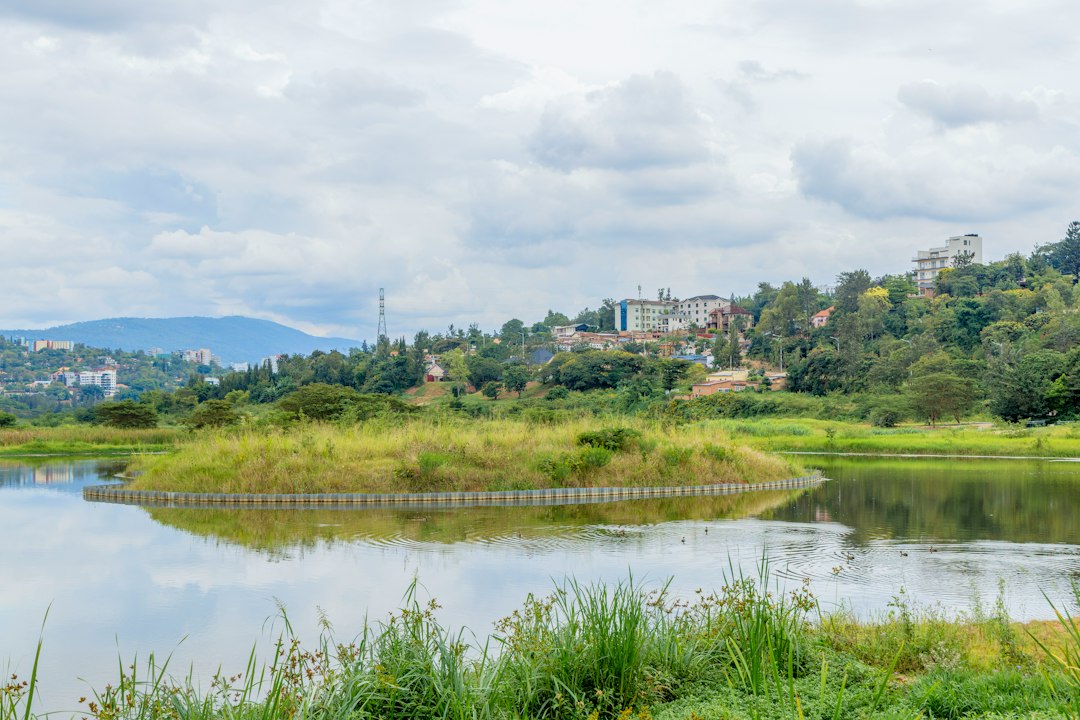
Rwanda has also established an Article 6 cooperation framework with Singapore, creating a pathway for authorised mitigation activities to access international markets. These arrangements provide an institutional base from which the country can assess opportunities for larger programmes and stronger buyer partnerships.
Five lessons Rwanda can draw from Gabon
1. Assess the potential for jurisdictional forest programmes
Gabon’s experience offers Rwanda a reason to examine whether verified conservation and restoration results can be organised at a broader landscape or jurisdictional scale. Rwanda’s forests, wetlands, restored landscapes and agroforestry systems could form part of such an assessment. Any programme would need robust baselines, independent measurement and safeguards against double-counting.
2. Negotiate the value and conditions, not just the volume
The six-million-tonne figure has attracted attention, but the absence of a public price shows why transaction volume should never be the only measure of success. Rwanda should ensure that carbon agreements clearly address price, payment schedules, fees, delivery obligations, reversal risks, contract duration and the treatment of credits under national climate accounting.
3. Make community benefit-sharing visible
Gabon says its forthcoming regulatory framework will provide for sharing benefits with communities. Rwanda’s own carbon-market rules already include benefit-sharing arrangements. The practical challenge is to make these arrangements understandable and verifiable: communities should know who qualifies, how benefits are calculated, when payments are due and how complaints can be addressed.
4. Protect national climate targets
International carbon trading must be aligned with Rwanda’s Nationally Determined Contribution (NDC). Under Article 6 of the Paris Agreement, authorised transfers of mitigation outcomes require careful accounting, including corresponding adjustments where applicable. Rwanda should assess the domestic climate value of each reduction before authorising its transfer to a buyer abroad.
5. Publish clear information about carbon-market results
Rwanda could strengthen investor and public confidence by regularly reporting the number of credits issued and transferred, project status, revenues where disclosure is possible, public fees, community payments and independently verified environmental results. Transparency would help the public distinguish between projects under development, credits verified, credits sold and money actually received.
Rwanda should adapt the model, not copy it
The two countries have different ecological profiles and carbon-market opportunities. Gabon’s extensive tropical forests give it a particular basis for jurisdictional forest credits. Rwanda’s opportunities are spread across forests, agriculture, wetlands, clean energy, transport, waste management and land restoration.
For Rwanda, the lesson is therefore not simply to pursue a six-million-tonne transaction. It is to build a pipeline of high-integrity projects, strengthen its negotiating capacity, attract credible buyers and ensure that carbon finance supports national development priorities.
It must also guard against selling mitigation outcomes that are needed to meet its own climate targets. Carbon finance should complement domestic emissions reductions and adaptation, not replace them.
From environmental protection to measurable public value
Gabon’s agreement with SEFE highlights the growing effort by African governments to secure financial recognition for conservation. It also leaves important questions unanswered, particularly the transaction’s price and the precise arrangements for community benefits.
Rwanda has already put key carbon-market institutions in place. Its next challenge is to convert that foundation into transparent, well-priced and environmentally credible transactions that generate measurable benefits for communities while preserving the country’s climate commitments.
The question for policymakers is no longer only how many carbon credits Rwanda can generate. It is how much value the country can retain, how fairly that value is shared and how effectively it contributes to a resilient, low-carbon economy.
Sources: Agence Gabonaise de Presse; Rwanda Ministry of Environment; The New Times; Reuters.
About The Author


SUBSCRIBE TO OUR NEWSLETTER