Police Tear-Gas Catholic Clergy in Lubumbashi as Land Rights March Blocked
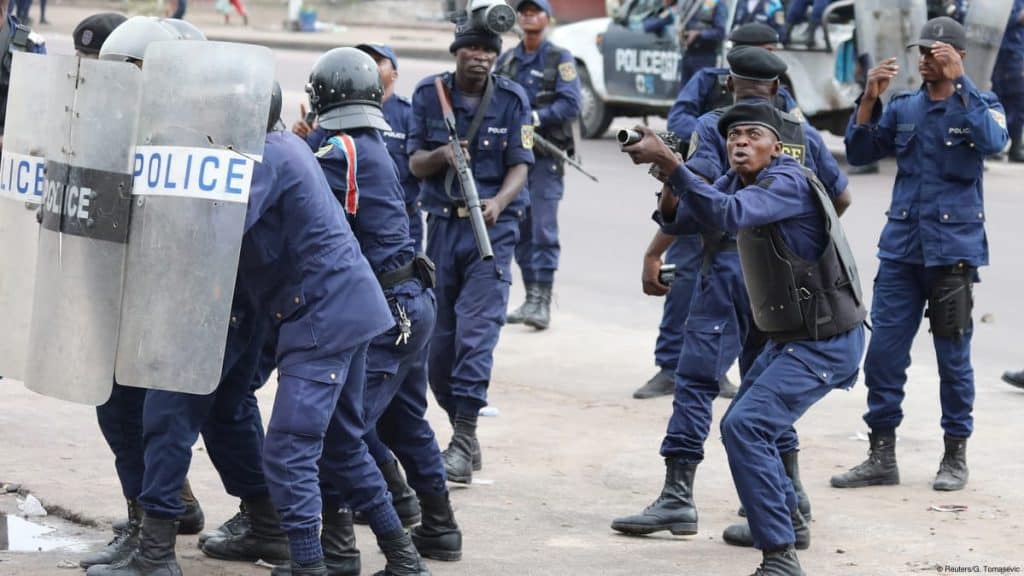
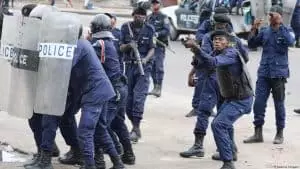
Lubumbashi, Democratic Republic of Congo — November 23, 2026: Congolese national police fired tear gas on Monday at Catholic bishops, priests, seminarians, and faithful in Lubumbashi who were attempting to hold a peaceful march demanding enforcement of a court ruling on Church-owned land. The operation prevented the demonstration from proceeding and marked the second clash in two days between authorities and the Catholic hierarchy.
Police had sealed off major avenues leading to the Cathedral of Saints-Pierre-et-Paul, including Kasa-Vubu, Kapenda, and Mama Yemo (or Tabora), from the previous night. Vehicles were stationed near parishes, and the residence of Archbishop Fulgence Muteba of Lubumbashi—who also serves as president of the National Episcopal Conference of Congo (CENCO)—was surrounded, restricting movement.
When some clergy and worshippers tried to leave the Saint-Paul interdiocesan major seminary in the Pengapenga (Gécamines) area to join the procession, officers deployed tear gas. Videos circulating online show bishops in clerical attire wiping their eyes and faces, receiving water and tissues from faithful, while continuing to pray—including recitations of the Hail Mary—and holding crosses. No injuries were widely reported by early afternoon.
Bishop Désiré Lenge of Kilwa-Kasenga, present near the scene, publicly denounced the measures. “We wonder what sin we have committed. It was a peaceful march, and that is a right in a democracy. We do not know what kind of state we are in,” he said, while expressing concern over the isolation of Archbishop Muteba.
The march had been organized by the Archdiocese of Lubumbashi to press for execution of a court judgment (referenced as RF 002) ordering the demolition of unauthorized constructions on a Church concession at Tshamalale in the Annexe commune. The land belongs to the Grand Séminaire interdiocésain Saint-Paul, which trains priests for the former Katanga region. Church leaders say the buildings remain standing despite the ruling and accuse local authorities of obstructing enforcement, including by not providing the necessary demolition brigade.
Interim Mayor Joyce Tunda Kazadi had formally banned the gathering in a letter to the bishops, citing a city-wide prohibition on public marches, rallies, and gatherings (originally issued in July 2026 and repeatedly reaffirmed) on grounds of public order and security. The mayor instructed organizers to call it off, warning of legal consequences for violations.
The incident comes one day after Kinshasa authorities prevented Cardinal Fridolin Ambongo, Archbishop of Kinshasa, from holding a planned Christ the King youth Mass at Tata Raphaël Stadium on Sunday, despite prior authorizations. Ambongo described the last-minute blockage as a provocation and a sign of contempt toward the Church.
Human rights figures reacted critically. Jean-Claude Katende, president of the African Association for the Defense of Human Rights (ASADHO), condemned the use of force against the clergy and asked whether the freedom to demonstrate had become a crime.
The Catholic Church remains one of the DRC’s most influential civil society institutions. Bishops have opposed constitutional revisions that could affect presidential term limits ahead of the 2028 elections. Monday’s events in Lubumbashi, combined with the Kinshasa episode, have intensified questions about the state of religious freedom, the right to peaceful assembly, and the relationship between the government of President Félix Tshisekedi and the Church.
As of Monday afternoon, provincial authorities and national police had not issued a detailed public statement on the operation. Archbishop Muteba has indicated the Church will continue pressing its land claims through available channels.
About The Author


SUBSCRIBE TO OUR NEWSLETTER