COP31 Climate Talks Collapse Without Deal as Nations Clash Over Fossil Fuels
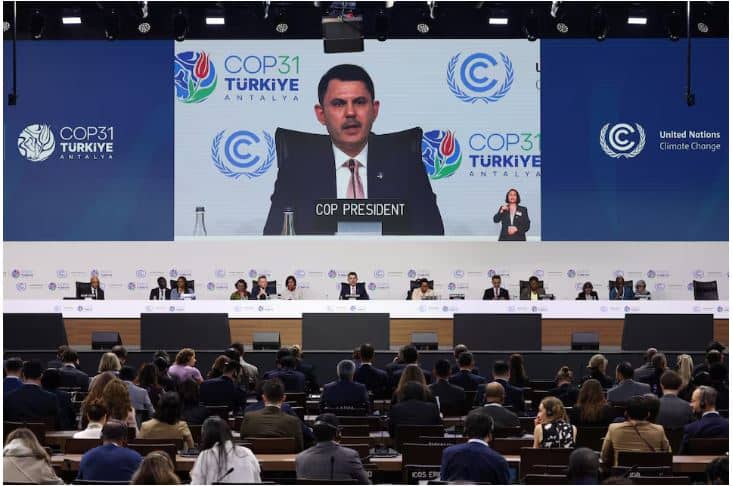
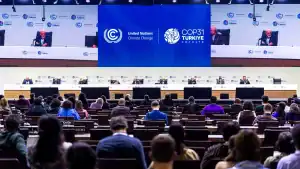
ANTALYA, Türkiye — The 31st UN Climate Change Conference (COP31) ended on November 22, 2026, without a consensus overarching outcome after becoming the longest summit in the process’s history.
Negotiations, originally scheduled for November 9–20 and co-hosted by Türkiye (with Environment Minister Murat Kurum as COP President) and Australia (with Climate Minister Chris Bowen leading negotiations), spilled more than 40 hours into overtime before collapsing over the omission of any explicit reference to fossil fuels in the final draft cover decision.
The draft, prepared under the joint presidency, referred only indirectly to the COP28 (Dubai 2023) commitment to “transition away from fossil fuels” without repeating or strengthening that language.
It also incorporated Türkiye’s “35 by 35” electrification goal (raising electricity’s share of global energy demand toward 35% by 2035) but fell short on adaptation finance targets sought by many developing nations.
COP31 was the first to formally acknowledge that the world is already on track to overshoot the Paris Agreement’s 1.5°C limit, with current national plans pointing toward more than 2.5°C by century’s end.
The European Union, the United Kingdom, Panama, the Marshall Islands, and others formally rejected the text. Ireland’s Environment Minister Darragh O’Brien, speaking for the EU, called it unacceptable and “greenwashing”: “We will not endorse a decision that does not respond to the science… [It] does not even mention fossil fuels.” The Marshall Islands delegate stated that their nation “will not compromise our future to benefit fossil fuel interests.”
Australia’s Chris Bowen, after sleepless nights of shuttle diplomacy, described the outcome as “very disappointing,” noting that disagreements over fuels and climate finance proved insurmountable. COP President Murat Kurum acknowledged there was “nothing to do” and confirmed no new text would advance, while earlier expressing hope that the text could still demonstrate multilateralism’s capacity to deliver.
UN Secretary-General António Guterres, attending his final COP before leaving office at the end of 2026, issued a statement of deep disappointment: “I am deeply disappointed that COP31 has ended without consensus on an overarching outcome. I share the very profound frustration of all those who expected governments to rise to the moment the climate crisis demands.” He reiterated that “the climate crisis will not wait for governments to find common ground. Neither can we,” and urged an accelerated just transition away from fossil fuels, deep emissions cuts, more finance, and protection for frontline communities.
Throughout the summit Guterres had been blunt. At the Leaders’ Summit he declared that “fossil fuels must go the way of the dinosaurs” and that “the dinosaurs did not have a lobby. Fossil fuels do,” while warning “you cannot build peace on a burning planet” and calling the moment “make or bake time.” He pressed for a climate justice compact, windfall taxes on oil profits, and concrete organization of the transition.
Reactions from other high-profile figures were mixed. World Resources Institute CEO Ani Dasgupta called the outcome “hollow” and “a failure of political leadership.” Greenpeace’s Jasper Inventor described parts of the drafts as “profoundly unacceptable.” Some scientists, including University of Exeter’s Prof. Martin Siegert, suggested the collapse might draw a clearer line requiring explicit fossil-fuel transition language in future agreements, arguing that agreeing to less would be worse. UNFCCC Executive Secretary Simon Stiell noted progress on many technical agenda items but conceded that the consensus system “fell short today,” while calling for the process to evolve.
The United States, having formally withdrawn from the Paris Agreement earlier in the year, sent no official delegation. Saudi Arabia and other oil-producing states, speaking through the Arab Group, had resisted stronger fossil-fuel language, favoring weaker phrasing focused on a “low greenhouse gas emissions” transition that could accommodate continued fossil-fuel roles alongside technologies such as carbon capture.
Side progress included new alliances and funding for Pacific island resilience, ocean-related declarations, and continued work on implementation of existing commitments. The next COP is scheduled for Addis Ababa, Ethiopia, which its hosts have framed as a “COP of hope.”
Guterres and others stressed that the lack of a cover decision does not change the underlying science or urgency: emissions remain too high, overshoot of 1.5°C is now expected, and the need for rapid, just emissions cuts and a managed exit from fossil fuels persists regardless of the diplomatic outcome in Antalya.
About The Author


SUBSCRIBE TO OUR NEWSLETTER