Rwanda Details $12 Billion Climate Investment Needs and Urban Resilience Projects Midway Through COP31
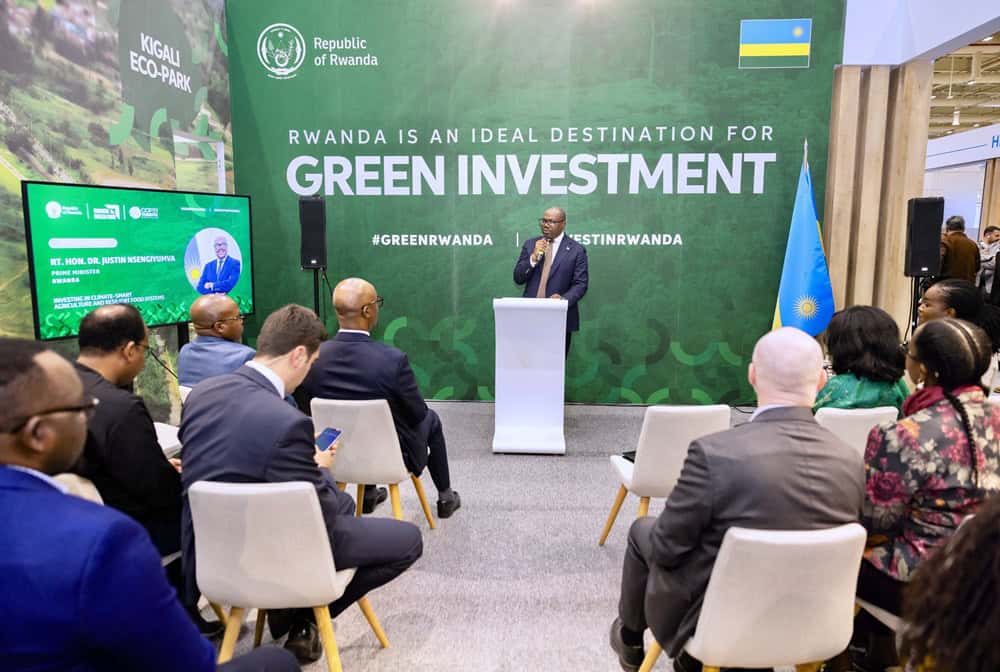
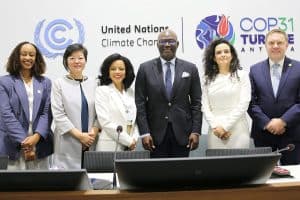
Antalya, Türkiye – November 14, 2026 – Midway through the UN Climate Change Conference (COP31, November 9–20), Rwanda has used high-level interventions and bilateral discussions to quantify its climate financing requirements and highlight on-the-ground resilience projects that depend on international support.
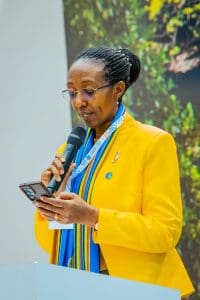
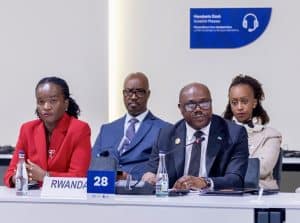
Prime Minister Dr. Justin Nsengiyumva, representing President Paul Kagame, delivered Rwanda’s national statement on November 12. He stated that the country’s third Nationally Determined Contribution (NDC 3.0) requires approximately $12 billion (Rwf17.95 trillion) through 2035 to achieve a 53 percent emissions reduction relative to business-as-usual levels. Of this total, 80 percent is conditional on international support, with roughly $7.07 billion directed to adaptation and $4.96 billion to mitigation. Nsengiyumva linked the financing gap to broader developing-country needs and noted that Rwanda’s forthcoming 2027 chairmanship of the Group of 77 and China would be used to advance clearer arrangements for measuring adaptation support under the Global Goal on Adaptation.
Specific resilience and energy projects
Rwanda has presented several concrete investment cases, including the rehabilitation of five wetlands covering nearly 500 hectares in Kigali. These interventions form part of roughly $195 million already invested in flood-risk reduction and informal-settlement upgrading. They are expected to reduce flood risks for more than 220,000 residents while creating public green spaces and livelihood opportunities. Officials also referenced the Green Gicumbi project, which has strengthened resilience for about 249,000 people in one district.
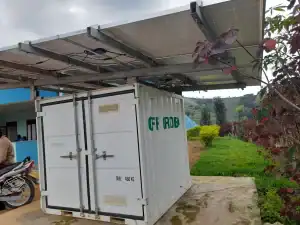
Electricity-sector needs are estimated at $3.05 billion, including $1.3 billion for grid infrastructure. Priorities include expanding transmission capacity by 70 percent and increasing regional electricity trade from 100 MW to 200 MW. These points were raised during engagement at the Global Grids Accelerator high-level event.
Rwanda has also outlined a $335 million climate-smart agriculture investment pipeline aimed at making about 83,250 hectares more resilient and productive while linking roughly 170,200 farmers and 375 companies to financing. The Rwanda Green Fund hosted a related high-level dialogue emphasising partnerships and innovative finance for food security.
Nsengiyumva welcomed Türkiye’s Sustainable Urban Resilience Financing Facility (SURFF) under the COP31 Action Agenda as a potential tool for turning urban climate objectives into bankable projects.
Ongoing engagements
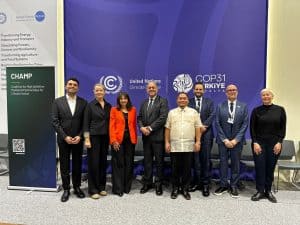
On the sidelines, the Prime Minister participated in discussions on the second decade of the Paris Agreement, urban resilience, adaptation and climate action. He met UNDP Administrator Alexander De Croo to explore expanded cooperation. The Rwanda Green Fund’s CEO, Teddy Mugabo, held separate talks with World Resources Institute officials on mobilising climate finance.
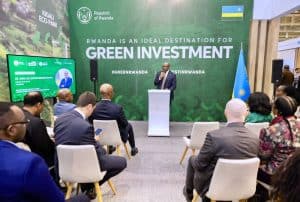
Rwanda’s pavilion continues to host sessions, including a November 14 event on operationalising Article 6 of the Paris Agreement, drawing lessons from Rwanda-Singapore cooperation, carbon-market transparency and the launch of Rwanda’s Carbon Registry.
As technical negotiations proceed into the conference’s second week, Rwanda’s emphasis has remained on translating quantified national needs—particularly the conditional share of the $12 billion NDC package and specific urban, energy and agricultural pipelines—into accessible finance and implementation partnerships.
About The Author


SUBSCRIBE TO OUR NEWSLETTER