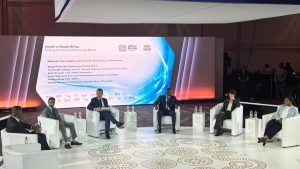
Africa Hydrological Conference at Cairo / Africa Water Week 2024

The Water-Energy-Food (WEF) Nexus offers a vital framework to address Africa’s complex interconnections between water, energy, and food resources. In many African countries, these sectors are critical for achieving sustainable development goals, addressing food insecurity, ensuring reliable energy access, and mitigating the risks posed by climate change. Hydrological data, which provides essential insights into water availability, usage, and quality, is key to informing the integrated management of these resources. However, hydrological data remains underutilized in many African countries, limiting its potential to drive socioeconomic development, build climate resilience, and mitigate disaster risks.
This session will focus on the application of hydrological data within the WEF Nexus to support national development agendas such as Agenda 2063 and the Africa Water Vision 2025. Case studies from across the continent will demonstrate how hydrological data can be leveraged to optimize the interdependencies between water, energy, and food sectors. The projects from the Ewaso Ng’iro North Catchment Area (ENNCA) in Kenya and the Akagara Basin in Rwanda will showcase real-world examples of how hydrological data supports resilience building and sustainable resource use.
Objective
This session aims to showcase how leveraging hydrological data can significantly enhance socioeconomic development, climate resilience, and disaster risk reduction in Africa by promoting the WEF Nexus approach. Specifically, the session will:
- Demonstrate Practical Applications: Present case studies from ENNCA (Kenya), Akagara Basin (Rwanda), and other regions to illustrate the integration of hydrological data into the WEF Nexus for resource optimization.
- Highlight Socioeconomic Benefits: Discuss how hydrological data is driving measurable benefits in agriculture, energy, and industry, enhancing livelihoods and promoting economic growth.
- Promote Ecosystem-Based Adaptation: Explore how hydrological data is being used to support ecosystem-based adaptation, building resilience to climate risks and environmental changes.
- Foster Knowledge Exchange: Provide a platform for exchanging insights, experiences, and best practices among stakeholders involved in water, energy, and food security.
Session Outcomes
- Enhanced Understanding: Participants will gain valuable insights into how hydrological data can be applied to achieve sustainable development goals and strengthen climate resilience in Africa.
- Policy Recommendations: Actionable policy recommendations will be generated on how hydrological data can be integrated into national and regional planning, supporting the effective management of water, energy, and food resources.
- Collaborations: The session will allow stakeholders to form new partnerships to leverage hydrological data to support sustainable development initiatives across Africa.
- Capacity Building: Participants will leave with a stronger ability to apply hydrological data in their respective sectors to drive informed decision-making and optimize resource use.
Target Audience
This session is aimed at policymakers, researchers, industry professionals, and practitioners involved in water resource management, agriculture, energy, and disaster risk reduction. It will also be relevant to stakeholders working on climate change adaptation, sustainable development, and African resilience building.
This session will offer participants the chance to learn about hydrological data application within the WEF Nexus framework, engage with experts, discuss innovative solutions, and contribute to shaping policies for sustainable development and climate resilience in Africa.
About The Author


SUBSCRIBE TO OUR NEWSLETTER