Farmers in Nyaruguru Demand Timely Access to Seeds and Fertilizers

Farmers in Nyaruguru District have urged authorities to ensure that seeds and agricultural inputs reach them on time, saying delays and high prices continue to affect their productivity.
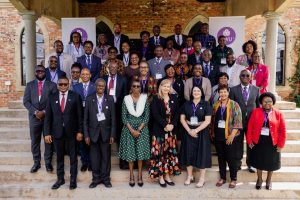
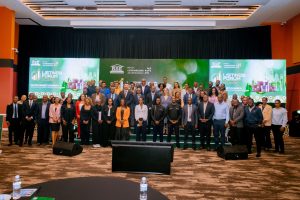
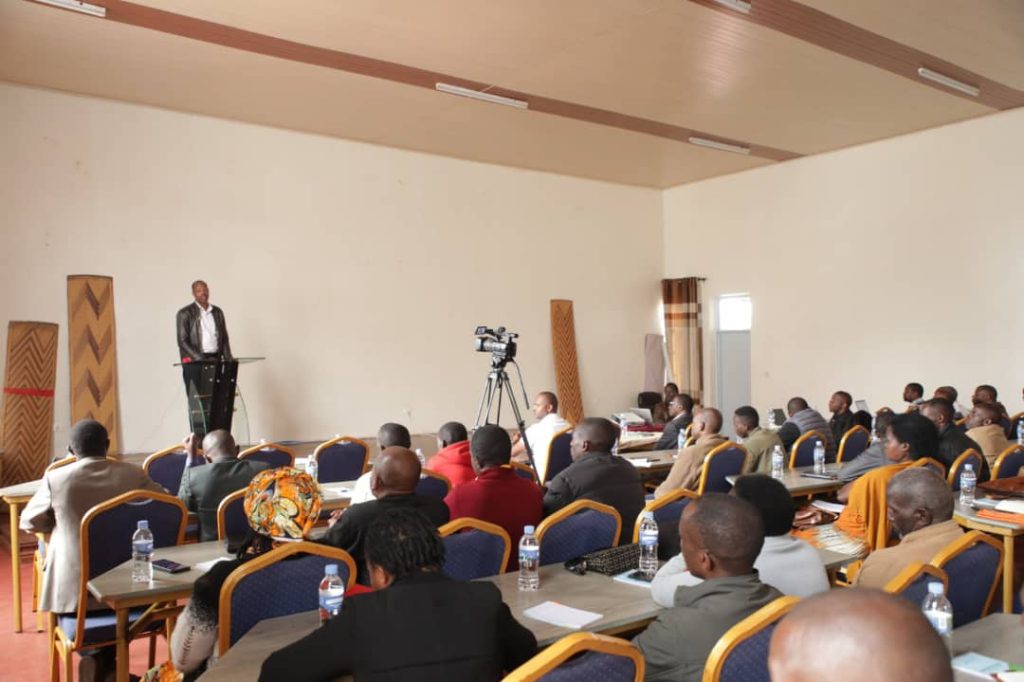
The concerns were raised during a meeting that brought together farmers and officials in charge of agricultural development to discuss challenges in the sector and ways to improve service delivery.
Several farmers said the main problem is the lack of quality seeds and fertilizers, especially delays in distribution and insufficient supply.
NIYIGENA Elizabeth, a farmers’ representative from Mwoya Cell in Nyagisozi Sector, said there are flaws in how inputs are distributed. “We still face challenges in accessing agricultural inputs,” she said. “Sometimes fertilizers are delivered to agro-dealers who then sell them to traders at higher prices. By the time they reach farmers, the prices have increased and supplies are often exhausted. Government subsidies end up benefiting traders instead of farmers.”

Banzubaze Ferdinand, a professional Irish potato farmer in the district, said mineral fertilizers are too expensive and often unavailable in adequate quantities. He called on local authorities to address the issue so farmers can increase production and improve their livelihoods.
Other farmers pointed to the lack of irrigation equipment during the dry season and the high cost of certified Irish potato seeds as factors that continue to reduce crop yields.
Agricultural officials acknowledged the challenges. The agronomist of Nyagisozi Sector, NIYIGENA Deo Tatus, explained that some delays occur because fertilizers and seeds are sometimes imported. “Inputs may delay when they come from outside the country,” he said. “When they are produced locally, delays are less common. We are also encouraging farmers to produce their own seedlings, especially fruit trees such as avocados.”
The meeting was organized in partnership with CCOAIB, a civil society umbrella organization supporting grassroots development. The organization is assessing agricultural service delivery in the districts of Nyaruguru, Nyamagabe, Muhanga and Gatsibo.
Senyabatera Jean Bosco, Director of Planning and Research at CCOAIB, said the organization helps citizens understand their rights and engage with government institutions. “Our role is to help citizens express the challenges they face and connect them with responsible authorities so solutions can be found in time,” he said. “We also help farmers give feedback on agricultural services so they can be improved.”
DUSHIMIMANA Jean Dedieu, head of the RAB station serving Nyamagabe and Nyaruguru, addressed concerns about lime shortages, saying lime is sourced from only a few areas in the country, including Musanze and Karongi. He added that a new supplier has recently joined the market and that the situation is improving.
He encouraged farmers to register early and indicate the inputs they need so distribution can be better planned.

The Vice Mayor in charge of Economic Development in Nyaruguru District, GASHEMA Janvier, said ensuring fertilizers reach farmers on time requires joint efforts.
More than 76 percent of the district’s population depends on agriculture, yet 75 percent cultivate less than one hectare of land. He said this makes efficient land use essential. “This meeting helps us understand how to make better use of the small land we have,” he said. “Access to subsidized fertilizer is not a favor but a right, because the government covers 40 percent of the cost. Farming without fertilizer leads to losses.”
He also warned that agro-dealers who fail to meet their responsibilities should be held accountable and urged farmers to understand both their rights and responsibilities.
Findings from a service delivery assessment involving 4,899 participants were also presented. The main issues raised included delayed or insufficient agricultural inputs, lack of irrigation equipment during the dry season, high prices of certified Irish potato seeds, and shortages or high costs of crop protection products for maize and rice.
In Nyaruguru District, where more than three-quarters of residents depend on agriculture and most cultivate less than one hectare, these challenges continue to limit productivity. Farmers at the meeting stressed that fertilizer and seed shortages require urgent attention to improve agricultural output in the district.


SUBSCRIBE TO OUR NEWSLETTER