Pakistan, African partners launch economic council with $15bn trade goal
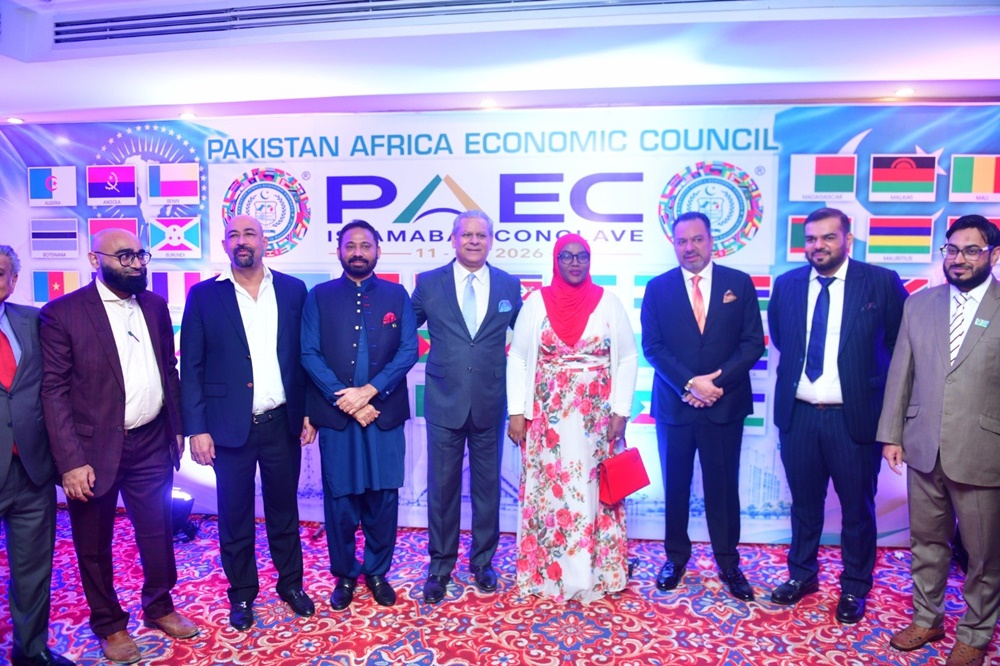
ISLAMABAD — Pakistan and African nations on Saturday launched the Pakistan-Africa Economic Council, pledging to lift bilateral trade to $15 billion by 2030 and to shift a long-standing diplomatic relationship toward commerce, investment and private-sector partnerships.
The inaugural ceremony of Pakistan-Africa Economic Council in the capital brought together Pakistani officials and ambassadors, high commissioners and consuls general from Rwanda, Mauritius, Morocco, Zimbabwe, Sudan, Kenya and Ethiopia. Speakers said trade between Pakistan and Africa remains far below its potential and that the new council should give businesses a structured platform to close that gap.
Federal Minister for Defence Production Raza Hayat Hiraj called the launch a milestone, saying Africa’s population of about 1.5 billion offered Pakistan a vast market. He said the council’s value would depend on bringing companies, chambers of commerce and investors from both sides into regular contact.
Ambassador Hamid Asghar Khan, named patron-in-chief of the Pakistan-Africa Economic Council, said he had spent seven years serving in Africa and was now focused on connecting Pakistani producers with African buyers and partners. He noted that Pakistan’s IT exports stand at about $2.7 billion and could grow sharply if firms build stronger digital and commercial links across the continent.
Khyber Pakhtunkhwa Governor Faisal Karim Kundi urged Pakistani businessmen not to treat Africa as a distant or secondary market. A rising Africa and an emerging Pakistan, he said, have complementary strengths in agriculture, manufacturing and services.
Islamabad Chamber of Commerce and Industry President Sardar Tahir Mehmood argued that the relationship should move beyond traditional diplomacy. Africa, he said, is no longer only a market of the future. Pakistan, he added, already has competitive offerings in pharmaceuticals, textiles and garments, surgical and sports goods, rice and other farm products, engineering, construction, information technology, education and healthcare.
Officials said the Pakistan-Africa Economic Council will first concentrate on East Africa, particularly Rwanda, Ethiopia, Uganda and Djibouti, before expanding engagement to Somalia, Sudan and South Sudan. A three-month agenda includes business delegations to Rwanda, Ethiopia and other countries, with two opportunity missions planned for the last quarter of 2026.
The organizers framed the effort as a way to diversify Pakistan’s export destinations, attract mutual investment and tap resources that have so far been underused. Whether the $15 billion target is met will depend on follow-through: trade missions, financing, logistics and the willingness of companies on both sides to treat the new Pakistan-Africa Economic Council as more than a ceremonial launch.
About The Author


SUBSCRIBE TO OUR NEWSLETTER