Rwanda’s Crackdown on Illicit Alcohol: A Necessary Public Health Reset After Deadly Poisonings
In the first days of August 2026, Rwanda’s Food and Drugs Authority launched one of the most aggressive regulatory actions in the country’s recent history against the alcohol sector.
What began with the shutdown of eight distilleries on 2 August quickly expanded: by 3–5 August, more than 130 manufacturing facilities had been ordered closed, their licences revoked, and their products recalled nationwide.
Ethanol import licences were suspended, products valued at over Rwf 2.6 billion were seized, nearly Rwf 360 million in fines imposed, and at least 56 people arrested.
The trigger was grim. Health officials reported that illicit and substandard alcoholic beverages had already claimed at least 50 lives in the first half of 2026, left roughly 100 people partially or fully blind, and sent more than 500 others to health facilities with complications.
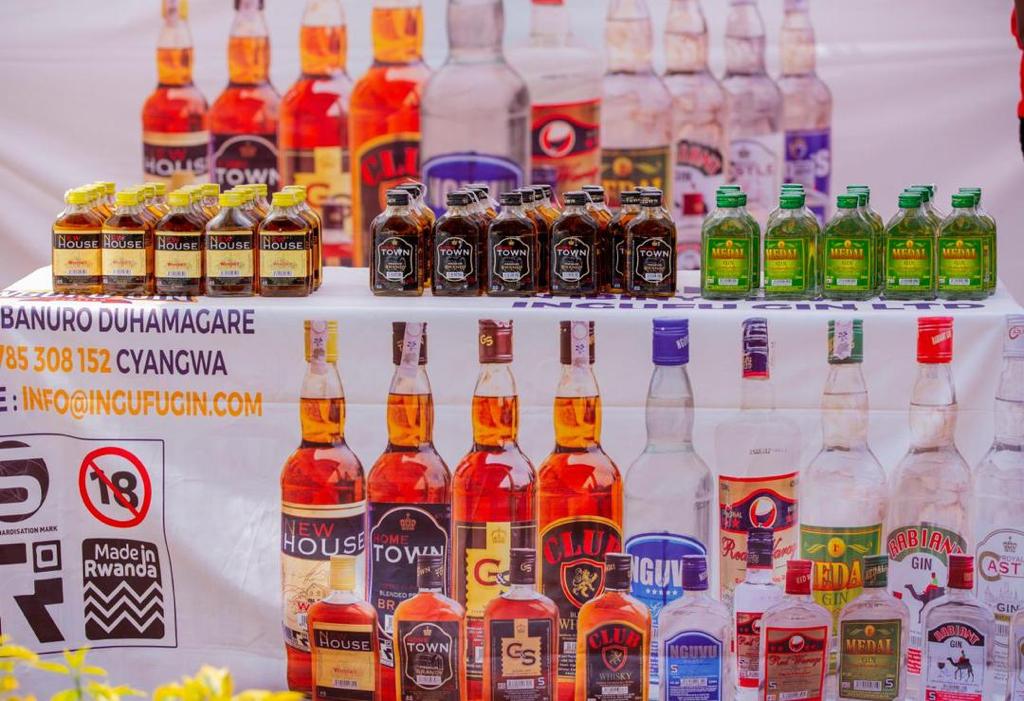
Investigations pointed to methanol contamination and other industrial chemicals mixed into cheap spirits marketed as gin, vodka, whisky, and flavoured local drinks.
This was not an isolated ban on illegal breweries. It targeted both unlicensed backyard operations and licensed facilities that had drifted into producing toxic cocktails—sometimes substituting soap, chili, tobacco, or industrial solvents for proper ingredients.
Concurrent police and local-authority raids destroyed thousands of litres of illicit brew across multiple districts. The move sits alongside earlier measures, including village-level approval requirements for traditional homemade beverages such as urwagwa and ikigage, and the broader “Tunywe Less” campaign aimed at reducing youth alcohol abuse.
A review of discussions centred on the crackdown reveals a clear majority view: strong public support framed around health protection.
Rwandans praised Rwanda FDA for decisive action. Typical comments described the closures as the right decision that protects Rwandans, thanked authorities for putting the safety of the people first, and urged the regulator to continue in that way for fostering health.
Artists and creatives publicly pledged to use their platforms against illicit alcohol and drugs, aligning with government calls for cultural influencers to promote healthier lifestyles.
Some voices went further, calling for sustained enforcement—checking markets, Expo events, and imported products—and for accountability higher up the chain. A few questioned why deaths and blindness had to occur before rigorous inspections, suggesting regulators themselves should face scrutiny for earlier oversight gaps.
Others noted the distinction between ethanol (the controlled industrial spirit whose imports were halted) and methanol (the toxic contaminant actually linked to harm), while advocating a return to safer banana-based traditional production.
Personal stories surfaced too: one entrepreneur recounted closing a profitable bar years earlier in favour of sports facilities after witnessing alcohol’s community damage, explicitly endorsing the current health-over-profit stance.
Criticism of the crackdown itself was sparse in the sampled conversation. Economic concerns about job losses or formal-sector disruption appeared muted compared with the emphasis on lives saved.
News outlets and official accounts dominated volume, but ordinary users largely amplified the public-health framing rather than resistance.
From a public-health and regulatory-policy perspective, Rwanda’s actions fit a classic pattern seen in methanol-poisoning crises worldwide. Methanol is cheap, colourless, and devastating—metabolised into formaldehyde and formic acid that destroy the optic nerve and vital organs.
When informal or poorly supervised producers cut costs by diverting industrial ethanol or adding adulterants, the result is predictable mass casualties among lower-income consumers seeking affordable alcohol.
Rwanda’s response scores high on several evidence-based criteria: rapid market withdrawal of identified risky products reduces immediate exposure; control of a key input (ethanol licensing) disrupts the supply chain for bootleggers; multi-agency coordination raises the cost of non-compliance; and public communication plus cultural mobilisation address demand-side drivers, especially among youth.
Yet expert analysis also highlights the structural challenges that pure enforcement cannot fully solve. Rwanda has hundreds of distilleries and a significant informal alcohol economy rooted in traditional banana and sorghum ferments.
Sudden mass closures risk pushing production further underground, where quality control is even weaker. Workers and small operators lose livelihoods; compliant formal producers may face temporary shortages or higher costs that price some consumers toward remaining illicit sources.
Sustainable success will require more than raids and recalls. Priority measures include strengthening routine, risk-based inspections and laboratory capacity so problems are caught before fatalities mount; creating clear, accessible pathways for small and traditional producers to meet safety standards rather than being driven entirely out of the formal market; investing in demand reduction—treatment services, youth programmes, and continued public education—because enforcement alone rarely shrinks overall consumption; and transparent post-action evaluation tracking whether deaths and blindness cases decline, whether a black market rebounds, and how affected workers are supported into alternative livelihoods.
Comparable episodes in other countries show that short-term crackdowns save lives only when paired with medium-term formalisation and sustained monitoring.
Rwanda’s high-capacity state apparatus gives it an advantage here; the political will displayed in early August 2026 is real. The test will be whether the momentum translates into a permanently safer alcohol market rather than a temporary purge followed by quiet re-emergence of toxic products.
For now, the dominant voice among Rwandans discussing the issue is one of relief and endorsement.
In a country that has repeatedly prioritised collective welfare, the closure of facilities linked to 50 deaths and 100 cases of blindness is widely seen not as overreach, but as the minimum acceptable response.
The harder work—building a regulatory system that prevents the next wave of poisonings while managing the economic transition—still lies ahead.
About The Author


SUBSCRIBE TO OUR NEWSLETTER