MSU scientists developing tools that help farmers improve irrigation, energy efficiency
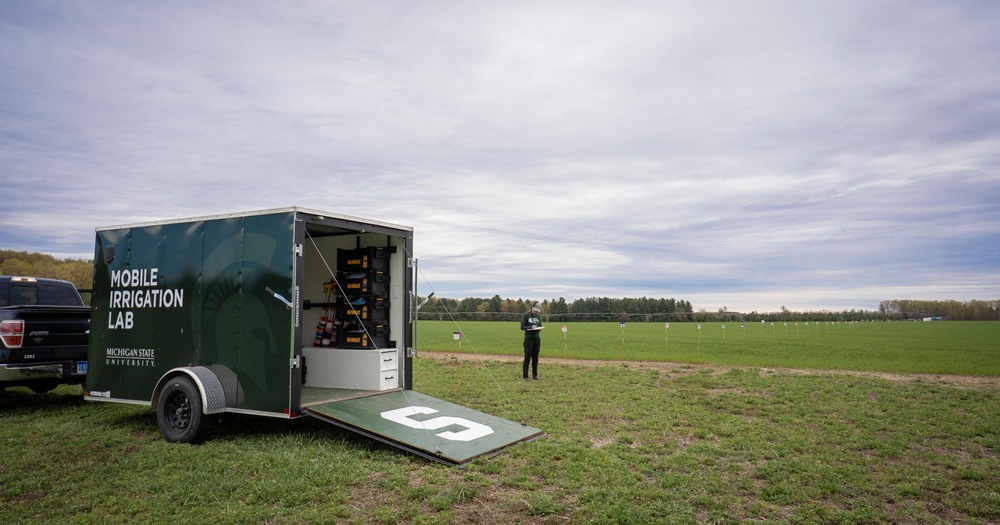
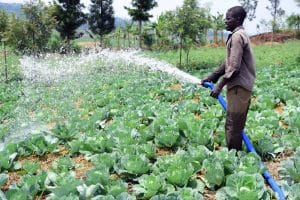
EAST LANSING, Mich. — July 2026 was among the driest on record across many parts of Michigan, according to National Weather Service data, putting the state’s agriculture sector in a precarious position. Plant growth is severely hindered by these conditions, forcing growers to rely on irrigation to supplement the lacking precipitation.
When irrigation is desperately needed, growers seek to use water resources as precisely as possible, said Younsuk Dong, an assistant professor and irrigation specialist in the Michigan State University Department of Biosystems and Agricultural Engineering.
Dong is an expert in affordable and accessible efficient irrigation technology that’s applicable to numerous crops. Without this precision, farmers can experience cascading negative effects.
Not enough water results in depleted soil moisture and stunted plant development. Too much can heighten disease pressure while saturating the soil, which leads to nutrient runoff and money lost. Either scenario hurts farmers’ bottom lines, presenting a difficult situation for businesses that operate on thin margins.
“Many farmers in Michigan recognize the value of supplementing rainfall with irrigation to increase profitability and protect against seasonal weather challenges,” said Laura Campbell, senior conservation and regulatory relations specialist with Michigan Farm Bureau. “Our farmgate value for irrigated land shows this. While we irrigate less than 10% of Michigan agricultural land, it produces nearly 40% of our farmgate value.
“Irrigation equipment and the power to run it are big investments, so MSU’s work to help farmers make the most of their irrigation is very important even in a state with less challenge in water availability than states in the western U.S. Additionally, because we are surrounded by the Great Lakes, farmers have important considerations to protect water quality as well as their own pockets by not wasting inputs like pesticides or fertilizers, and efficient irrigation helps with that.”
Alongside a variety of other tools, Dong and his team pioneered the Low-Cost Monitoring System (LOCOMOS), which positions in-field sensors to monitor soil moisture, leaf wetness and several other environmental conditions. Software then analyzes the data to generate precise recommendations that are delivered to growers via a mobile app.
About The Author


SUBSCRIBE TO OUR NEWSLETTER