Bridging Science and Policy: Rwanda Strengthens Drive for Climate Resilience
KIGALI, Rwanda — Rwanda is strengthening efforts to translate climate research into practical policies and actions as scientists, policymakers, development partners and other stakeholders seek to improve the country’s ability to anticipate and respond to climate-related risks.
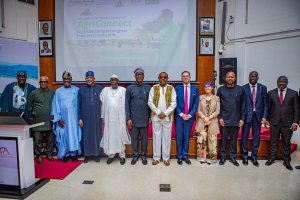
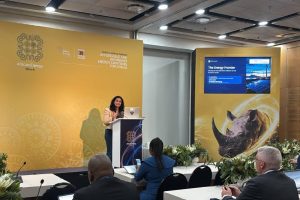
More than 800 registered delegates from government, academia, civil society and international development organizations participated in the 2nd Rwanda Climate Science Symposium, held at the M Hotel in Kigali under the theme “Where Rwanda’s Climate Research Meets Policy.”
The symposium was co-organized by the Ministry of Environment and German Development Cooperation (GIZ) and focused on strengthening the link between scientific evidence and national decision-making.
At the centre of the discussions was a question increasingly important for Rwanda: how can detailed climate information be translated into practical decisions that protect communities, strengthen economic sectors and support long-term development?
Rwanda faces different climate risks
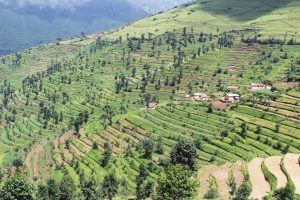
Rwanda’s varied topography means that climate impacts differ considerably across the country.
The eastern region faces prolonged dry periods and water scarcity, while mountainous areas in the west are more exposed to intense rainfall, flooding and landslides.
Fidel Bingwa, Permanent Secretary at the Ministry of Environment, highlighted the importance of understanding these localized climate patterns.
Climate projections discussed at the symposium indicate that Rwanda’s overall rainfall volume over the next 20 to 25 years may not change significantly. However, the intensity of rainfall events and the duration of dry periods are expected to change, creating significant implications for planning.
For policymakers, the challenge is therefore not simply to know how much rain Rwanda receives, but to understand when, where and with what intensity climate events may occur.
Participants emphasized that translating complex scientific projections into accessible information will be essential for planning in agriculture, infrastructure, health and other sectors.
Rwanda’s climate response is guided by frameworks including its Nationally Determined Contributions (NDCs), National Adaptation Plan (NAP), Green Growth and Climate Resilience Strategy (GGCRS) and Vision 2050.
Climate intelligence for agriculture
Agriculture was one of the key sectors discussed during the symposium.
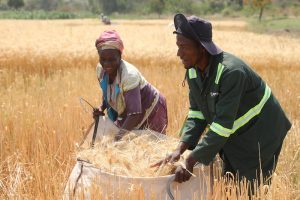
Representing the Food and Agriculture Organization (FAO), Country Representative Muhammed Abdiker stressed the importance of ensuring that climate intelligence reaches smallholder farmers and supports decisions on what, when and how to plant and harvest.
Climate-related risks can affect agricultural production before harvest by damaging crops and livestock, while post-harvest impacts can contribute to quantitative and nutritional losses in important food commodities such as maize, rice, potatoes and tomatoes.
Better access to localized climate information can therefore support farmers in adapting production decisions to changing conditions.
Climate data increasingly integrated into health planning
Climate change is also closely linked to public health risks.
Jean Marie Vianney, Permanent Secretary at the Ministry of Health, explained how climate information is being captured through Internet of Things (IoT) sensors and integrated into Rwanda’s National Health Intelligence Center.
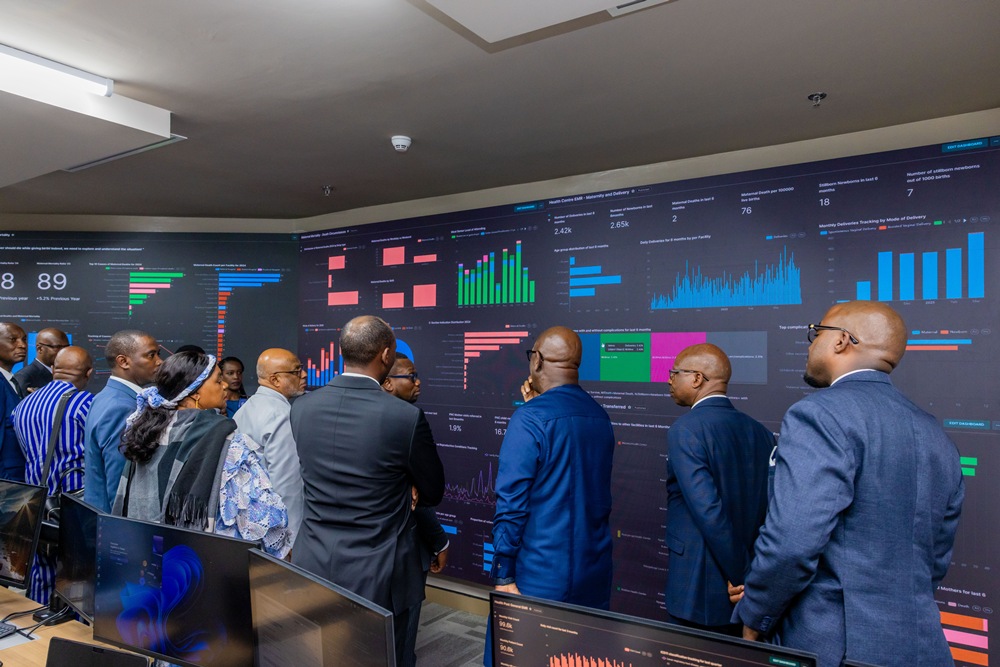
Early-warning systems can help monitor climate-sensitive disease risks and support preparedness for diseases including malaria, flu, pneumonia and waterborne illnesses.
The approach seeks to strengthen the ability of the health sector to anticipate risks and inform budgeting and resource allocation before outbreaks or other climate-related health emergencies occur.
Rwanda turns to space technology and high-resolution modelling
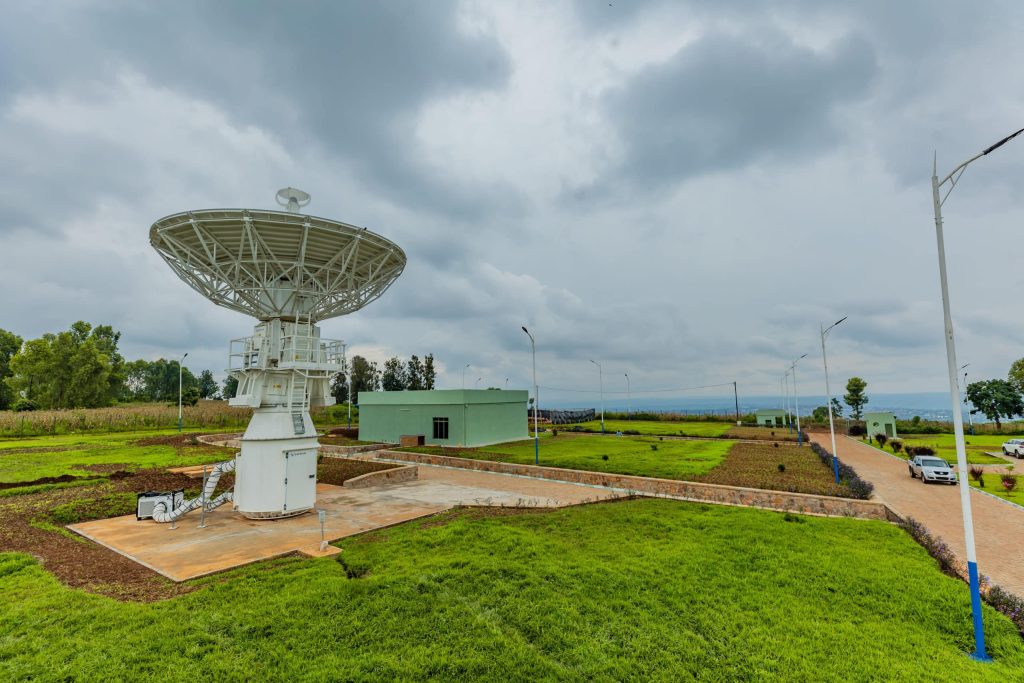
The Rwanda Space Agency (RSA) is playing a growing role in climate observation and data generation.
Dr. Didier Nkurunziza of RSA explained that climate monitoring extends beyond conventional indicators such as temperature and rainfall. It includes the 55 Essential Climate Variables (ECVs) recognized by the World Meteorological Organization, covering areas such as soil moisture, vegetation and greenhouse gases.
RSA operates specialized instruments including the Picarro, which tracks multiple greenhouse gases, and the Medusa, described during the symposium as the only instrument of its kind deployed in Africa for measuring more than 50 ozone-depleting substances and halocarbons in the stratosphere.
The agency also runs downscaled Numerical Weather Prediction models using the Weather Research and Forecasting (WRF) system at a 2 km × 2 km spatial resolution, providing hourly modelling across Rwanda’s 416 administrative sectors.
Such high-resolution modelling can support localized monitoring of thunderstorms, drought risks through vegetation indicators, urban heat effects in Kigali and other climate-related risks.
Building a national climate data ecosystem
The symposium also examined how institutions can share and use climate information more effectively.
Roger Mizero, Chief Technology Officer at the Rwanda Information Society Authority (RISA), outlined the implementation of Rwanda’s National Data Sharing Policy and the development of a decentralized “data mesh” architecture.
The system is intended to facilitate governed data exchange between sectoral data hubs while supporting greater access to information for researchers.
Reducing data silos could allow different government institutions and researchers to combine information when assessing complex climate risks and developing policies.
Regional cooperation remains critical
Participants also stressed that climate-related risks do not stop at national borders.
Rwanda participates in regional mechanisms including the Nile Basin Initiative (NBI), Greater Horn of Africa Climate Outlook Forum (GHACOF) and the World Meteorological Organization regional network.
The country is also involved in the Smart Africa Sadex cross-border data exchange pilot.
Such regional cooperation is particularly relevant for challenges such as flooding, weather extremes and transboundary livestock and environmental risks.
Rwanda-Germany partnership enters new phase
The symposium also highlighted Rwanda’s cooperation with European development partners.
Supported by German Development Cooperation through GIZ, the partnership is entering a new phase under PROCEED — Promotion of Climate Protection and Resilient Economic Development in Rwanda.
Of the 112 peer-reviewed research abstracts presented during the symposium, 51 originated from partner institutions elsewhere in Africa, reflecting the regional dimension of climate research and knowledge exchange.
Nana Teiba Chinbauh, Deputy Resident Representative of UNDP, highlighted the constraints facing global climate adaptation finance.
She emphasized the importance of strong, sector-specific evidence to demonstrate the costs of climate inaction and strengthen the case for climate financing and investment.
Making climate science usable
While Rwanda continues to expand its climate research and data infrastructure, participants stressed that generating information is only part of the challenge.
The next step is ensuring that scientific findings reach policymakers, communities, businesses and other users in forms they can understand and apply.
Prof. Cecil Naphtaly Moro Ouma of the AIMS Research & Innovation Centre emphasized the importance of communicating climate science in ways that make complex information meaningful to society.
Climate research can have applications well beyond agriculture and disaster management, including urban planning, building design, clean cooking and other areas of economic and social development.
With Africa’s young population expected to continue growing significantly in the coming decades, participants also highlighted the importance of engaging younger generations in climate knowledge and solutions.
The discussions in Kigali underscored a central message: climate resilience depends not only on producing better scientific data, but on turning that data into decisions, investments and actions.
For Rwanda, bringing researchers and policymakers closer together is becoming an important part of that process—helping connect climate science with the decisions that shape the country’s development and resilience.
About The Author


SUBSCRIBE TO OUR NEWSLETTER