94 Countries make 283 pledges to end violence against children
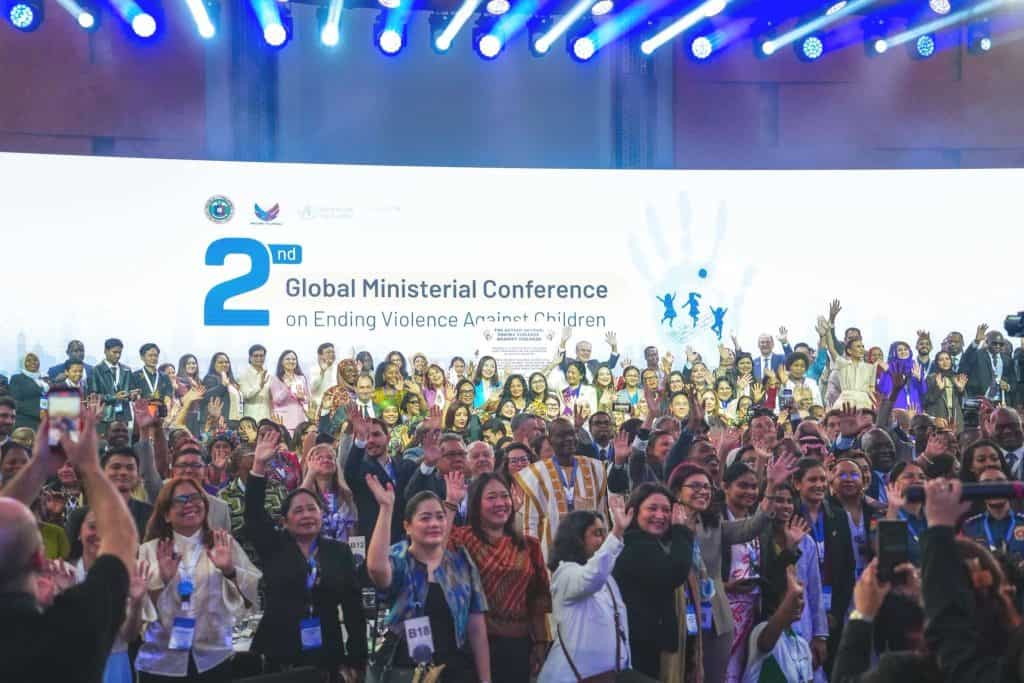
Governments from 94 countries have made 283 new commitments to prevent violence against children, including financial investments, legal reforms and national targets aimed at protecting millions of children.
The commitments were announced during the Second Global Ministerial Conference on Ending Violence Against Children, held in Manila, Philippines, on November 18 and 19, 2026.
According to the United Nations Children’s Fund (UNICEF), the pledges are intended to strengthen efforts to protect children from violence in their homes, schools, communities and online environments.
The conference brought together government ministers, children, young people, survivors, civil society organisations and international partners to discuss ways of accelerating prevention and improving child protection systems.
Among the financial commitments, Tanzania outlined plans to invest US$190 million in child protection interventions by 2029, while Portugal identified €92.9 million in government budget funding for family support.
Chile committed approximately US$11.3 million to protect more than 3.4 million children from school violence and cyberbullying, while Nepal pledged to reduce violence against children in and around schools by at least 50 per cent by 2030.
Other commitments include Mexico’s pledge to fully regulate the digital environment by 2030 and Côte d’Ivoire’s target of reducing violence against children by 30 per cent by the same year.
In Africa, Burundi pledged to ban corporal punishment by 2028, adding to the range of measures governments are introducing to strengthen children’s protection.
A continuing global challenge
Despite the new commitments, violence remains a major threat to children’s safety and development.
UNICEF estimates that more than 1.6 billion children experience violent discipline at home every year, equivalent to approximately two in every three children worldwide.
This includes physical punishment and psychological aggression by parents or other caregivers.
Violence also increasingly affects children through digital platforms. Online abuse, exploitation and other forms of technology-facilitated violence have created additional challenges for governments and child protection organisations.
The consequences can extend throughout a person’s life, affecting physical and mental health, education, wellbeing and development.
UNICEF says that conflict, displacement, climate-related emergencies and rapidly changing digital technologies, including artificial intelligence, are creating additional risks for children.
Turning commitments into action
The Manila conference builds on the first Global Ministerial Conference on Ending Violence Against Children, held in Bogotá, Colombia, in November 2024, where 109 Member States made more than 395 pledges to prevent and respond to violence against children.
The latest meeting provided an opportunity to assess progress, strengthen accountability and encourage governments to increase financial support for child protection programmes.
UNICEF Deputy Executive Director Ted Chaiban emphasised that preventing violence requires governments to make child protection a priority in national budgets, including maintaining investments when public finances come under pressure.
Since 2022, UNICEF has reached 60.2 million parents and caregivers with interventions designed to prevent violence and support positive parenting.
The organisation has also supported responses for 19.9 million children who experienced violence across 112 countries. In addition, legal frameworks prohibiting violent discipline have provided enhanced protection for more than 40 million children.
As the 2030 deadline for achieving the Sustainable Development Goals approaches, UNICEF is calling for increased domestic and international investment, stronger national child protection systems and coordinated action across health, education, justice and social welfare sectors.
Sustainable Development Goal 16.2 specifically calls for ending abuse, exploitation, trafficking and all forms of violence against and torture of children.
UNICEF says governments must now translate their commitments into adequately funded programmes and stronger protection services to ensure children can grow up free from violence.
About The Author


SUBSCRIBE TO OUR NEWSLETTER