Beyond the OIF: Louise Mushikiwabo’s Next Chapter in African Leadership and Development

Louise Mushikiwabo has a strong profile for continued high-impact roles after her OIF tenure ends around late 2027, particularly in multilateral diplomacy, African development and education initiatives, governance-related work, and influence platforms focused on results-driven programs for youth, women, digital skills, and multilingual education.
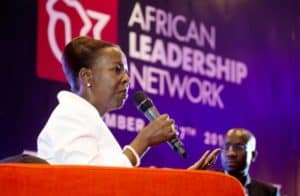
She (born 22 May 1961) became the first African woman Secretary-General of the Organisation Internationale de la Francophonie (OIF) in 2019 after serving as Rwanda’s Minister of Foreign Affairs and Cooperation (2009–2018) and earlier as Minister of Information. She was re-elected in 2022. At the November 2026 Phnom Penh summit, member states failed to reach consensus on a successor amid competing candidacies and regional tensions. They extended her mandate by one year (until roughly late 2027) so she could lead institutional reforms, after which she will step down permanently; Rwanda agreed not to field a candidate in the subsequent election.
Her tenure emphasized streamlining activities to focus on measurable results, financial transparency and annual external audits, and programs such as women’s economic support (“La Francophonie avec Elles,” reaching nearly 100,000 women across dozens of countries), youth digital and vocational skills (D-CLIC and related efforts), economic missions, and attention to AI and digital governance. The organization reported mobilizing hundreds of millions of euros with high execution rates.
Contributions to education and governance capacity
Mushikiwabo began her career as a secondary school teacher in Rwanda after graduating with a bachelor’s degree in English from the University of Rwanda (then National University of Rwanda) in 1984, before further studies in languages and interpretation. This early experience grounds a long-standing interest in education.
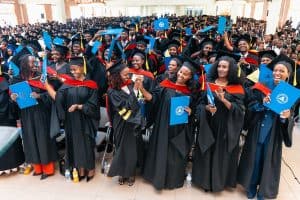
Through the OIF she has advanced practical education initiatives across Francophone Africa, including Rwanda. These include the ELAN program supporting mother-tongue-based multilingual education (reaching millions of learners and training hundreds of thousands of teachers), digital skills training for young people, and broader efforts to expand quality education, teacher mobility, and skills linked to employment. She has also engaged publicly on girls’ education and youth empowerment, including events linked to Rwandan initiatives such as those of the Imbuto Foundation. These efforts align with priorities of building human capital and practical skills relevant to Africa’s development needs.
Her background in diplomacy, multilateral reform, and education programming also positions her well relative to institutions focused on African public policy and leadership training, such as the African School of Governance (ASG) in Kigali. While public records do not detail a formal operational role for her at ASG, her experience reforming an international organization, promoting results-oriented programs, and supporting education and youth skills complements the kind of governance and leadership capacity-building ASG advances.
Likely or plausible post-OIF paths
Given her experience, networks across OIF members, trilingual skills (Kinyarwanda, French, English), prior work at the African Development Bank, and track record in program delivery:
- Multilateral or international organization roles. Positions at the African Union, UN agencies focused on development, education, or Africa, or advisory work with development banks and other cooperation bodies. Her emphasis on results, governance, and African agency fits reform-oriented multilateral work.
- Education, skills, and governance initiatives. Leadership or advisory roles in institutions or programs advancing public policy education, digital skills, multilingual education, or women’s and youth economic empowerment across Africa. This builds directly on OIF programs and her early teaching experience.
- Think tanks, academia, boards, and public influence. Fellowships, chairs, or board roles in development, governance, or education-focused organizations; the speaking circuit on diplomacy, education, digital inclusion, and multilateral reform.
- Philanthropy, foundations, or scaled development work. Leading or supporting initiatives that expand successful models around youth skills, women’s inclusion, or education access in Africa.
- Writing and commentary. Further work building on her earlier book Rwanda Means the Universe, or analysis of institutional reform, education policy, and African agency in multilateral settings.
At 65–66 in 2027 she has repeatedly indicated she retains energy and commitment to service. Opportunities will favor environments that value practical delivery, African leadership in education and governance, and her specific expertise in results-focused multilateralism and skills development.
In short, Mushikiwabo leaves the OIF with a tangible reformist and programmatic track record, including concrete advances in education and youth skills that benefit Rwanda and the wider Francophone space. The most natural next chapters lie in senior roles advancing African education, governance capacity, and development initiatives—areas where her experience can continue delivering measurable impact.
About The Author


SUBSCRIBE TO OUR NEWSLETTER