Beyond Fertilizer: Solidaridad Southern Africa Sets Out 2026–2030 Vision for Smallholder Transformation
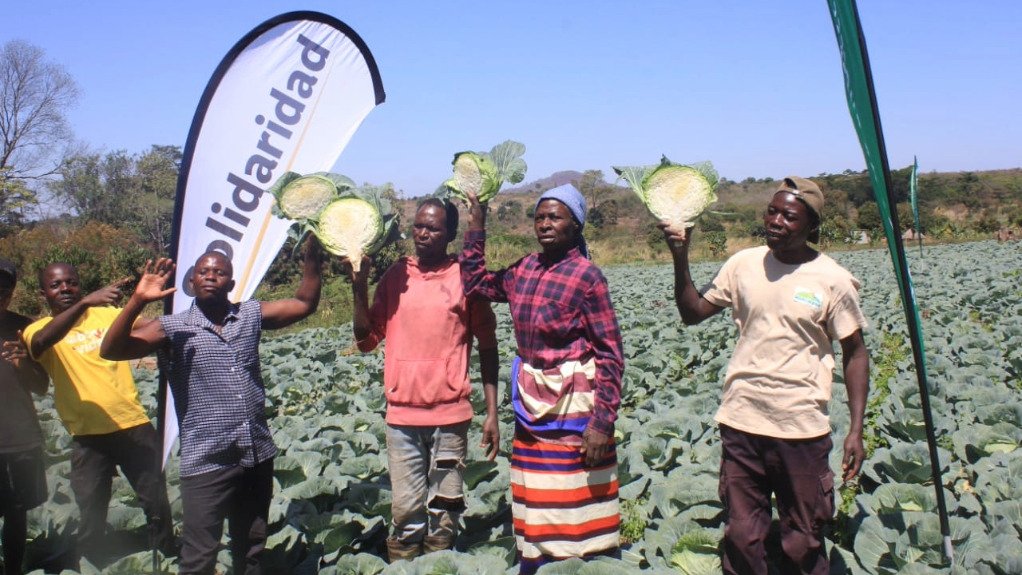
The countdown to 2030 is placing renewed pressure on agricultural development programmes across Southern Africa, where thousands of smallholder farmers continue to face challenges linked to poverty, limited resources, climate volatility and weak market access.
For Solidaridad Southern Africa, the next five years will focus on helping approximately 13,000 smallholder farmers move beyond subsistence production and toward more stable, commercially viable agricultural enterprises.
At the centre of this ambition is Talentus Mthunzi, Head of Program Quality and Impact at Solidaridad Southern Africa, who is helping lead the organisation’s 2026–2030 strategic shift in what he describes as an increasingly “resource-deficient environment.”
The objective, he said, is not simply to help farmers survive, but to support their integration into a more predictable and commercially oriented agricultural economy.
Bridging the Information Gap Through Farmer Profiling
Mthunzi identified limited agricultural data as one of the major weaknesses affecting development interventions.
For years, he said, many agricultural programmes have been designed around assumptions rather than detailed information about farmers’ circumstances, technical capacity and ambitions.
Solidaridad Southern Africa’s 2026–2030 multi-annual strategic plan therefore places farmer profiling at the centre of its approach.
The profiling process is intended to identify farmers’ needs, capacity gaps and aspirations, while helping the organisation determine the most appropriate support for different groups.
Mthunzi referred to this approach as a “Typology of Transformation,” which categorises farmers into three broad groups:
- Subsistence farmers, whose main focus is household food security;
- Semi-commercial farmers, who produce surpluses but require stronger market linkages; and
- Potential commercial farmers, who have the capacity and ambition to operate as agricultural entrepreneurs.
According to Mthunzi, the distinction is important because farmers at different stages of development require different forms of assistance.
A package designed for a subsistence farmer, he said, may not be suitable for a farmer who is ready to expand commercial production.
Without accurate profiling, interventions risk being poorly targeted, ineffective and costly.
Moving Beyond Fertilizer as a Standalone Solution
Soil health is another central concern in Solidaridad Southern Africa’s strategy.
While fertilizer remains an important agricultural input, Mthunzi said it should not be treated as a standalone solution to declining productivity.
He argued that fertilizer use must be guided by scientific information about soil nutrition and quality.
“What we know at this particular point is that the soil quality within sub-Saharan Africa is depleting at a very fast rate,” he said.
Solidaridad’s proposed approach combines soil analysis, farmer training and the use of both organic materials and organic manure.
The aim is to ensure that farmers understand the specific condition of their soils and apply the nutrients and crops most appropriate to their local circumstances.
Rather than encouraging farmers to apply inputs without sufficient information, the strategy seeks to promote evidence-based decisions that can improve productivity and protect soil quality over time.
The approach also reflects a broader effort to move away from single-input interventions and toward integrated agricultural support packages.
Linking Scientific Research to Farmers’ Fields
Solidaridad Southern Africa acknowledges that it is not a scientific research organisation.
Instead, Mthunzi said, its role is to work with scientific and technical partners and translate research findings into practical solutions that farmers can use.
One of its key partnerships is with the International Crops Research Institute for the Semi-Arid Tropics, known as ICRISAT.
While ICRISAT contributes scientific research and technical knowledge, Solidaridad provides what Mthunzi described as the “boots and brains on the ground.”
This partnership is intended to help move scientific findings from laboratories and research institutions into farming communities.
Solidaridad’s regional network covers South Africa, Mozambique, Zambia and Malawi. In Zimbabwe, the organisation works through a partnership with International Livestock Research Institute (ILRI), with a focus on livestock-related activities.
Through its professional teams, digital tools and collaboration with government extension services, Solidaridad aims to scale practical agricultural solutions across the region.
The partnership model is designed to ensure that scientific knowledge is not confined to research institutions, but is converted into tools and advice that farmers can apply in their daily operations.
Digitalisation Presents Both Opportunity and Risk
The growing use of artificial intelligence and digital advisory tools presents both opportunities and risks for smallholder farmers.
Mthunzi described digitalisation as a “double-edged sword.”
On one hand, digital technologies can improve access to information, technical advice and markets. On the other, farmers without reliable access to digital tools risk being excluded from emerging economic opportunities.
“Those that do not have access to these digital technologies are going to be left behind from participating and benefiting from these economies,” he said. “And agriculture is no exception.”
To address this challenge, Solidaridad is developing a Digitized Lead Farmer Model.
The model is expected to strengthen digital infrastructure and expand access to advisory services through lead farmers and local agricultural networks.
It will also help connect scientific information from partners such as ICRISAT with practical decisions made by farmers in the field.
The approach is intended to make digital and scientific knowledge more accessible, particularly in communities where direct access to technical services remains limited.
By using lead farmers as channels for information and support, Solidaridad hopes to reduce the digital divide while improving the reach of agricultural advisory services.
Making Agriculture More Predictable
Climate change and resource shortages have made farming increasingly uncertain for smallholder producers.
Mthunzi said farmers are operating in an unpredictable business environment, making agriculture a high-risk activity.
“Small holder farmers are operating in an unpredictable business and any unpredictable business is very risky,” he said.
Solidaridad’s 2026–2030 strategy therefore places strong emphasis on infrastructure and systems that can make agricultural production more reliable.
The organisation’s approach is based on the understanding that farmers cannot become successful agricultural entrepreneurs without access to dependable water, roads, storage, processing and markets.
Infrastructure as a Foundation for Smallholder Success
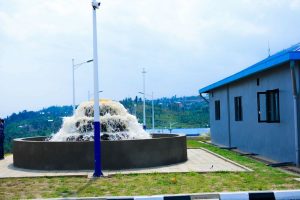
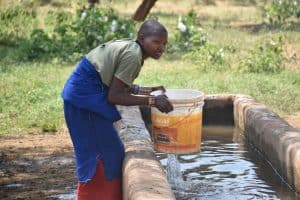
Water infrastructure is among the most urgent priorities.
Sustainable dams and boreholes could help farmers manage drought and improve water availability, but Mthunzi cautioned that groundwater resources must be carefully monitored.
He said understanding underground water reserves is essential to ensure that short-term drought responses do not create long-term resource depletion.
Road infrastructure is also viewed as critical to improving market access and reducing the cost of delivering agricultural services to remote communities.
At the same time, stronger post-harvest systems could help reduce food losses and protect the value of agricultural production.
The strategic priorities include:
Water Infrastructure
Dams and boreholes can improve water availability and help farmers manage drought conditions. However, groundwater extraction must be monitored to avoid depletion and ensure long-term sustainability.
Rural Road Networks
Better roads can connect farmers to markets, input suppliers, extension services and other providers. They can also reduce the cost and difficulty of delivering agricultural support to remote communities.
Post-Harvest Management
Cold storage facilities can help protect horticultural and dairy products from spoilage. Warehouses and grain silos can provide safer and more reliable storage for agricultural commodities.
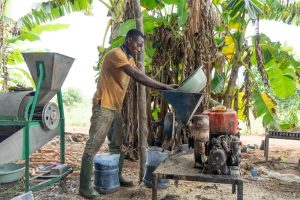
Processing Facilities
Local processing units can support value addition, create rural employment and allow communities to retain a greater share of the value generated within agricultural value chains.
Creating Opportunities for Youth
Solidaridad’s infrastructure-led approach also places emphasis on opportunities for young people.
Processing facilities, transport services, equipment maintenance, digital advisory services and other activities can create new roles for youth within rural value chains.
Rather than limiting young people’s participation to farm production, the strategy seeks to open opportunities across the wider agricultural economy.
This could include roles as service providers, technicians, processors, logistics operators and digital support agents.
Such opportunities are expected to strengthen rural economies while helping address some of the structural barriers that limit agricultural growth.
A Full-Package Approach to Commercial Success
For Solidaridad Southern Africa, the transition from subsistence farming to entrepreneurship cannot be achieved through isolated interventions.
Farmers need a combination of services, infrastructure, technical advice, market access and financial opportunities.
Improved roads can make it easier to provide services and transport produce. Storage facilities can reduce post-harvest losses. Processing units can help rural communities retain more value from their agricultural products.
Scientific partnerships can improve the quality of production decisions, while farmer profiling can help ensure that support is matched to each farmer’s level of development.
Digital tools can expand access to information, but they must be introduced in ways that do not exclude farmers with limited connectivity or digital skills.
The broader objective is to transform farming from a highly vulnerable activity into a more stable and commercially viable business.
Solidaridad’s vision for 2026–2030 is built around the belief that smallholder farmers should not be treated as a liability within the agricultural economy.
Instead, with the right data, scientific support, infrastructure and market opportunities, they can become central participants in the future of agriculture across Southern Africa.
About The Author


SUBSCRIBE TO OUR NEWSLETTER