Rwanda Accuses France of Yielding to DRC Pressure as Francophonie Leadership Election Is Postponed

Olivier-Nduhungirehe
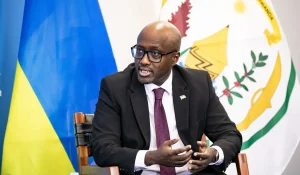
Rwandan Foreign Minister Olivier Nduhungirehe says political pressure from Kinshasa and Paris undermined Louise Mushikiwabo’s bid for a third term, raising questions about the independence of the International Organisation of La Francophonie.
Rwanda has accused France of giving in to political pressure from the Democratic Republic of Congo (DRC) during negotiations over the leadership of the International Organisation of La Francophonie (OIF), following the decision to postpone the election of its Secretary-General by one year.
In an interview published by French magazine Le Point Afrique on November 17, Rwanda’s Minister of Foreign Affairs and International Cooperation, Olivier Nduhungirehe, described the postponement as the outcome of intense political negotiations, alleging that France had exerted pressure to prevent the immediate re-election of Rwanda’s candidate, Louise Mushikiwabo.
Nduhungirehe argued that the dispute exposed deeper questions about the influence of powerful member states over the Francophonie, insisting that the organisation should not operate under the political control of any single country.
“The OIF is not Françafrique,” he said, rejecting what he described as attempts by France to impose its preferred decisions on the organisation under the cover of collective consensus.
Rwanda challenges the arguments behind the postponement
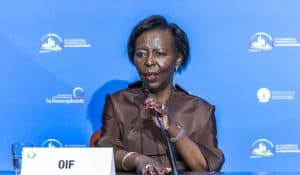
Mushikiwabo, who has served as OIF Secretary-General for two consecutive terms, was seeking a third term. However, the election was postponed for one year following disagreements among member states during the summit in Phnom Penh, Cambodia.
According to Nduhungirehe, the discussions centred on whether the Secretary-General should be elected through consensus or, where consensus could not be reached, by a simple majority.
He dismissed arguments that a candidate elected by a simple majority would lack sufficient legitimacy, noting that majority voting is an established practice in many countries, including the DRC.
The minister maintained that these arguments were used to prevent Mushikiwabo’s re-election despite what he described as strong support for her candidacy and recognition of her record at the organisation.
He said her candidacy had been known for approximately a year and that concerns about a third term or the voting procedure had not been raised by France or other member states during the earlier stages of the process.
Kigali accuses Paris of exerting pressure
The Rwandan minister alleged that tensions intensified shortly before the summit, following diplomatic engagements involving French Foreign Minister Jean-Noël Barrot in Kinshasa and Congolese Foreign Minister Thérèse Kayikwamba Wagner in Paris.
He claimed that Congolese authorities threatened to withdraw from the Francophonie, prompting France to increase pressure during the negotiations.
Nduhungirehe further alleged that French President Emmanuel Macron sent a letter to Rwandan President Paul Kagame asking him to reach an understanding with Congolese President Félix Tshisekedi within two days or withdraw their respective candidates.
He described the letter as disrespectful to the Rwandan Head of State.
The minister nevertheless said Rwanda did not consider France’s position a betrayal, arguing that Paris was free to support whichever candidate it preferred.
He noted that France had initially supported Romanian candidate Dacian Cioloș before indicating support for Mauritanian candidate Coumba Bâ, a move he said created confusion during the final stages of the contest.
A compromise extends Mushikiwabo’s mandate
Nduhungirehe said President Kagame, together with the presidents of Senegal, Togo and Benin, proposed a compromise under which Mushikiwabo’s mandate would be extended by two years, with Rwanda committing not to present another candidate until the next summit scheduled for Ottawa in 2028.
However, some African countries proposed reducing the extension to one year, a compromise that was eventually accepted by the DRC.
Under the arrangement, Mushikiwabo is expected to continue serving for another 12 months while undertaking reforms, including changes to the organisation’s electoral procedures.
Nduhungirehe described her previous eight years in office as successful, saying her administration had introduced reforms recognised by African member states.
Rwanda rejects linking the OIF election to the conflict in eastern DRC
The dispute over the leadership election has unfolded against the backdrop of the conflict in eastern DRC, where Kinshasa has repeatedly accused Rwanda of supporting the M23 armed group, an allegation Kigali has denied.
The Congolese government has linked its opposition to Mushikiwabo’s third term to the security crisis and its concerns about Rwanda’s role in the conflict.
Nduhungirehe rejected this connection, arguing that security disagreements between the two countries should be addressed through the mechanisms established under the Washington agreements rather than brought into the Francophonie leadership contest.
He said the agreements provide for security verification and follow-up mechanisms through which the two countries’ delegations meet under United States mediation.
According to the minister, the DRC was using international organisations to exert pressure against Rwanda’s candidate because she is Rwandan.
He also rejected suggestions that Rwanda had deprived Africa of an opportunity to retain leadership of a major international institution.
Instead, he accused Kinshasa of supporting Romanian candidate Dacian Cioloș while opposing the two African candidates, Mushikiwabo and Mauritania’s Coumba Bâ.
Rwanda questions the future independence of the Francophonie
Beyond the immediate electoral dispute, Nduhungirehe’s remarks point to a wider disagreement over the role of France within the Francophonie.
He argued that France had historically exercised considerable influence over the appointment of the organisation’s Secretary-General, citing the 2014 selection of Canada’s Michaëlle Jean during François Hollande’s presidency.
According to him, Rwanda wants the organisation to move away from a system in which one powerful member state can influence decisions presented as collective agreements.
He said Mushikiwabo would implement the requested electoral reforms but questioned whether all member states, including France, would respect the rules adopted in the next electoral cycle.
The debate therefore extends beyond the fate of one candidate. It raises questions about the balance of power within an organisation whose membership includes countries from Africa, Europe, the Caribbean and other regions, and whose stated mission is to promote cooperation among French-speaking nations.
Nduhungirehe also addresses Rwanda’s migrant reception agreement
In the same interview, the Rwandan foreign minister addressed the agreement involving Rwanda and five European Union member states concerning the reception of migrants.
He rejected the expression “Rwanda Solution”, arguing that the wording could carry negative historical connotations and should not be associated with the country’s name.
Nduhungirehe said the agreement was intended to provide migrants with another opportunity, either by facilitating their voluntary return to their countries of origin or by supporting their integration into Rwandan society through specific economic projects.
He compared the initiative to Rwanda’s previous efforts to receive African migrants stranded in Libya, as well as people from Afghanistan and Sudan.
The minister said Rwanda had structures to accommodate the migrants and that the financial component of the agreement would support economic integration projects and activities designed to assist them.
He also maintained that the previous arrangement with the United Kingdom ended because of a political change following the Labour Party’s return to power in July 2024, rather than legal or technical difficulties.
A diplomatic test for the Francophonie
The postponement of the OIF leadership election has exposed competing political interests among member states and renewed debate about the organisation’s decision-making processes.
For Rwanda, the central issue is not only Mushikiwabo’s political future but also whether the Francophonie can operate independently of the influence of its most powerful members.
The reforms expected during the coming year may therefore become an important test of whether the organisation can establish electoral rules that all its members are prepared to respect.
About The Author


SUBSCRIBE TO OUR NEWSLETTER