How Rwanda is positioning itself for a higher-value carbon market
Rwanda is positioning the upcoming Carbon Markets Africa Summit as an opportunity to push Africa’s carbon market beyond project development and toward higher-value transactions that can generate more financing for climate action and local communities.
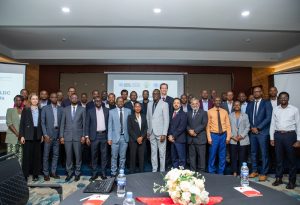
The Carbon Markets Africa Summit (CMAS 2026), scheduled for October 13–15 in Kigali, will bring together governments, investors, project developers and other stakeholders as African carbon markets increasingly move from establishing regulatory frameworks to attracting investment and executing transactions.

Rwanda’s Minister of Environment, Dr. Bernadette Arakwiye, said hosting the summit would give the country a platform to help shape discussions about how carbon markets can work for African economies.
“We want to really have that opportunity to understand what does this mean for Rwandans? What does it mean for Africans? And how can Africa shape this carbon market so that the benefit can also stay in the continent?” she said.
The Minister said the summit should ultimately produce clearer pathways for collective action and help African countries better understand how the emerging market can contribute to their development priorities.
She added, “Rwanda wants the summit to help determine how carbon-market benefits can remain within Africa rather than simply financing projects whose economic value is captured elsewhere.”
The discussion comes as Rwanda seeks to expand its participation in a market that links emissions reductions and removals to private and public climate finance.
Faustin Munyazikwiye, Deputy Director-General of the Rwanda Environment Management Authority (REMA), said Rwanda has so far registered 29 carbon-market projects, covering sectors including land conservation, agriculture, forestry, electric mobility, waste management and renewable energy.
The projects are at different stages, including development, verification and sale of carbon credits, he said.
Munyazikwiye added that Rwanda has so far generated about $1.5 million from some of the carbon credits produced by these projects, with a portion going to government coffers.
Carbon credits are generally generated when projects demonstrate verified reductions or removals of greenhouse gas emissions. The credits can then be sold to buyers seeking to finance or account for emissions reductions.
According to Munyazikwiye, carbon-credit prices currently vary widely, with transactions ranging from about $14 to $45 per tonne, depending on factors including the project and quality of the credits.
But Rwanda says it does not want to compete mainly on volume.
Munyazikwiye the country is deliberately targeting what it considers higher-value credits, arguing that projects should account not only for emissions reductions but also for people and biodiversity.
“We are choosing to go for the high value ones. Instead of quantity, we are going for quality,” he said.
He said Rwanda’s approach also depends on monitoring projects after credits are sold to ensure that developers deliver what they committed to achieve.
“Whatever you have committed to do as a country, you’re going to do it,” he said, explaining that REMA’s carbon-market unit monitors projects on the ground.
The approach reflects a wider shift in African carbon markets. The official CMAS 2026 programme says global carbon markets are moving from rule-setting toward implementation, with Article 6 mechanisms and growing compliance-driven demand increasing attention on credible African projects and investment-ready opportunities.
For Rwanda, the challenge will be converting its growing project pipeline into larger flows of finance while maintaining environmental and social safeguards.
About The Author


SUBSCRIBE TO OUR NEWSLETTER