After nearly two decades in Rwanda, Congolese refugee family finds hope in Denmark
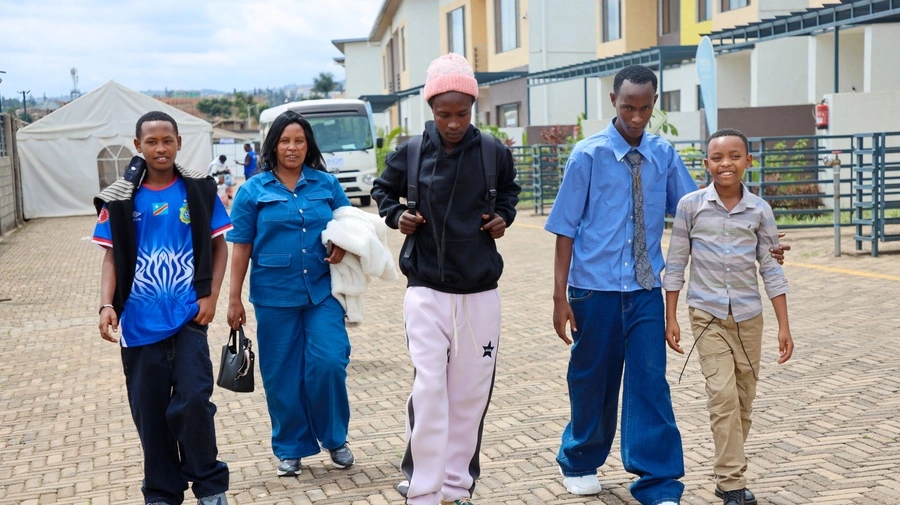
Esther and her children at IOM’s transit centre in Kigali before their departure to Denmark. (UNHCR)
For Esther and her five children, being told they would be resettled to Denmark in June 2026 marked the end of nearly two decades of uncertainty and the beginning of a new chapter.
The 44-year-old Congolese refugee had spent almost 20 years living in Nyabiheke Refugee Camp in eastern Rwanda after fleeing violence in Masisi, eastern Democratic Republic of Congo (DRC).
A day before leaving Rwanda, Esther described the news of her resettlement as a moment she had once thought impossible.
“When I was told that I would be resettled to Denmark, it was as if someone had told me that the gates of heaven had opened and I was invited to enter,” she said. “I felt that my life was about to change, that I would be able to find work and meet my needs. Today, I feel happy because I have hope for a better life.”
Esther now hopes to find employment in Denmark and provide her children with opportunities she struggled to access during their years as refugees.
She believes her children will be able to continue their education in better conditions and eventually find jobs that will allow them to support themselves.
Her third-born child, Enock, 20, is particularly excited about the possibilities ahead. Alongside continuing his studies, he hopes to develop his basketball skills and pursue his dream of becoming a professional player.
“I plan to continue my studies while also developing my basketball skills because I dream of becoming a professional basketball player one day,” he said.
Fleeing violence with her children
The family’s journey to Rwanda began after armed violence reached their village in Masisi.
Esther said her husband was killed by armed men, forcing her to flee with her children as attacks and the burning of homes continued.
“When armed men killed my husband, I ran away. They chased us, and wherever we went, they attacked and burned homes. We eventually decided to flee DR Congo and seek refuge in Rwanda,” she said.
She arrived in Rwanda carrying a three-month-old baby on her back and another young child on her shoulder, while her oldest child walked beside her.
She had left behind almost everything she knew.
But reaching safety did not end the family’s struggle.
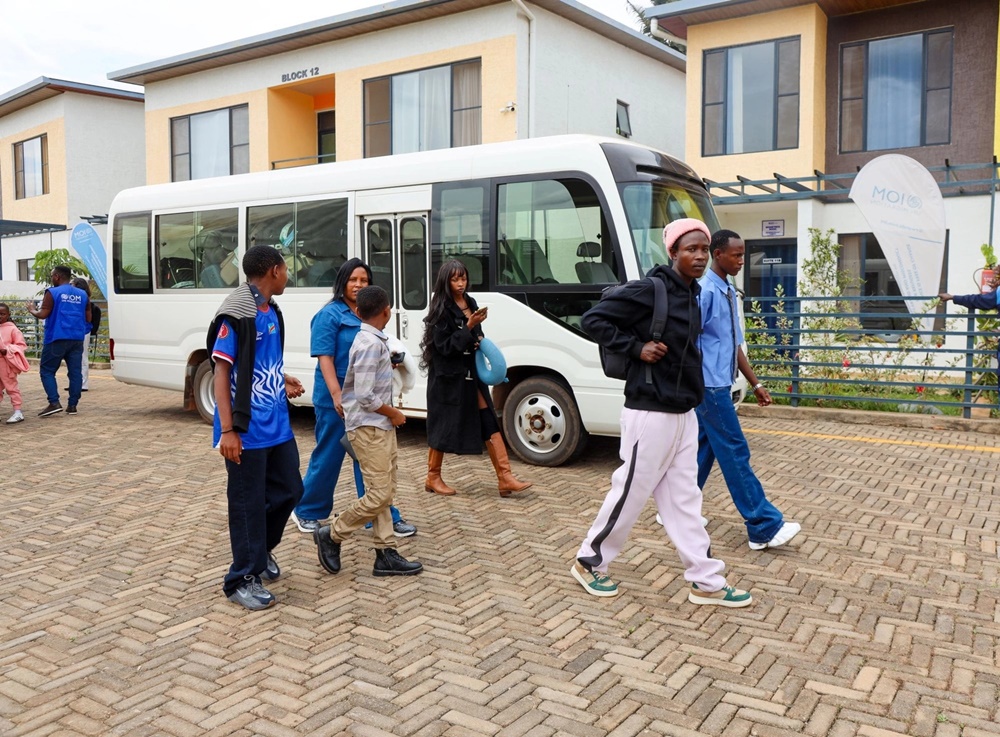
With no husband to help provide for the children, Esther faced the daily challenge of finding enough food. Humanitarian assistance helped, but she said it was not enough to meet all their needs.
“When I finally reached safety, finding food became the next challenge because I was solely responsible for providing for my children,” she recalled.
She remembers one period when her youngest child was about 10 months old and had just started walking.
“He would ask for food when there was none. He would cry for milk, and I had nothing to give him,” she said. “His older sibling became malnourished and even started losing hair because of poor nutrition. For a parent, nothing is more painful than seeing a child going hungry.”
To supplement the assistance they received, Esther worked on other people’s farms near the camp, earning small amounts to provide basic necessities for her children.
A chance to rebuild
Esther and her children are among refugees who have been resettled from Rwanda to third countries, with Denmark among the countries receiving refugees.
The UN Refugee Agency, UNHCR, works with countries that offer resettlement opportunities to vulnerable refugees, giving them a chance to rebuild their lives in new countries.
UNHCR also works with the International Organization for Migration (IOM) to organize travel arrangements, medical clearances and other logistics required for refugees departing for their new homes.
In 2026, UNHCR Rwanda is expected to submit 1,434 refugees for resettlement to Canada, Denmark, France, the Netherlands, Finland, Sweden and New Zealand.
Between January and late August 2026, more than 430 refugees living in Rwanda had already departed for resettlement in third countries, including Canada, Denmark, Finland, France and Sweden.
But the available opportunities remain far below the level of need.
The number of vulnerable refugees requiring resettlement continues to exceed the quotas available from countries participating in the programme. UNHCR has therefore continued to call on more countries to expand their resettlement programmes, either by increasing existing quotas or making them more flexible.
For Esther, however, one of those limited opportunities has finally reached her family.
As she prepared to leave Rwanda, she was already thinking about the work ahead in Denmark.
“I am ready to work in whatever job I can find,” she said.
Her greatest hopes, however, are for her children.
“My wish for my children is that they have opportunities, earn an income, build their future, and prosper,” she said. “If they ever return to their homeland, I do not want them to experience the difficult life that I have lived.”
About The Author

SUBSCRIBE TO OUR NEWSLETTER