10 years after Kigali Amendment, Rwanda pushes for more sustainable cooling solutions
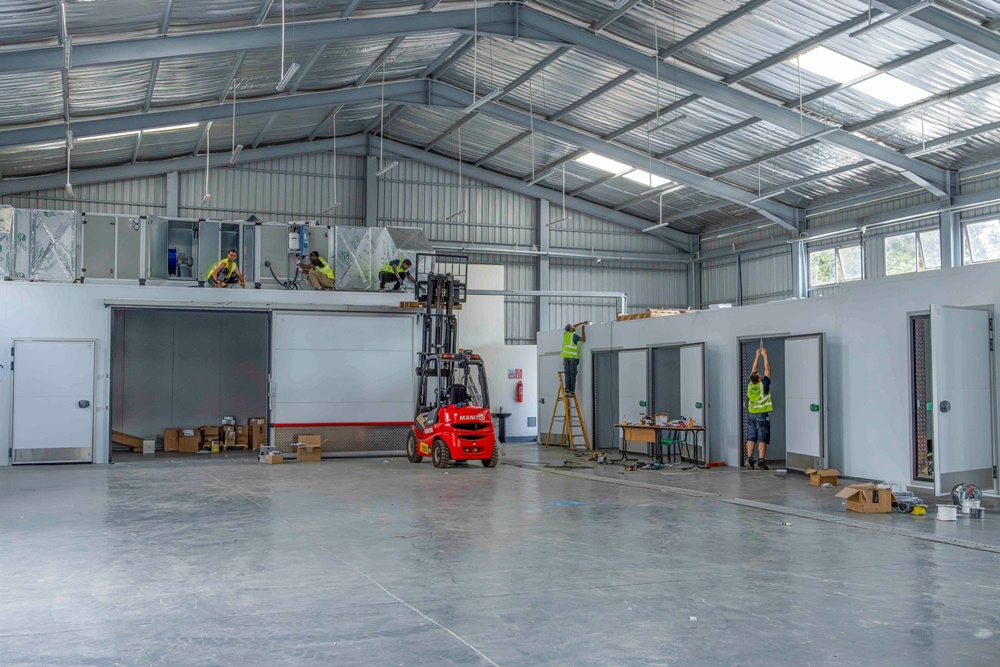
The state-of-the-art Environmental Testing Chamber at the Africa Centre of Excellence for Sustainable Cooling and Cold-Chain (ACES) in Kigali, Rwanda.
Ten years after countries adopted the Kigali Amendment to phase down powerful greenhouse gases used in refrigeration and air-conditioning, Rwanda wants the next phase of the agreement to focus increasingly on how developing countries can access practical and affordable cooling solutions.
Rwanda will host the 38th Meeting of the Parties to the Montreal Protocol (MOP38) in Kigali from November 2–6, 2026, according to the Ozone Secretariat.
The meeting will come in a year marking the 10th anniversary of the Kigali Amendment, which was adopted in 2016 to reduce the production and consumption of hydrofluorocarbons (HFCs).
The Kigali Amendment is expected to prevent up to 0.5°C of global warming by 2100 by phasing down HFCs, powerful greenhouse gases widely used in refrigeration and air-conditioning.
HFCs do not significantly deplete the ozone layer, but many are extremely powerful greenhouse gases. The Ozone Secretariat says they currently account for about 2% of global greenhouse gas emissions and, without controls, had been growing by more than 10% annually. The Kigali Amendment is expected to reduce global HFC use by 80–85% by 2047.
Rwanda’s Minister of Environment, Dr. Bernadette Arakwiye, said the country wants MOP38 to both celebrate the progress achieved since the Montreal Protocol was adopted and look at what needs to happen next.
“We want to sit together and explore the progress,” she said.
For Rwanda, she said, the meeting will also be an opportunity to celebrate the country’s role in the Kigali Amendment, while pushing for practical solutions to the cooling needs facing developing countries.
Cooling is increasingly important beyond household comfort.
Arakwiye pointed to its role in food storage, healthcare and agriculture, saying inadequate cooling can contribute to food losses and undermine access to essential services.
“We want from hosting this MOP particularly to see complete plans on how we bring those solutions to the problems we are experiencing,” she said.
The challenge is particularly relevant as demand for cooling rises with population growth, urbanisation and increasing temperatures.
The Kigali Amendment’s implementation is therefore increasingly being linked not only to refrigerant transition but also to energy efficiency, technology, financing and the development of sustainable cooling systems. UNEP’s Ozone Secretariat has highlighted the need to move beyond refrigerant phase-down toward broader sustainable cooling delivery.
For developing countries, however, the transition also raises questions about affordability, technology access and financing.
Rwanda is seeking greater alignment among countries on how to address those challenges, particularly in Africa.
Arakwiye said Rwanda has worked on a declaration that it hopes will receive consensus support from participating countries. She said the declaration has already been endorsed by the African group of negotiators.
The minister also linked sustainable cooling to wider development needs, particularly food systems and health.
“Cooling technology is needed, not only for our lifestyle, but also for storing our foods properly, for the health sector, for really various sectors,” she said.
The international framework already provides differentiated timelines for developing countries. For many developing countries in the first group under the Kigali Amendment, HFC consumption was frozen in 2024, followed by phased reductions beginning in 2029.
That means MOP38 comes at an important point in the implementation cycle.
About The Author


SUBSCRIBE TO OUR NEWSLETTER