Rwandan Farmer Targets Bigger Profits Through Watermelon Farming and Fruit Processing
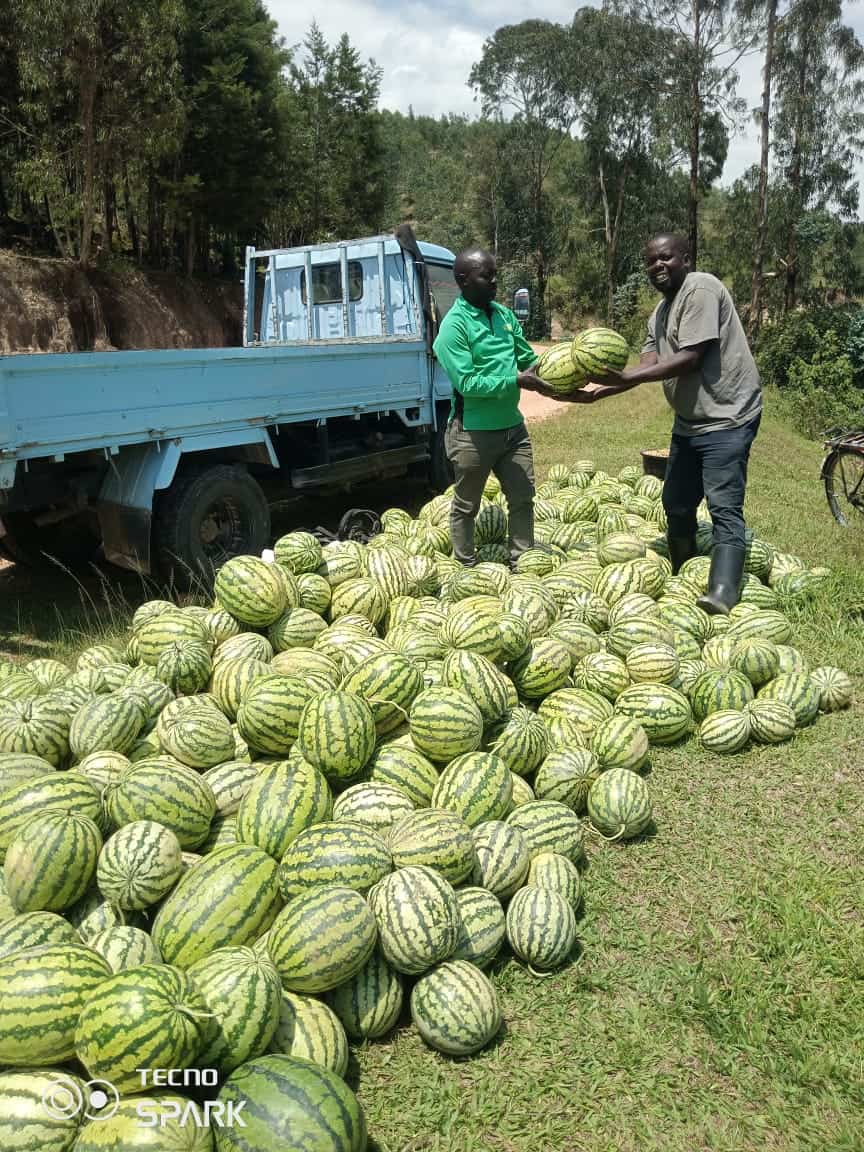
A farmer in Rwanda’s Ruhango district is turning watermelon and fruit production into a growing agribusiness, harvesting up to 60 tonnes of watermelons in a three-month season while investing in fruit processing to create new income opportunities, add value to his produce and expand his reach in agricultural markets.
Gatete Jean Bosco is building his farming enterprise around irrigation, planned planting and diversified fruit production, demonstrating how farmers can move beyond traditional cultivation to develop commercially oriented businesses. With a facility constructed to process juice from tree tomatoes, passion fruits and sugarcane, he is also exploring opportunities to transform fresh produce into value-added products.
Gatete says the Sustainable Agricultural Intensification and Food Security Project (SAIP II) has helped him change his approach to farming by encouraging him to treat agriculture as a business that requires planning, investment and effective management.
“One of the most important things SAIP has helped me achieve is professionalising my farming. Previously, I grew vegetables and fruits without managing the activity professionally, but today, I earn money consistently, just like someone running a shop,” he said.
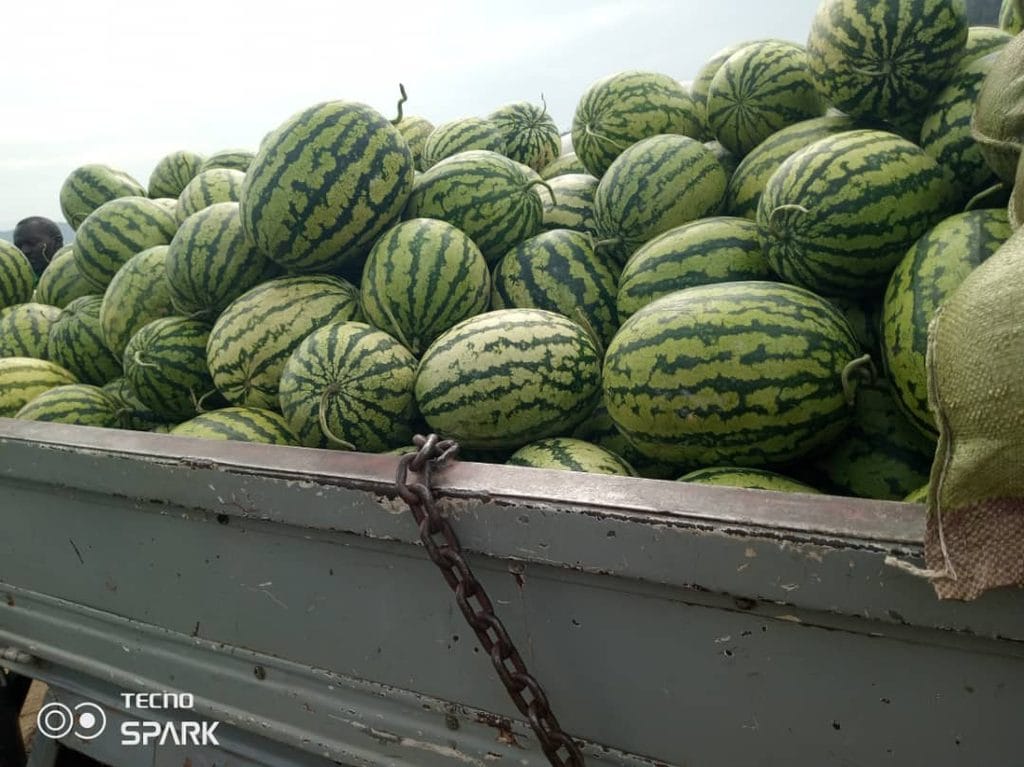
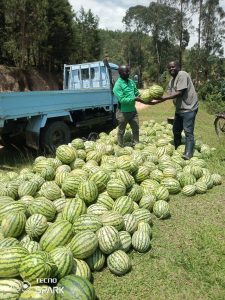
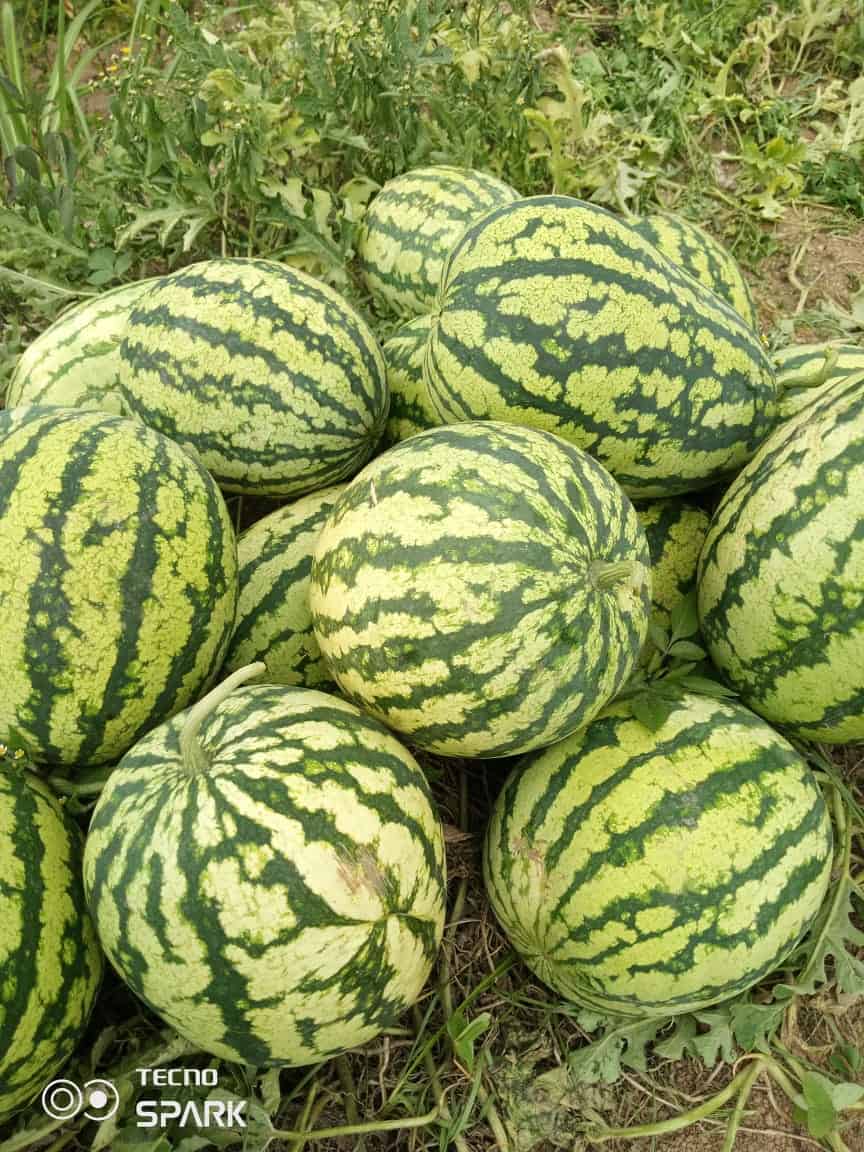
Watermelon production is a major part of his enterprise. To support crop growth, Gatete draws water from nearby streams to irrigate his fields, helping him sustain production without relying entirely on rainfall. He says this approach enables him to harvest approximately 60 tonnes of watermelons during a three-month growing season.
“Using my own resources, I draw water from streams to irrigate my crops. Today, I can harvest up to 60 tonnes of watermelons in a three-month growing season,” he said.
Beyond irrigation, Gatete carefully plans his planting schedule to improve the consistency of his harvests. Rather than planting all his watermelons at once, he staggers planting so that the crops mature at different times. This allows him to supply produce to the market across different periods and reduces the risk of having no harvest available when buyers need it.
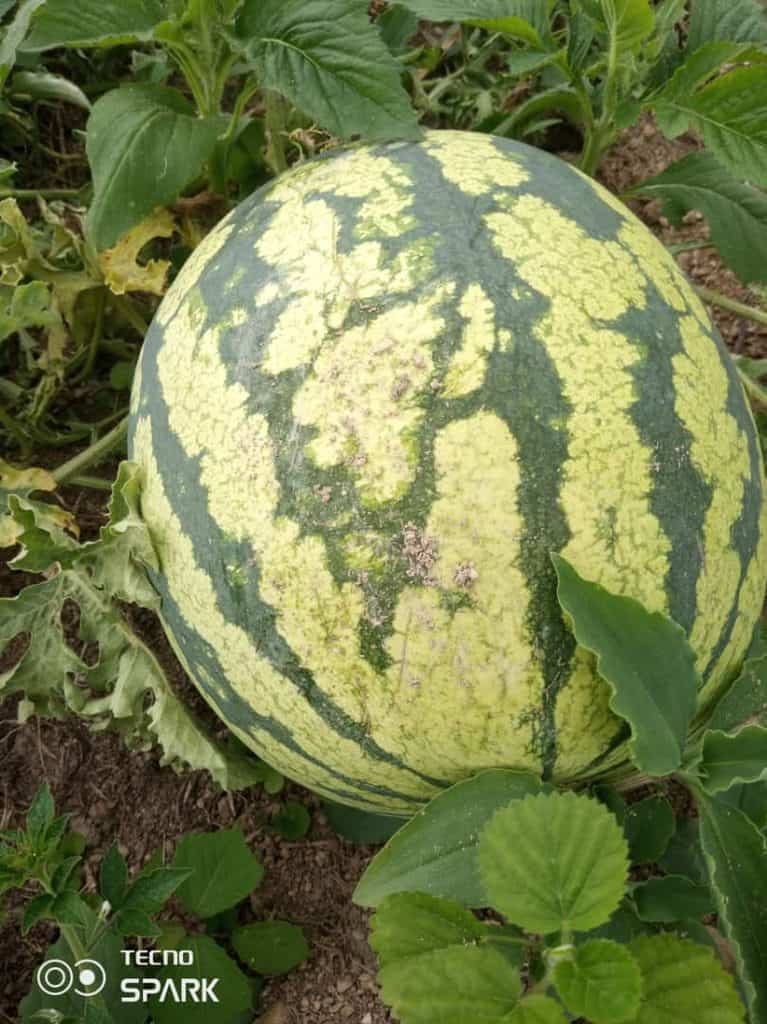
The strategy reflects his growing focus on commercial farming, where production decisions are guided not only by the availability of land and water but also by market demand. By managing planting schedules and irrigation together, he seeks to make his agricultural activities more predictable and financially sustainable.
Alongside watermelons, Gatete grows tree tomatoes, passion fruits and sugarcane, giving him several types of produce to sell and opportunities to diversify his income. His investment in fruit processing is intended to take this diversification a step further.
He has completed the construction of a facility intended to produce juice from tree tomatoes, passion fruits and sugarcane. The investment represents an effort to move beyond selling fresh produce and explore value addition, potentially creating new ways to market his harvest.
For farmers, processing can open opportunities to serve consumers through products other than fresh fruit, although success depends on factors such as suitable equipment, product quality, reliable markets and effective business management. Gatete’s facility reflects his ambition to develop these opportunities and strengthen the commercial value of the crops he produces.
His experience also demonstrates the importance of combining agricultural production with investment and planning. Irrigation helps sustain crop growth, staggered planting spreads harvests over time, and crop diversification provides multiple potential sources of income. Together, these practices can help farmers manage production risks and identify opportunities to grow their businesses.
Gatete’s journey forms part of wider efforts under SAIP II to encourage farmers in Ruhango and neighbouring Nyanza District to exchange experiences, adopt improved farming techniques and strengthen agriculture as a source of income.
For Gatete, the combination of watermelon farming, fruit diversification, irrigation and planned processing provides a foundation for pursuing these opportunities. His approach shows how farmers can use available resources and practical knowledge to build enterprises that respond to market needs.
Through SAIP II, farmers are encouraged to learn from one another and adapt successful practices to their own circumstances. By combining this knowledge with investment, improved production methods and stronger market connections, they can work towards more productive farms and sustainable agricultural businesses.
About The Author


SUBSCRIBE TO OUR NEWSLETTER