Rwanda Farmers Turn Peer Learning into Higher Yields and Stronger Cooperative Businesses in Muyanza
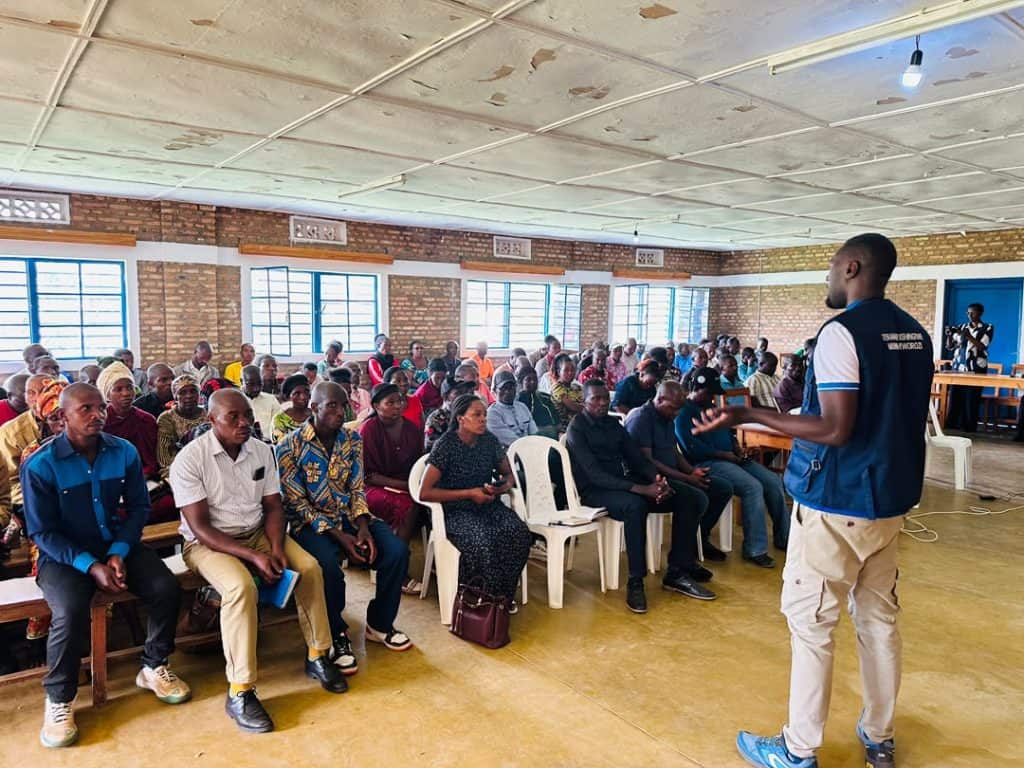
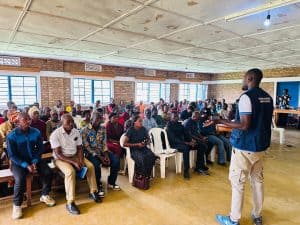
Farmers participating in the Sustainable Agricultural Intensification and Food Security Project (SAIP II) which implemented through the Rwanda Agriculture and Animal Resources Development Board (RAB), under the Single Project Implementation Unit (SPIU)are looking to boost agricultural productivity, expand markets and improve household incomes by learning from successful cooperatives, as Farmer-to-Farmer Knowledge Sharing Sessions officially begin at the Muyanza Irrigation Scheme in Rulindo district.
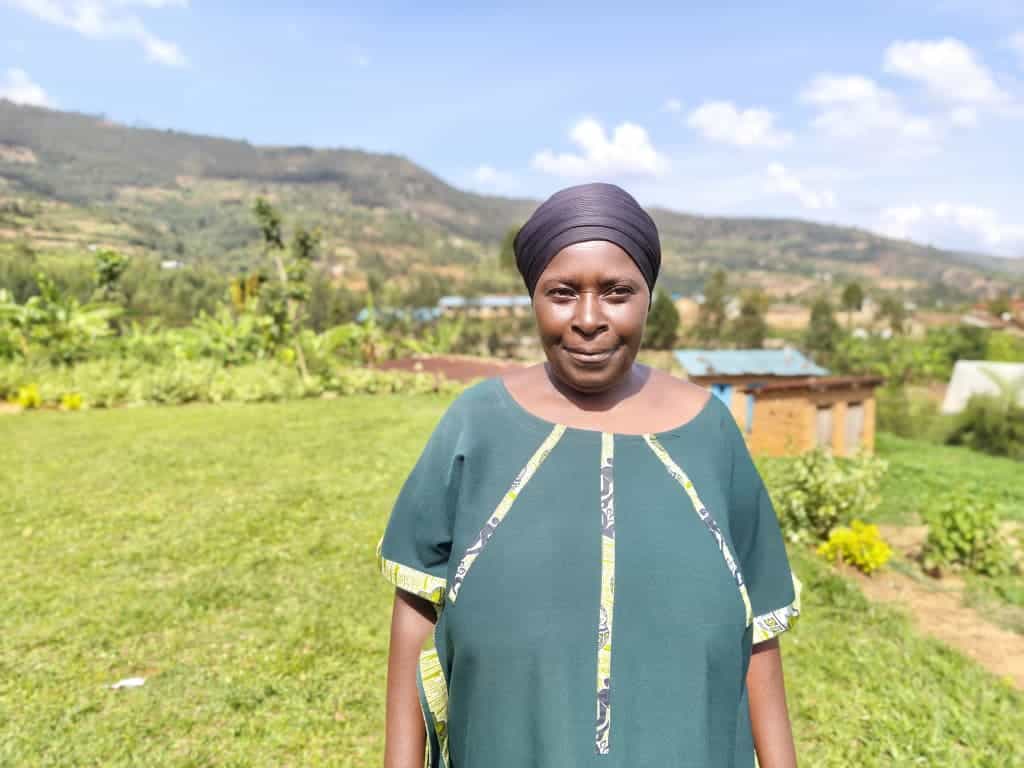
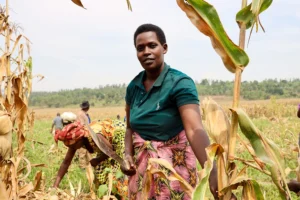
MUKANDOLI Domitille, a member of DUKUNDUMURIMO Cooperative, said the exchange had given farmers valuable lessons that they intend to apply to improve their operations and strengthen their livelihoods.
“Today, we heard how other cooperatives have been operating, and there is a lot we can learn from them to help us progress,” she said.
Mukandoli credited SAIP II with helping women in her cooperative venture into greenhouse farming, an investment she said had opened up opportunities for better harvests, income generation and improved family welfare.
“What we appreciate most is that SAIP supported us. As women, we formed a group, and the project provided us with a greenhouse that helped us engage in farming. Once we harvest our produce, we export some of it and earn money that supports our families,” she said.
She explained that the income generated through greenhouse farming had also strengthened women’s participation in household decision-making, with their husbands increasingly supporting their agricultural activities because of the benefits they bring to the family.
“Today, our husbands give us the opportunity to work in the greenhouses because, when we earn money, our children can go to school, we can pay for community-based health insurance, and we can address different challenges in our households,” Mukandoli added.
She encouraged other women, particularly those seeking to improve their economic independence, to form agricultural groups that can help them access support and invest in greenhouse farming. She also said the lessons from other cooperatives had encouraged her members to become more ambitious in pursuing produce markets and expanding their activities.
For the cooperative, the next step is to translate the knowledge gained into practical improvements that can increase production, strengthen business opportunities and prevent the gains already achieved from slipping away.
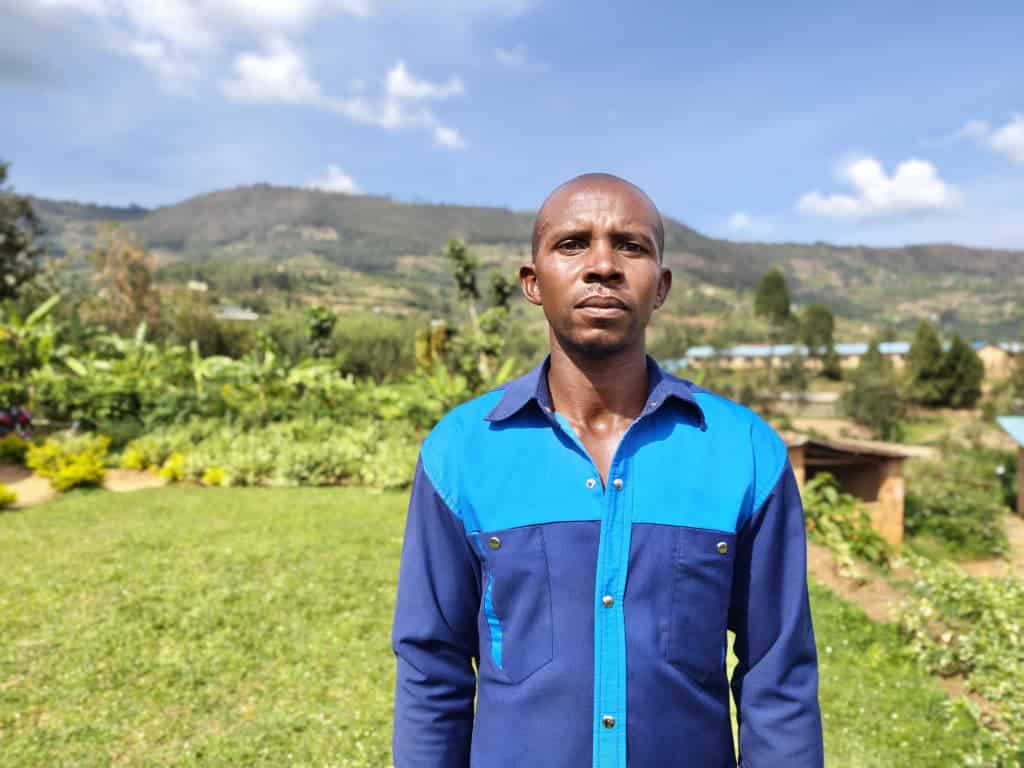
NIYONIZERA Patrick, a member of Terimbere Muhinzi Rulindo Cooperative (KOTEMURU), said the sessions were helping farmers identify practical ways to close productivity gaps, particularly through better fertiliser use, timely planting and effective pest control.
“Three of the cooperatives represented here operate in the irrigation scheme, while the other two farm on the hillsides. We are looking at what we can do to increase production. We have heard that some farmers harvest up to 10 tonnes per hectare, while we are still slightly behind. We have learned that using good fertilisers, planting at the right time and controlling pests can help us reach our desired yields,” he said.
Niyonizera noted that KOTEMURU had also built experience in cooperative entrepreneurship, demonstrating how collective effort can help farmers develop businesses beyond crop production.
He said the cooperative started with limited financial resources but later ventured into the sale of agricultural inputs and managed to purchase a building at a local trading centre valued at Rwf8 million.
Although the cooperative once suffered a loss of Rwf3 million, its members remained determined and continued working to restore the business, he said.
Niyonizera added that SAIP II had provided valuable training and other forms of support that would continue benefiting members even after the project concludes. He said the knowledge acquired would help them improve farming practices, strengthen their cooperative and build a more sustainable agricultural business.

Rulindo district vice mayor in charge of economic development, RUGERINYANGE Theoneste, said the knowledge-sharing sessions provided an important opportunity for farmers to exchange experiences while enabling local leaders to better understand their needs and priorities.
He said the district was committed to increasing agricultural production by ensuring that the Muyanza Irrigation Scheme is used effectively, allowing farmers to improve their livelihoods while generating sufficient produce for the market.
“Our plan is to increase agricultural production by making proper use of the Muyanza Irrigation Scheme. This will help residents transform their livelihoods and produce a surplus for the market,” He said.
He commended SAIP II for contributing to increased crop production and improving farmers’ living conditions, adding that the training provided through the project would remain valuable beyond its implementation period.
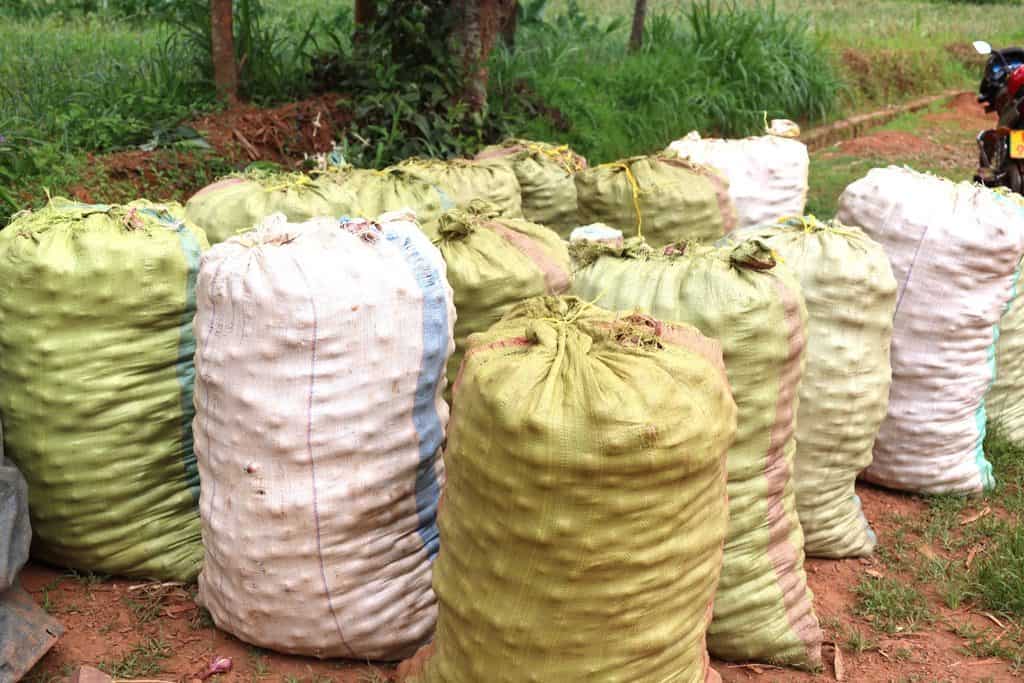
“The project has increased the production of different crops in this district, improved people’s livelihoods and provided training that farmers will continue to benefit from,” he said, pledging continued district support to ensure farmers make effective use of the progress achieved.
The impact of agricultural interventions in Muyanza is also reflected in crop productivity figures recorded between the 2024 and 2026 growing seasons. Maize yields increased from 3.1 tonnes per hectare in Season A of 2024 to 3.4 tonnes in Season A of 2026, while bean yields rose from 2.7 to 3 tonnes per hectare over the same period.
Potato production recorded a stronger increase, rising from 12 to 16 tonnes per hectare, while cassava yields grew from eight to 10 tonnes per hectare. Banana productivity also increased from three to four tonnes per hectare, demonstrating progress across several major food crops.
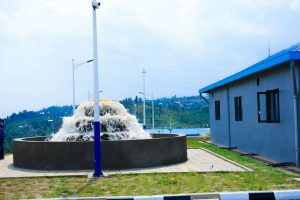
The Muyanza Irrigation Scheme covers 2,550 hectares and currently has 655 hectares under irrigation, with plans to expand irrigation to an additional 1,100 hectares. Its reservoir has a storage capacity of 2.3 million cubic metres of water, providing an important foundation for expanding irrigated agriculture and strengthening production.
Through SAIP II, the project works with five cooperatives in Muyanza irrigation scheme including DUKUNDUMURIMO, KORA UKIRE, KIMUYANZA, KOTEMURU and MUGREF. Combining irrigation infrastructure with farmer training, cooperative development and peer-to-peer learning, the initiative seeks to help farmers improve productivity, access reliable markets and turn agricultural production into a stronger source of income and long-term economic resilience.
About The Author


SUBSCRIBE TO OUR NEWSLETTER