Global Hunger Crisis Escalates: U.S. Accuses Iran of Disrupting Vital Food Supply Chains
NEW YORK — The United States has sounded the alarm on a rapidly deteriorating global food security situation, linking rising hunger levels directly to recent provocations by the Iranian regime in the Strait of Hormuz.
During a UN Security Council Open Debate on Food Insecurity on August 25, 2026, Ambassador Jennifer Locetta, Alternative Representative for Special Political Affairs, addressed the Council regarding the intensifying intersection of conflict, climate, and geopolitical interference.
“Unfortunately, conflicts and crises have grown in scale and complexity,” Ambassador Locetta stated. “Food insecurity is rising, and the humanitarian systems to address food insecurity are struggling to keep pace”.
Disruptions in the Strait of Hormuz
A central focus of the U.S. remarks was the impact of Iranian actions in the Strait of Hormuz. According to the U.S. mission, these obstructions are not merely a maritime security issue but a catalyst for a global humanitarian emergency. The disruption is hindering approximately one-quarter of global oil trade and one-third of the global fertilizer trade.
“The fertilizers that Iran prevents from passing through the Strait of Hormuz are necessary for food production in sub-Saharan Africa, South Asia, and parts of Southeast Asia,” Locetta noted. The resulting scarcity is projected to drive up prices and reduce agricultural output, further straining vulnerable regions.
The World Food Programme (WFP) projects an additional 45 million people could suffer from acute food insecurity as a direct consequence of these disruptions and related global instability.
Regional Impacts: Sudan and DRC
Ambassador Locetta highlighted specific crises in Africa where the lack of resources and ongoing conflict are compounding the danger:
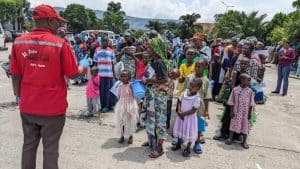
- Democratic Republic of the Congo (DRC): More than 16 million people currently require food assistance. The situation is exacerbated by armed groups blocking humanitarian routes and an ongoing Ebola outbreak.
- Sudan: Described as the site of the world’s largest humanitarian crisis, the region faces tactics where parties to the conflict reportedly manipulate food access as a weapon of war.
U.S. Commitment and Humanitarian Aid
Despite the escalating challenges, the United States reaffirmed its commitment to global stability through continued financial and diplomatic support. Ambassador Locetta announced that the U.S. has recently committed over $1 billion in assistance to UNICEF and the WFP to address critical nutrition and food security needs.
The U.S. delegation also emphasized that they are “actively pursuing options to respond to fertilizer shortages” and urged all parties in conflict zones to facilitate unhindered humanitarian access.
Looking beyond geopolitical conflict, the address also acknowledged the looming threat of natural phenomena, specifically citing El Niño as a risk that could push tens of millions into acute hunger in the coming months.
About The Author


SUBSCRIBE TO OUR NEWSLETTER