Africa presses for factories, finance and a louder voice after BRICS New Delhi summit
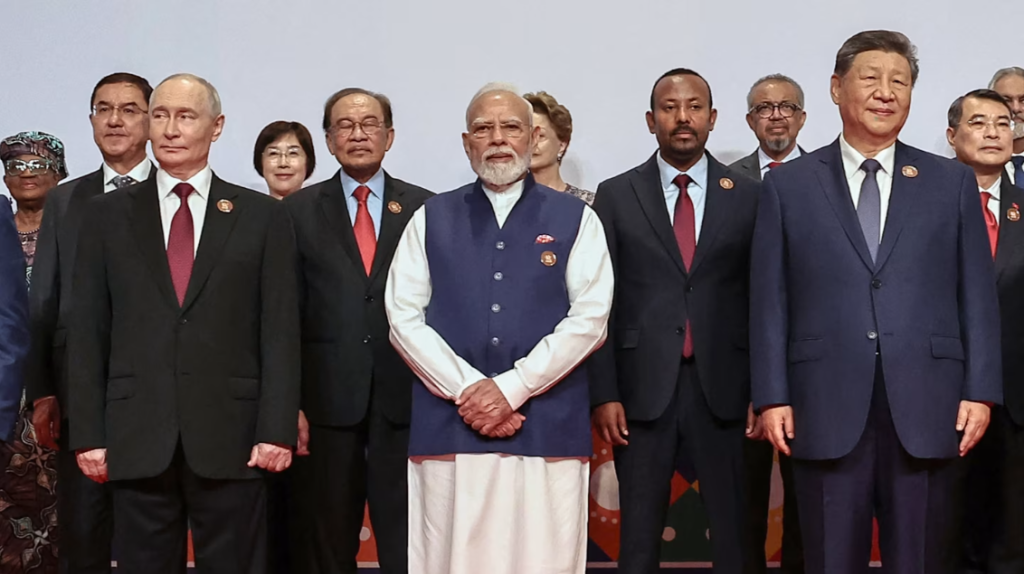
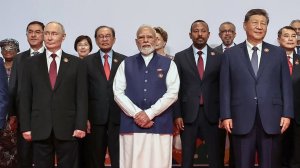
NEW DELHI / JOHANNESBURG / ADDIS ABABA / CAIRO — Sept. 15, 2026: Africa did not attend the 18th BRICS summit as a guest list. South Africa, Egypt and Ethiopia sat as full members. Nigeria and Uganda joined as partners. The African Union chair from Burundi was in the room. After two days of talks in New Delhi, leaders adopted a joint declaration that backed African industrialization, infrastructure linked to the continental free trade area, Ethiopia’s bid to join the World Trade Organization, and a stronger African presence in global institutions.
The test now is whether those commitments become plants, ports and loans — or remain conference language.
A larger African table
BRICS is no longer a grouping that invites the continent only for outreach photos. South Africa has been a member since 2010. Egypt and Ethiopia joined in 2024. All three took part in the closed leaders’ sessions held on Sept. 12–13 under India’s chairship theme of resilience, innovation, cooperation and sustainability.
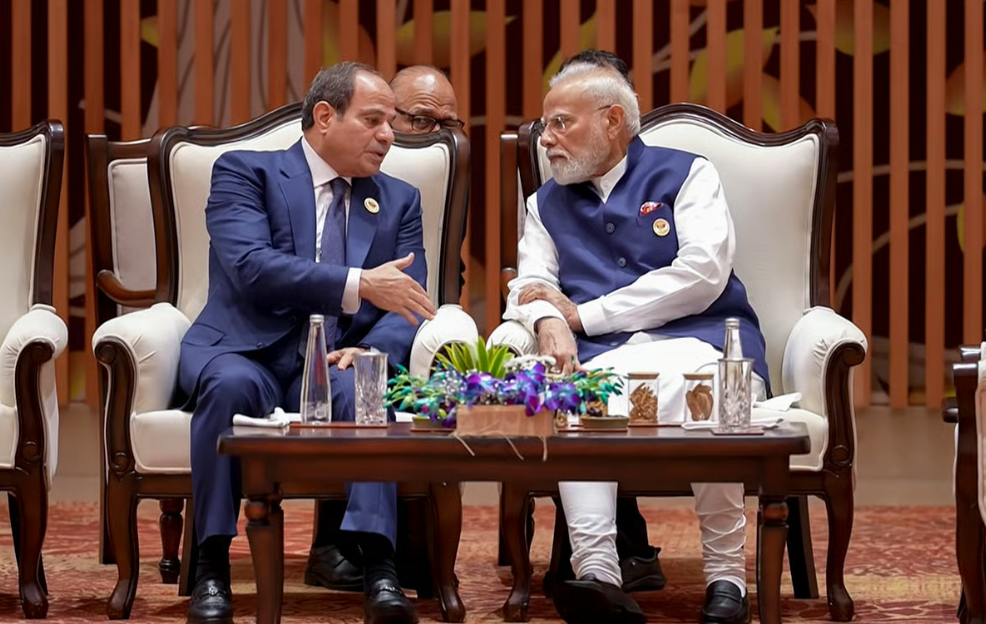
President Cyril Ramaphosa attended in person, as did Egyptian President Abdel Fattah el-Sisi and Ethiopian Prime Minister Abiy Ahmed. Nigeria was represented by Vice President Kashim Shettima. Uganda’s Vice President Jessica Alupo took part. Burundi’s President Évariste Ndayishimiye came as African Union chair. Indian Prime Minister Narendra Modi held separate meetings with African leaders on trade, investment and security.
That lineup put three African governments inside the room that produced the New Delhi Declaration, and it put partner states at the outreach table where the bloc discusses growth across the Global South.
South Africa: defend the G20, add value, set rules for AI
Pretoria used the summit to defend its standing in the G20 and to repeat an argument it has made for years: Africa should not only ship raw materials.
The declaration described South Africa as a founding G20 member and said any arbitrary revision of that membership was inadmissible. The wording followed a public dispute with Washington over the U.S.-hosted G20.
Ramaphosa’s economic brief was concrete. South Africa wanted more trade and investment inside BRICS, industrialization and value addition, and infrastructure finance aligned with the African Continental Free Trade Area. He carried that message into the BRICS Business Forum and an India–South Africa business roundtable covering pharmaceuticals, infrastructure, critical minerals and electric-vehicle batteries.
After the summit he reminded South Africans that more than a fifth of the country’s trade already runs through BRICS economies, that Pretoria has used the New Development Bank for energy, water and transport projects, and that the bloc’s contingency reserve remains a liquidity backstop.
On technology, he supported a BRICS open-source AI community, with a South African condition attached. He proposed an independent scientific evaluation mechanism for artificial intelligence, mandatory reporting of serious incidents, human-control rules, and investment in sovereign AI capacity for developing economies. He tied that agenda to climate resilience, disaster-risk reduction and medical sovereignty.
Ethiopia: WTO, aviation, climate — and a path into the BRICS bank
Addis Ababa treated New Delhi as a diplomatic harvest.
The declaration supported Ethiopia’s accession to the World Trade Organization. It backed Ethiopia as the African Union’s sole candidate for an additional seat on the International Civil Aviation Organization Council. It also endorsed Ethiopia’s preparations to host the United Nations climate conference, COP32, in Addis Ababa in 2027.
Those three files sit at the centre of Abiy’s international agenda: trade integration, aviation diplomacy built around Ethiopian Airlines, and climate hosting. On the summit floor he argued that BRICS should connect capital and technology to African resources, and he offered cooperation in minerals, renewable energy and manufacturing.
There was a quieter institutional gain. Ethiopia has been admitted by the New Development Bank’s board as a prospective member. The bank already has African shareholders. For a government still managing debt and looking beyond a narrow set of creditors, a path into the BRICS lender is as practical as a paragraph on WTO talks.
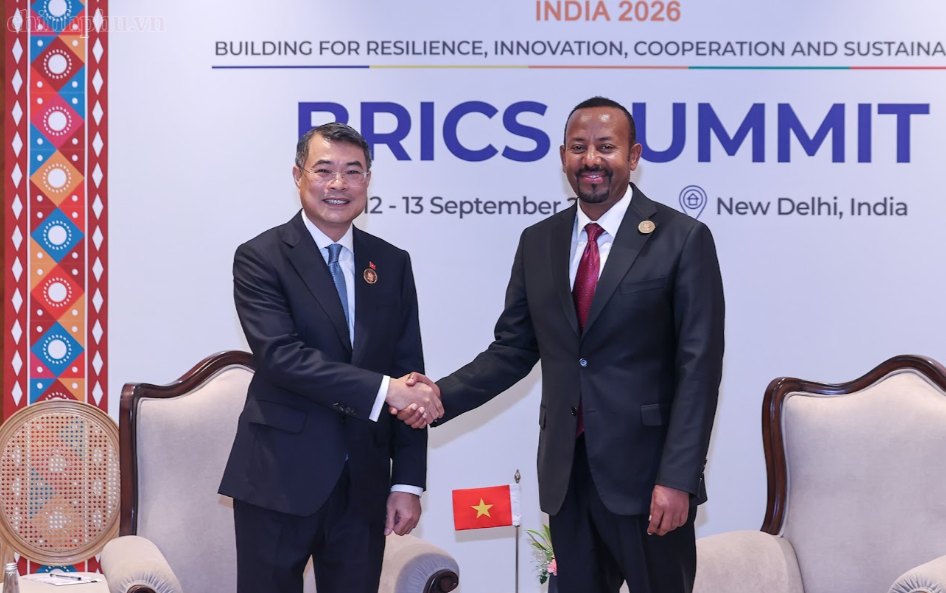
Modi met Abiy on the sidelines to review economic cooperation, defence, capacity-building and regional issues.
Egypt: more trade, a wider gap
Cairo arrived with a large commercial footprint already in place. Official Egyptian figures show trade with BRICS economies rose 25.5 percent to $36.7 billion in the first half of 2026, from $29.3 billion a year earlier.
Almost all of the increase came from imports. Egyptian purchases from the group reached about $30.2 billion, led by China, the United Arab Emirates, Saudi Arabia, Russia and Brazil. Egyptian exports to BRICS markets fell to $6.6 billion from $7.4 billion. Saudi Arabia and the UAE were the main destinations. Jewellery, fruit and vegetables, fuels, fertilisers and electrical goods topped the export list.
Investment and remittances tell a stronger story. BRICS investment in Egypt was put at $6.2 billion in the last full fiscal year, with the UAE the largest source. Remittances from Egyptians working in BRICS countries rose sharply, to $15.7 billion.
Sisi used bilateral time with Modi on trade and strategic cooperation. For Egypt, BRICS is already a major commercial circuit. The unfinished business is the same one South Africa keeps naming: selling more processed goods, not only buying machines, grain and fuel.
What the text actually offered the continent
Several lines in the New Delhi Declaration matter in African capitals even when they never name one.
Leaders called for reliable critical-mineral supply chains linked to value addition and economic diversification in resource-rich countries. They said developing economies should gain better access to higher-value manufacturing through investment, productive capacity, technology transfer and technical cooperation. That is the language African industrial policy has asked for for years.
They condemned unilateral coercive measures and rising tariffs as harmful to developing economies, and they kept the door open to local-currency payments and more lending from the New Development Bank. The bank was described as a strategic development instrument that should expand local-currency finance and infrastructure support across the Global South.
The declaration restated support for greater African representation in global decision-making, including reform of the UN Security Council, without setting a timetable. China also pointed to expanded zero-tariff treatment for dozens of African countries with which it has diplomatic ties.
Nigeria, speaking as a partner, backed a more representative order and said it would continue to support the World Trade Organization. Shettima’s line was blunt: the world is greater than one nation.
The limits
African officials know the distance between a summit hall and a steel mill.
South Africa’s BRICS trade is still heavily concentrated in commodities. Egypt’s BRICS ledger is a large and growing deficit. Ethiopia’s WTO, aviation and bank files will be decided in Geneva, Montreal and the bank’s own boardrooms, not only in New Delhi. Partner status for Nigeria and Uganda is not full membership. Further expansion was treated cautiously.
The Middle East language in the declaration — a call for maximum restraint, without naming sides — also showed how African members sit inside a bloc that includes both Iran and the UAE. Consensus is the method. Precision is often the cost.
China takes the BRICS chair in 2027. African governments will measure that year the same way they measured this one: not by how many African flags stood on the stage, but by whether minerals leave as concentrate or as product, whether development-bank money reaches power and rail, and whether AfCFTA corridors get more than a sentence in the next declaration.
About The Author


SUBSCRIBE TO OUR NEWSLETTER