Rwanda Advances Kigali Amendment, Secures $100M Cooling Pact
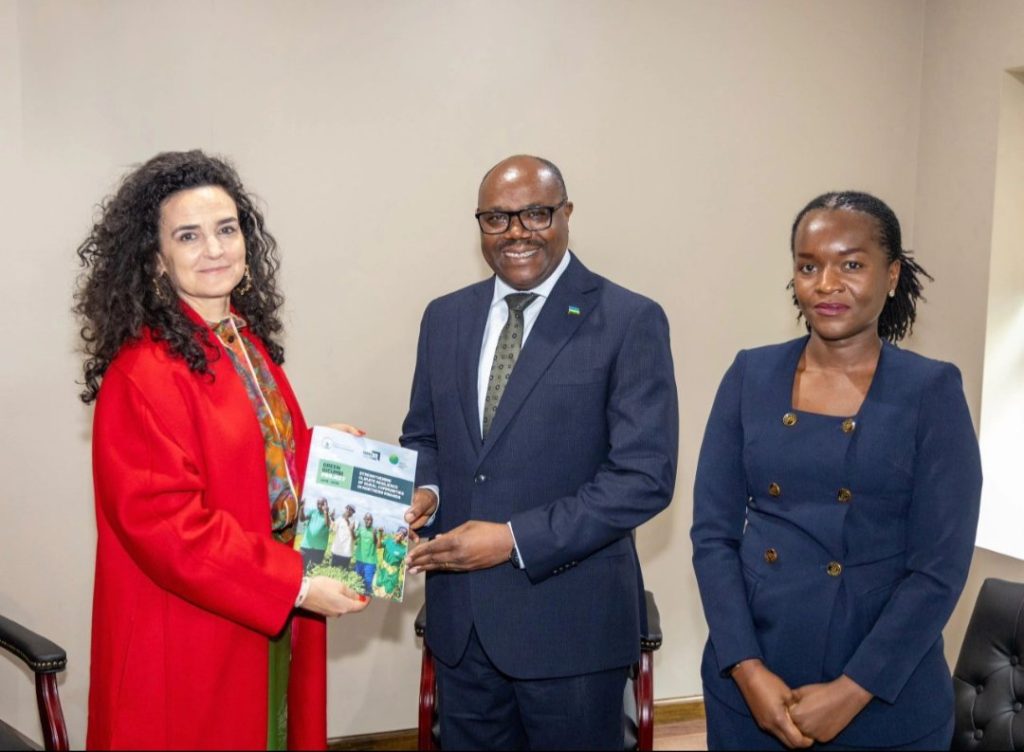
NEW YORK — Rwanda used the 81st United Nations General Assembly and Climate Week events this week to deliver a series of concrete climate and environment outcomes, including the launch of a new political coalition on sustainable cooling, a $100 million philanthropic funding goal, and membership in a major food-security partnership.
Rwanda and Kigali Amendment Initiative
On 23 September, Rwanda co-led the launch of the Friends of the Kigali Amendment alongside Brazil and the United Kingdom.
The coalition aims to accelerate implementation of the 2016 Kigali Amendment to the Montreal Protocol.
Additionally, it advances the phase down of hydrofluorocarbons (HFCs) used in refrigeration and air conditioning.
The grouping revives the political alliance that helped secure the original agreement a decade ago.
At the same event, Rwanda, Brazil, and the United Kingdom presented a new Ministerial Communique.
Additionally, the communiqué set four priorities: stronger implementation of the Amendment; energy-efficient cooling and improved refrigerant management.
It also called for increased finance, technology and capacity, and closer industry partnerships.
Philanthropic organizations announced a US$100 million funding goal to support faster HFC reductions.
It will also widen access to climate-friendly cooling systems, complementing public finance under the Montreal Protocol.
Rwanda
Prime Minister Justin Nsengiyumva told the gathering the Kigali deal shows collective action works.
However, adoption was only the beginning, and the real test is delivery.
Additionally, he linked sustainable cooling to development outcomes.
He pointed to Rwanda’s African Centre of Excellence for Sustainable Cooling and Cold-chain as a practical model.
Environment Minister Dr. Bernadette Arakwiye said the Amendment “remains one of the clearest opportunities we have to deliver significant results.” She invited more countries to join the Friends group ahead of the 38th Meeting of the Parties to the Montreal Protocol, which Rwanda will host in Kigali from 2 to 6 November to mark the Amendment’s tenth anniversary.
The Kigali Amendment, ratified by 174 parties, could avoid up to 0.5°C of warming by 2100 if fully implemented. Global demand for cooling is rising sharply, with air-conditioner numbers projected to more than triple by 2050.
Rwanda also announced its membership in the Global Flagship Initiative for Food Security, framing the partnership as a channel for climate-smart investment and support to farmers. During Climate Week discussions, Minister Arakwiye outlined national priorities that include cleaner air, reduced transport emissions, scaled green investment and a more climate-resilient economy.
Prime Minister Nsengiyumva held additional meetings with climate-finance leaders. He discussed expanding collaboration with the Green Climate Fund, citing results from existing projects, and met the leadership of the Fund for Responding to Loss and Damage. He also participated in the Climate Vulnerable Forum leaders’ meeting, calling for greater focus on adaptation alongside emissions reductions.
The week’s outcomes position Rwanda both as a convener and as a country seeking to translate international agreements into delivery. Officials said the Friends of the Kigali Amendment will meet again in Kigali in November and on the margins of the next UN climate conference to review progress and identify further steps.
About The Author


SUBSCRIBE TO OUR NEWSLETTER