Rwanda and Armenia Deepen Ties with Diplomatic Visa Waiver Deal
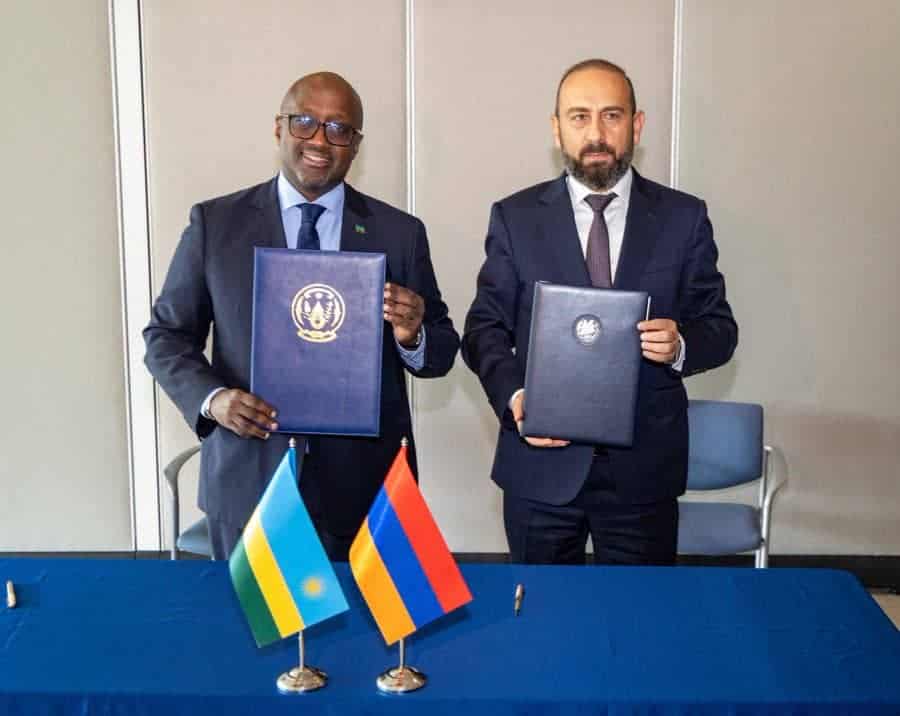
Rwanda and Armenia have signed a visa-waiver agreement for holders of diplomatic and official passports, in a move expected to ease official travel and strengthen political and institutional cooperation between the two countries.
The agreement was signed on Friday, September 25, 2026, in New York on the sidelines of the 81st United Nations General Assembly. It was signed by Rwanda’s Minister of Foreign Affairs and International Cooperation, Ambassador Olivier Nduhungirehe, and his Armenian counterpart, Ararat Mirzoyan.
The agreement is intended to facilitate movement by government officials and diplomats between Rwanda and Armenia, while creating greater opportunities for closer engagement between the two governments.
The signing comes as the two countries continue to explore areas of shared interest and cooperation. Rwanda and Armenia are both relatively small countries that have experienced difficult histories, including genocide, and have pursued national recovery and development following periods of profound national trauma.
Rwanda’s experience in governance, institutional development and national reconstruction has also attracted international attention, including from countries seeking lessons from its development journey. Armenia, in particular, has expressed interest in strengthening engagement with Rwanda and learning from its experience in areas of governance and development.
Located in the Caucasus region at the crossroads of Europe and Asia, Armenia covers about 26,743 square kilometres and has a population of approximately 3.1 million people. It is bordered by Türkiye, Iran, Azerbaijan and Georgia.
Armenia is also among the world’s oldest historical and cultural centres, with a history stretching back to antiquity. The country has developed a diversified economy, with its gross domestic product estimated at about $31.8 billion.
The visa-waiver agreement adds to the growing diplomatic engagement between Rwanda and Armenia, providing a practical framework for facilitating official exchanges and contacts between their institutions.
About The Author


SUBSCRIBE TO OUR NEWSLETTER