91% of countries mention health in climate Plans, but few set measurable targets
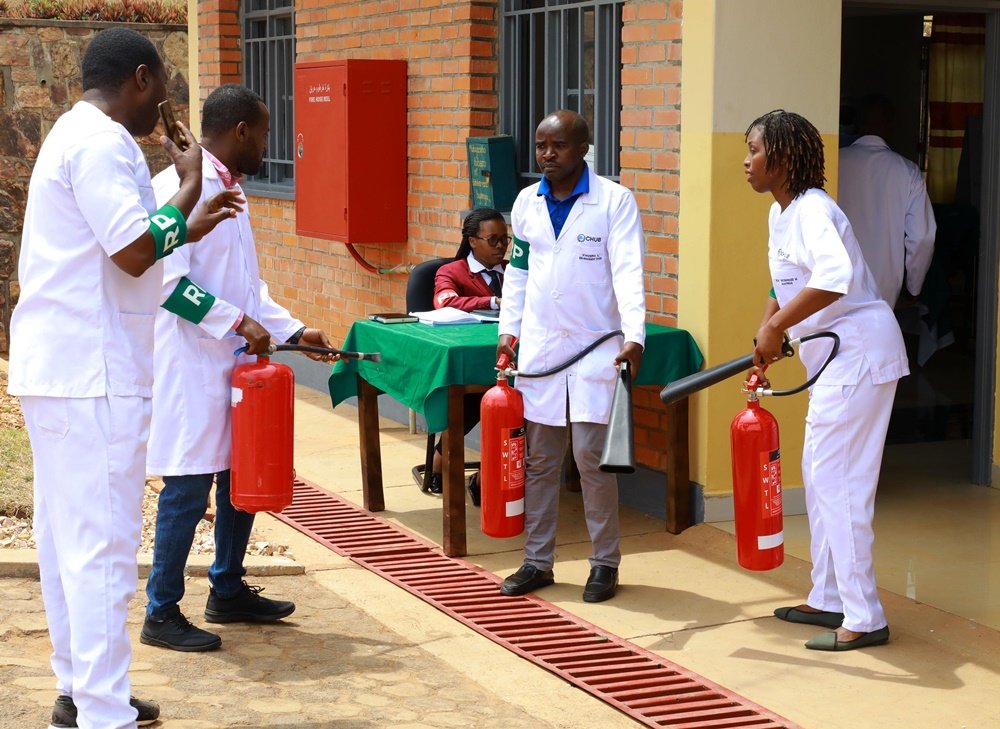
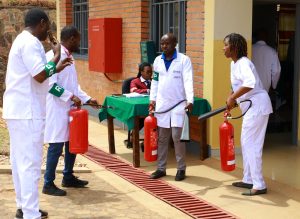
Health workers in Rwanda take part in emergency preparedness training. (MINEMA)
Most countries now recognise health in their national climate plans, but few quantify the health benefits of climate action or estimate the resources needed to protect people from climate-related risks, according to a new World Health Organization (WHO) report published on October 19, 2026.
The report, ‘Ten years of the Paris Agreement: a global review of health in nationally determined contributions’, found that 128 of 140 countries and other Parties assessed, representing 91%, mentioned health in their latest nationally determined contributions (NDCs), the national plans through which governments set out their climate commitments.
However, only four of the 82 Parties that identified health benefits from climate mitigation quantified or monitored those benefits. This represents just 5% of the group, despite a substantial increase in the number of countries recognising the connection between climate action and public health.
The findings highlight a gap between acknowledging the health consequences of climate change and making specific, measurable and adequately financed commitments to address them.
WHO reviewed 114 climate plan documents representing 140 Parties, including the European Union’s submission on behalf of its 27 member states. The assessment examined how governments incorporated health into emissions reduction, adaptation, climate-related loss and damage, governance and financing.
Climate plans recognise health, but measurable action lags
The report found progress in the recognition of health benefits from climate mitigation. The proportion of Parties identifying such benefits rose from 10% in the 2020 WHO review to 30% in 2023 and 59% in the latest assessment.
These benefits can include improved respiratory and cardiovascular health through reduced air pollution, as well as wider health gains from cleaner energy and more sustainable transport.
Yet only 31 of the 140 Parties, or 22%, included stand-alone targets, measures or policies to reduce air pollution and short-lived climate pollutants in their latest climate plans.
The report also found that just 15 Parties, equivalent to 11%, included emissions reduction measures or targets for the health sector itself.
WHO estimates that health care accounts for about 5% of global greenhouse gas emissions, making hospitals and other health services potential contributors to national emissions reduction efforts.
The report points to Nepal as an example of more specific commitments. Its climate plan includes targets to upgrade 140 health facilities by 2030 and 280 by 2035 to make them low-carbon and climate-resilient, including through solar photovoltaic backup systems.
Climate-related health risks need stronger planning
Climate change can affect health through extreme heat, floods, waterborne and vector-borne diseases, malnutrition, respiratory illnesses and disruptions to health facilities.
The WHO assessment found that 82 Parties, or 59%, identified at least one climate-sensitive health risk or outcome in their national climate plans. However, only six of those 82 quantified these risks.
Vector-borne diseases were the most frequently identified category among the Parties that described climate-sensitive health risks, appearing in 66% of that group. Heat-related illnesses were identified by 55%, while injuries and deaths associated with extreme weather events were cited by 52%.
Waterborne diseases and other water-related health impacts were also identified by 52% of the group.
The findings suggest that although countries increasingly acknowledge the health consequences of climate change, more detailed assessments could help governments establish priorities and measure whether their interventions are effective.
Health-specific adaptation actions or targets appeared in 77 of the 140 Parties’ plans, representing 55%.
Such measures can include preparing health facilities for extreme weather, strengthening disease surveillance and early warning systems, and improving the resilience of essential health services.
Financing remains a major challenge
The report identified another gap in the resources needed to turn climate and health commitments into action.
Only 32 Parties, or 23%, estimated the resources required to implement health-related measures in their climate plans. Just 10 Parties, or 7%, specified that at least part of their climate-health financing commitments would be unconditional, meaning they would be financed from domestic sources rather than depend on external support.
The report notes that funding estimates may also fail to capture the full cost of health services contributing to climate targets in other sectors.
Vanuatu, for example, estimated that its health and nutrition commitments would cost approximately US$62 million between 2025 and 2035, with almost US$52 million designated as conditional funding.
WHO says stronger financial commitments are particularly important for low-income countries facing substantial and unmet health-related climate finance needs.
The report calls for more specific, evidence-based and adequately financed climate commitments, with stronger integration of health across government policies and economic sectors.
Rwanda’s climate plan recognises health-related losses
Rwanda is among the countries whose climate commitments are examined in the report.
According to WHO, Rwanda’s latest nationally determined contribution identifies increasing temperatures and more frequent hot days as sources of non-economic losses, including heat-related illness and deaths.
The country’s climate plan also recognises health-related losses associated with extreme weather events and includes health care costs in its estimates of economic losses and damage.
This provides an important national context for the global findings, particularly as governments consider how to prepare health services for climate-related risks.
However, the report does not establish that Rwanda has failed to implement its commitments. Its assessment focuses on what countries explicitly include in their submitted climate plans, and WHO cautions that some actions may be taking place in practice or may be detailed in separate national policy documents.
Next climate plans offer an opportunity
The Paris Agreement, adopted in 2015, established a framework under which countries periodically update their climate commitments to reduce greenhouse gas emissions and strengthen resilience to climate change.
The latest generation of national climate plans, known as NDCs 3.0, was intended to set out climate actions through 2035.
WHO says the next round of updates, expected in 2030, provides an opportunity for governments to include more comprehensive health assessments, measurable targets, stronger adaptation measures and clearer financing commitments.
The organisation concludes that countries have made progress in recognising health as a priority in climate policy, but further work is needed to strengthen the depth, specificity and financial support of their commitments.
The challenge now is to translate that recognition into measurable action that protects communities, strengthens health systems and delivers tangible health benefits alongside efforts to address climate change.
About The Author


SUBSCRIBE TO OUR NEWSLETTER