15 of 17 Rubavu Schools Adopt Good Practices After School Feeding Learning Visit in Rusizi
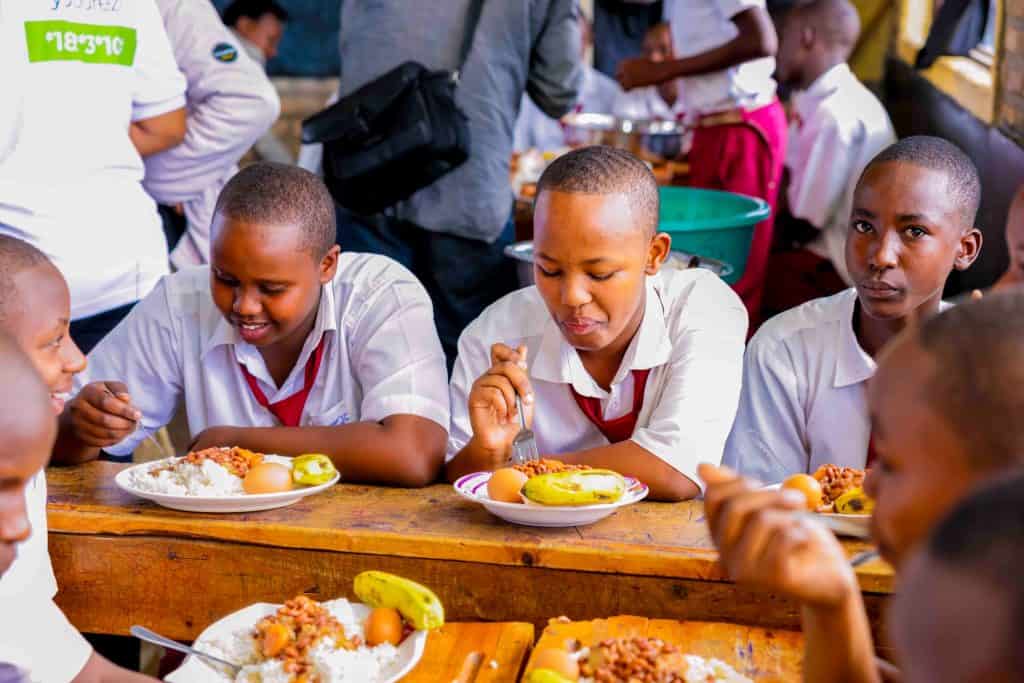
RUBAVU, Rwanda – Fifteen schools in Rubavu District have begun implementing good practices in school feeding programmes after participating in a peer-learning visit to G.S. Muko in Bugarama Sector, Rusizi District, highlighting the impact of knowledge-sharing in improving nutrition and learners’ well-being.
The progress was shared during a follow-up and achievement-sharing workshop held in Rubavu District on November 10, 2026, bringing together participating schools and stakeholders under the Nutrition in City Ecosystems (NICE) Project.
The initiative followed a learning visit conducted from May 31 to June 2, 2026, through a collaboration between Rubavu District and the NICE Project. Representatives from 17 schools in Rubavu, alongside district officials, visited G.S. Muko to learn from its experiences and explore practical ways of strengthening school feeding programmes.
The delegation was led by the then Vice Mayor in charge of Social Affairs, Mrs. Ishimwe Pacifique.
According to Innocente Turinimigisha, NICE Project City Coordinator, the follow-up workshop provided an opportunity for participating schools to share the progress they had made in adapting lessons from the visit.
The fact that 15 of the 17 participating schools had already taken steps to implement some of the observed practices demonstrates how peer learning can translate into tangible improvements at the institutional level.
The learning exchange focused on several aspects of school feeding, including local food production and supply, kitchen hygiene, safe food handling, meal preparation and the nutritional quality of food served to learners.
It also emphasized the importance of community participation, particularly strengthening cooperation between schools, parents and surrounding communities to ensure sustainable food supply and improved nutrition.
Another important component was encouraging innovation, inclusion and student participation in school feeding programmes. The approach seeks to ensure that learners have a voice in shaping their school feeding environments and that solutions respond to the needs of all students.
The experience at G.S. Muko provided participating schools with practical examples that could be adapted to their own circumstances rather than relying on a uniform approach.
The November 10 workshop also reinforced the importance of monitoring progress and creating opportunities for institutions to share achievements, challenges and solutions after participating in learning exchanges.
For the NICE Project, the initiative demonstrates that learning visits can deliver greater value when followed by concrete implementation efforts and continued collaboration among institutions.
The Nutrition in City Ecosystems Project promotes improved nutrition through stronger local food systems and coordinated action among urban stakeholders, including schools, local authorities and communities.
The experience in Rubavu highlights the potential of school-to-school learning to strengthen food systems, improve meal quality and contribute to better nutrition for children.
As schools continue adapting the lessons from G.S. Muko, the initiative offers an example of how locally developed solutions can inspire wider improvements in school feeding programmes.
As Turinimigisha emphasized, learning should not end with a visit but should translate into action, inspire innovation and create lasting benefits for learners.
About The Author

SUBSCRIBE TO OUR NEWSLETTER