Proven: Rwanda and Singapore Accelerate Carbon Credit Approvals
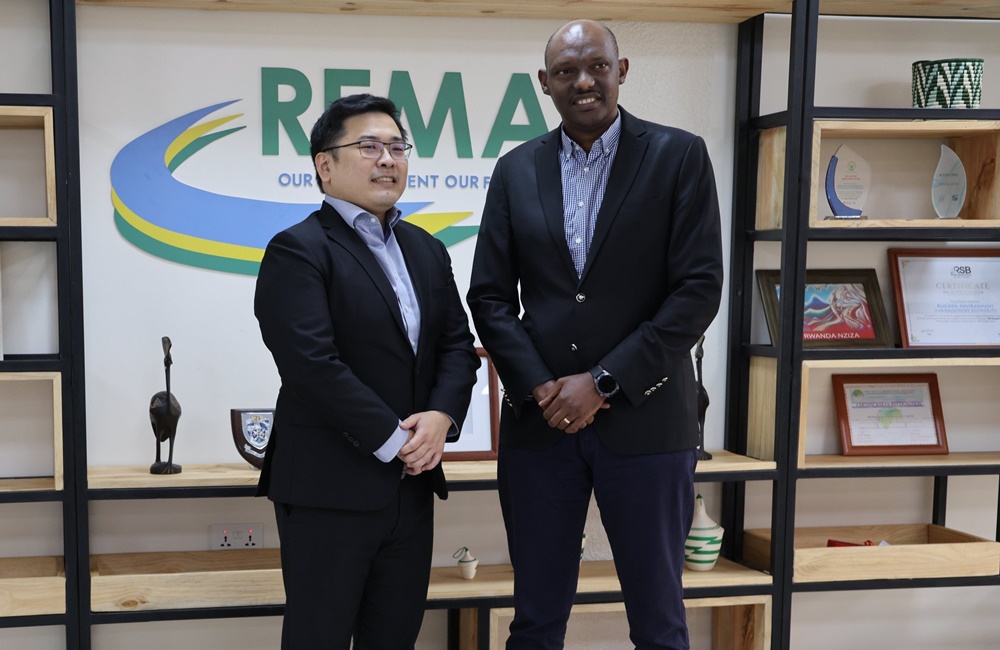
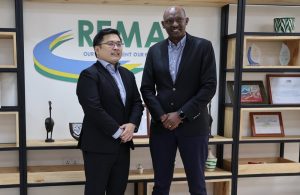
In Kigali, on October 16, 2026, REMA Deputy Director General Faustin Munyazikwiye welcomed members from Singapore.
The exchange focused on implementing their bilateral carbon credits agreement for Rwanda and Singapore.
Discussions centered on exchanging expertise, procedures, and best practices to streamline project approvals in Rwanda and Singapore.
The Joint Committee, co-chaired by Munyazikwiye, oversees the agreement’s administration.
Additionally, Singapore’s Director of the Carbon Planning Division at the National Environment Agency is part of the leadership.
The Rwanda and Singapore Implementation Agreement was signed on May 6, 2025. Singapore’s Minister for Sustainability and the Environment Grace Fu and the then Rwanda’s Minister of Environment Dr. Valentine Uwamariya signed it.
This agreement establishes a legally binding framework under Article 6 of the Paris Agreement. It authorizes mitigation activities and transfers high-integrity Internationally Transferred Mitigation Outcomes.
It is Singapore’s first such pact with an East African country and its sixth overall.
The arrangement allows Singapore, which faces limited domestic mitigation options as a small, densely populated city-state, to access credits that support its Nationally Determined Contribution and path toward net-zero emissions by 2050. Eligible credits can be used by Singapore-based companies under the International Carbon Credit Framework to offset up to 5 percent of taxable emissions. Singapore has committed to directing the value equivalent to 5 percent of authorized credits toward adaptation measures in Rwanda and to canceling 2 percent of credits at first issuance, contributing to additional global emissions reductions.
Focus: Rwanda and Singapore.
A call for applications opened on January 30, 2026, for technology-based and nature-based projects. Eligible programs include the Gold Standard for the Global Goals, Verified Carbon Standard, American Carbon Registry, Global Carbon Council, and Architecture for REDD+ Transactions.
Covered activities range from clean cooking and household energy solutions, waste management and landfill gas capture, renewable energy and efficiency upgrades, sustainable transport including electric mobility, improved forest management, agricultural methane reductions, and water and sanitation projects.
Authorized activities are expected to generate measurable emission reductions while delivering co-benefits such as job creation, improved livelihoods, stronger energy security, reduced pollution, and enhanced biodiversity.
The authorization process involves staged reviews of project design and implementation plans by both governments.
Additionally, it is followed by corresponding adjustments to maintain environmental integrity and prevent double-counting.
The October technical exchange builds on the Joint Committee’s earlier operational work.
That work enabled the project call.
Moreover, both sides advance eligible applications that channel climate finance into Rwanda and Singapore’s targets through transparent international cooperation.
About The Author


SUBSCRIBE TO OUR NEWSLETTER