France and Germany Forge Pact to Shield Europe’s Auto Industry from China
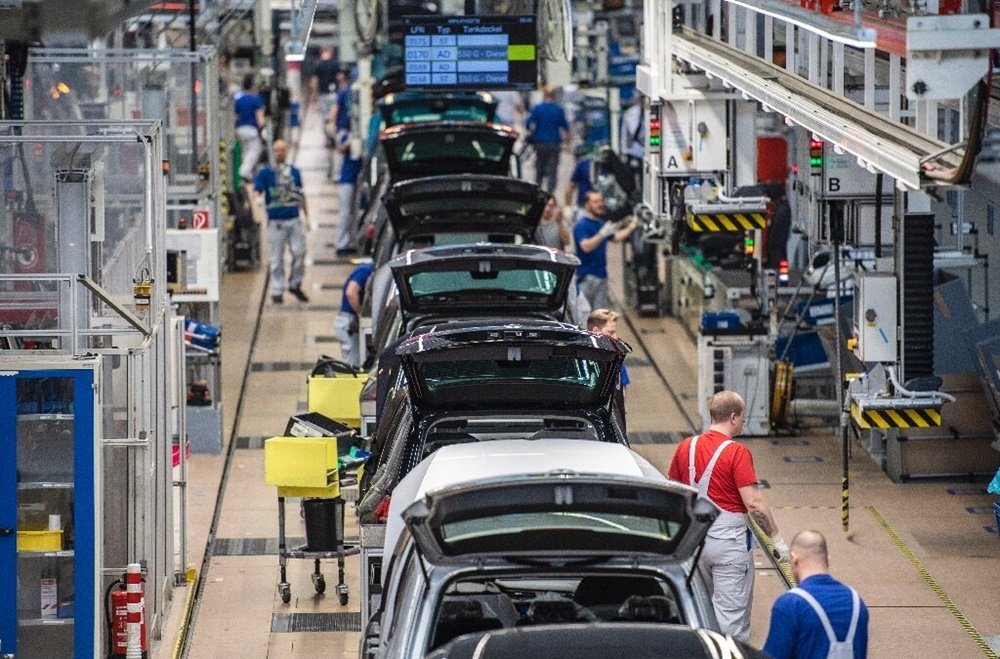
France and Germany have reached a landmark agreement to strengthen Europe’s automotive sector as Chinese-made vehicles rapidly expand their presence on European roads. The deal, concluded on the sidelines of a European Union summit in Brussels, softens planned emissions rules for new cars while introducing stricter requirements that favor European production and supply chains.
Under the joint position, carmakers would need to cut fleet-average CO₂ emissions by 90 percent by 2035, versus 2021 levels. They may offset the remaining 10 percent with low-carbon steel or alternative fuels.
This marks a relaxation of earlier proposals. Specifically, they effectively pointed toward a near-total shift away from combustion engines.
In return, the two countries support tighter “Made in Europe” criteria.
These would require that 70 percent of a vehicle’s components, excluding batteries, be produced in Europe for subsidies and contracts.
Battery content requirements would start low, at about 10 percent from European sources in the early years, with increases later.
German Chancellor Friedrich Merz described the outcome as a good day for motorists and for jobs in Germany, France, and Europe, calling it a clear investment signal for industry. French President Emmanuel Macron emphasized the shared ambition to transform the automotive sector while keeping production in Europe and upholding climate goals. Both leaders framed the package as a way to preserve technological choice, including for hybrids and some combustion-engine vehicles, while building more resilient European supply chains.
The move responds to a sharp rise in Chinese brands’ market share in Europe. Chinese manufacturers held roughly 5.7 percent of the European market in the second quarter of 2025; by the second quarter of 2026 that figure had climbed to 10.7 percent. Growth has been especially strong in plug-in hybrids, a segment not fully covered by existing EU tariffs on Chinese battery-electric vehicles. Affordable pricing and a broad model range have allowed Chinese companies such as BYD, Chery, and SAIC (owner of MG) to capture a growing share of new registrations, accounting for a large portion of overall market expansion in recent months.
The Franco-German agreement opens the door for the United Kingdom and certain other European partners to be treated as “Made in Europe” for automotive purposes, provided they accept full reciprocity and align with EU trade defense measures. This conditional inclusion aims to broaden the production base while preventing third-country assembly from becoming a backdoor for non-European content.
The joint position is not yet EU law. It must still win support from other member states and the European Parliament before it can shape the final rules on vehicle emissions and industrial policy. Industry groups have welcomed the greater flexibility and local-content incentives, while some environmental organizations argue that the package risks slowing the transition to electric vehicles and offers limited protection for European battery manufacturing.
For African observers tracking global industrial policy, the deal illustrates how major economies are adjusting climate timelines and local-content rules in response to intense competition in high-value manufacturing. The outcome will influence investment decisions, supply-chain strategies, and the competitive landscape for vehicle production well beyond Europe.
About The Author

SUBSCRIBE TO OUR NEWSLETTER