Kenyan Women Decry an Energy Transition as the Cost of Fuel Surges
By Imali Ngusale
Nairobi, Kenya – Fuel prices in Kenya have risen for the second time in less than two months. This move has sparked sharp criticism of the government and further increased the cost of living for Kenyans already struggling with 6.8 percent inflation.
In Nairobi, Super Petrol is priced at KSh 226.96 (US$1.76) per liter, Diesel at KSh 227.76 (US$1.76), and kerosene at KSh 219.87 (US$1.70). In Kisumu, Super Petrol is priced at KSh 226.51 (US$1.75) per liter, Diesel at KSh 227.71 (US$1.76), and kerosene at KSh 219.83 (US$1.70). In Mombasa, Super Petrol retails at KSh 223.81 (US$1.73) per liter, Diesel at KSh 224.61 (US$1.74), and kerosene at KSh 216.71 (US$1.68).
These prices have reverberated through the cost of doing business. Worse still, the cost of access (where movement is required), prices of food and other essential household commodities have increased. A kilo of beef cost around Sh782.68 (USD $6.07), while Sukuma wiki rose to Sh122 (USD $0.95). White wheat flour increased by 4.5 percent to Sh181 (USD $1.40) for a two-kilo pack; fresh non-packet milk went up to Sh77.54 per liter, from Sh73 (USD $0.57), while the average price of a 500ml packet of fresh milk rose from Sh57.74 in August to Sh63.00 (USD $0.49) in October 2026 amid a major shortage.
A looming strike is being rumored from the political front as the decry of an energy transition resurfaces again a few weeks ahead of the Conference of Parties (COP31).
While fuel costs affect everyone, they disproportionately affect women, who shoulder a greater share of household expenditures and unpaid care work.
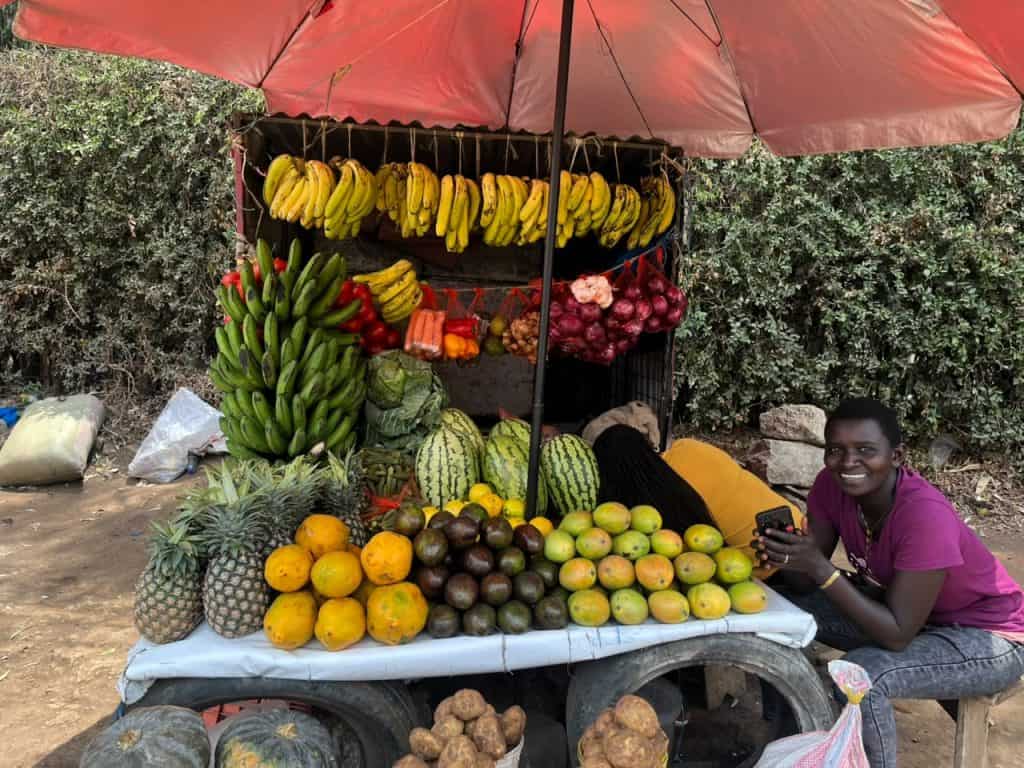
Speaking on the matter, Ruth Mwanza, a 30-year-old vegetable vendor in Nairobi County, said, “The rising cost of fuel is a sharp blow to my business.”
“You see,” Ruth said, “My business requires me to wake up at 0300 hours every day. I travel 15 kilometers to Marigiti market in downtown Nairobi to buy goods before dawn. I use public trasport every day and I am worried that the return on investment will be lost”
“Before the October 2026 fuel price adjustment, the one-way trip cost me about KSh 100 (USD $0.78) . Now I am expected to pay between KSh 130 (USD $1) and KSh 150 ($1.15). The increase may look small, but they have a significant impact on my business. This is because I pay for two , I pay for my own transportation, and I also pay for the goods because they also occupy a seat in the matatu,” added Mwanza.
“I wanted to delegate so I could have enough time to do other domestic chores; however, rising fuel prices have led me to keep only one other employee instead of expanding, “ said Mwanza.
Besides her, another vegetable vendor also lamented, “An increase in fuel prices adds to my operating costs. I have to review my expenses and pass some of the additional costs on to my customers.”
While the impact has already hit low-income entrepreneurs hardest, the pinch seems to reverberate everywhere.

Sharon Okeyo, a rights activist and coordinator at Women Climate Action and Livelihood Development, said, “Women must be at the epicenter of energy discussion.”
Okeyo also said, “The challenges with the rising cost of fuel go beyond the price of fuel itself.”
“Women who rely on public transportation, manage household energy use, run small businesses, or perform unpaid care work may face additional financial and time pressures as energy and transportation costs affect their daily lives,” added Okeyo.
Accordingly, Malkia, the Disruptor in Chief at Sauti Salama, an institution that represents vulnerable groups, young women and girls, said, “The transition cannot be just if energy systems remain patriarchal.”
“The decisions made in the boardroom seem to turn a blind eye to the impact the cost of fuel has on the cost of safety for women and girls. For women and girls to access cheap transport, they have to move at odd hours,” said Malkia. “That puts in jeopardy their psychological, physical and emotional well-being”
Malkia believes women must have meaningful power to shape energy policies to achieve a just transition in Kenya.
An “unjust” energy transition has gendered implications that are not only cross-cutting but also deepen structural inequalities. Unfortunately, few fossil fuel analysts recognize the outcome of ungendered policies.
Over-reliance on fossil-fuel-powered public transportation remains Kenya’s most expensive expenditure, estimated at over $4 billion (Kshs. 519.68 billion) annually. Investing in geothermal power and electric vehicles could reduce dependence on imported petroleum, lower transport operating costs over time and ease pressure on household budgets. This proposal is actually underscored the Kenya Energy Transition and Investment Plan 2023-2050,
Policymakers in Kenya must realize that every shilling spent keeping pump prices low is a shilling that cannot go to public hospitals, universal healthcare (UHC), schools, infrastructure, and ultimately the well-being of women and girls who make up more than 50 percent of the country’s population.
It’s time to stop rhetoric and fast-track the replacement of fossil-fuel vehicles with electric vehicles (EVs).
About The Author


SUBSCRIBE TO OUR NEWSLETTER