“Don’t Wait for Finished Products”: Fathers Gatete and Callixte Urge Early Industry Partnership to Strengthen TVET
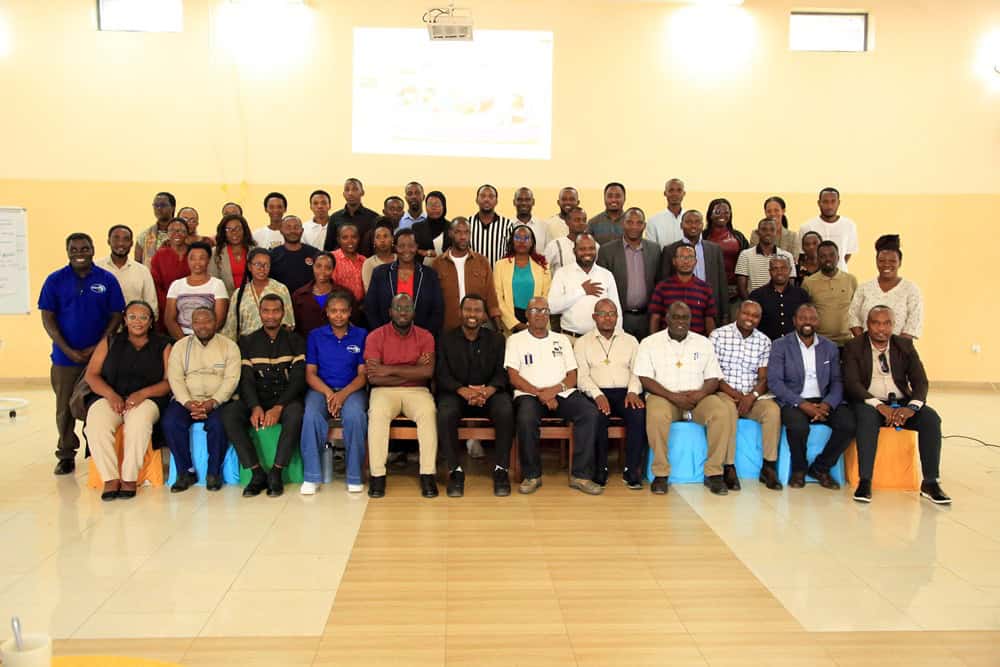
TVET must no longer be treated as the responsibility of training schools alone.
KIGALI — Technical and Vocational Education and Training (TVET) cannot succeed if training institutions operate in isolation from industry. Businesses, government, parents and training centres must work together from the earliest stages of skills development, rather than waiting until students graduate.
That was the central message delivered by Father Callixte Ukwitegetse and Father Gatete Innocent during Rwanda’s national TVET stakeholder meeting organized by the Salesians of Don Bosco in Rwanda with the support from Don Bosco Tech Africa, a coordinating body of all the Salesian Technical Schools in Africa and Madagascar.
Through complementary interventions, the two priests highlighted the need to connect Rwanda’s vocational training system more closely with labour market demands while aligning national efforts with a broader African vision.

Father Callixte presented the continental perspective, while Father Gatete challenged industries to become actively involved in training future workers before they enter the job market.
From Addis Ababa to Kigali: Building a Continental Approach
Father Callixte Ukwitegetse reminded participants that the discussions in Kigali were part of a wider initiative led by the Salesians of Don Bosco across Africa.
“This is a global programme that the Salesians of Don Bosco are implementing throughout Africa,” he said.
He recalled a meeting held in August in Addis Ababa, where Don Bosco Tech Africa (DBTA), together with the African Union, brought together political leaders and decision-makers from different African countries to discuss how governments and training institutions could strengthen cooperation in technical and vocational education.
“In August, we met in Addis Ababa, where DBTA, together with the African Union, convened political leaders and decision-makers from different African countries,” he recalled.
The experience raised an important question for Rwanda: if countries are moving towards greater cooperation at continental level, how can they strengthen coordination within their own national systems?

“If at continental level we are making progress, how are we, as countries, moving together?” he asked.
For Father Callixte, the national stakeholder meeting offered an opportunity to address that challenge by sharing best practices and identifying what training institutions should learn from industry, students and the experiences of other institutions.
“The objective of this national stakeholder meeting is to share best practices and move together,” he said, emphasising that Technical and Vocational Education and Training is the common purpose bringing stakeholders together.
Rwanda Is Investing in TVET, but Parents Must Be Reached
Father Callixte also highlighted the resources Rwanda is committing to technical and vocational education.
Drawing on his experience at his school in Gatenga, he said he had managed RWF 32 million for technical examinations alone. He noted that his institution was one of 808 training institutions in the country.
“I handled 32 million Rwandan francs for technical examinations only, and this is one of 808 institutions in the country,” he said.

He challenged participants to reflect on the scale of public investment supporting vocational education.
“Can you understand how much money your country has put into this?” he asked.
However, he argued that government investment and political commitment must be matched by stronger engagement with families. In his view, parents remain central to decisions about whether young people pursue vocational training.
“Politicians have done their role. Now, how are you reaching the parents?” he asked.
He called for greater efforts to help parents understand the value of technical education and encourage young people to enrol in programmes that respond to the country’s skills needs.
“How do we reach that parent so that the student, the tailor we train today, is one the country needs?” he said.
His intervention also highlighted the importance of improving the entire vocational training journey, beginning with career guidance before enrolment and continuing through practical and theoretical learning, industry engagement and feedback from graduates after they enter employment.
He pointed to practical challenges that require collective solutions, including language barriers. Some students learn in Kinyarwanda, while certain technical tools do not have commonly used Kinyarwanda names, creating difficulties in the learning process.
He also stressed that training must produce graduates who can confidently perform real tasks in the workplace. A plumber, for example, should be able to climb a building and install pipes correctly, not simply explain the theory behind the work.
Father Gatete Challenges Industry to Get Involved Before Graduation
While Father Callixte focused on national coordination and continental cooperation, Father Gatete Innocent delivered a direct message to the private sector.

Father Gatete is Director of Don Bosco Rango TVET School and Coordinator of Salesian schools in the Africa Great Lakes Province, which covers Burundi, Rwanda and Uganda.
He described vocational education as a means of empowering young people to contribute to national development while also building their personal capacities.
“It is to give young people the possibility to develop their country while also developing their personality,” he said.
His strongest appeal was directed at companies that receive young people for internships or recruit graduates from vocational training institutions.
He urged businesses to become involved much earlier in the training process instead of waiting for schools to deliver graduates who are already fully prepared for employment.
“I call upon these industries that welcome young people to also come and engage upstream, not only wait for us to give them finished products, but to also come and train their staff in our institutions,” he said.
For Father Gatete, industry partnerships should not begin only when students complete their studies. Employers should contribute from the beginning by sharing practical experience, professional standards and the skills required in their workplaces.
Such collaboration could help reduce the gap between what students learn in training institutions and what companies actually expect from prospective employees.
He also thanked the Government for providing guidelines that help institutions align their work with the country’s development priorities.
“I thank the State, which really gives us the guidelines, without which we would work in a scattered way,” he said.
A Shared Responsibility for the Future of TVET
The contributions of Fathers Callixte and Gatete pointed towards a common conclusion: strengthening TVET requires collective responsibility.
Father Callixte called for countries and institutions to coordinate their efforts, while Father Gatete emphasised the need for businesses to participate directly in preparing future workers.
Their messages reflected several priorities raised during the national stakeholder meeting, including aligning training programmes with labour market demands, strengthening cooperation between schools and industry, and improving access to practical training equipment and machinery.

The Director of Don Bosco Tech Africa Fr. Roméo Salami also gave intervention during the Forum held in Kigali on Tuesday, 10th November, 2026
Other priorities included building trainers’ capacity, expanding language learning and strengthening career guidance so that young people can make informed choices about their professional futures.
The challenge now is to turn these recommendations into practical and sustained action.
The message from Kigali was clear: vocational training institutions cannot prepare tomorrow’s workforce alone. Businesses must participate from the beginning, parents must be more actively involved in career choices, and public institutions must work towards a shared national vision.
TVET must no longer be treated as the responsibility of training schools alone. It must become a national partnership in which industry helps shape skills from the first day of training, not only when graduates are ready for employment.
About The Author


SUBSCRIBE TO OUR NEWSLETTER