Innovative Solutions for Sustainable Water Management: The Rwanda Water Resource Modeling Hackathon 2024

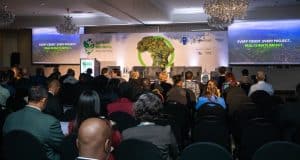
The Rwanda Water Resources Board (RWB) in collaboration with Albertine Rift Conservation Society (ARCOS), under the Living Lakes Biodiversity and Climate Project, awarded the top six participants of the Water Resource Modeling Hackathon 2024.
The Living Lakes Biodiversity and Climate Project is under the German International Climate Initiative, funded by the Federal Ministry for the Environment, Nature Conservation, Nuclear Safety and Consumer Protection (BMUV).
This hackathon, which followed National Water Week, aimed to promote sustainable water management in Rwanda through improved students’ capacity building, resilient water systems, career development in the water sector, data-driven decision-making, and biodiversity conservation.

Evariste NSABIMANA, Deputy Director of Rwanda Water Resources Board (RWB), emphasized the need for collaboration between industry and academia to generate innovation, identify future technical personnel, and implement hackathons for student contests.
He said, “There is a large consensus that Industry and Academia need to collaborate to generate not only innovation and knowledge responding to the country’s critical issues but also to identify the profile of future technical personnel or professionals. Hackathons are one of the areas where such collaboration can be realized through small contests for students.”
Rwanda is utilizing hackathons for statistical projects, engaging students and raising their awareness while detecting the most promising talent in the country and contributing to solving real-world problems.
NSABIMANA congratulated participants for their impressive work and dedication, stating that their achievements are just the beginning, highlighting their potential as future leaders. The competition brought together the creative ideas of undergraduate and postgraduate students, in applying modeling techniques to devise practical solutions for sustainable water use and management
He said, “We witnessed the finale of hard work, creativity, and dedication from all the participants. Your contributions have not only showcased your talents but also highlighted the potential solutions for sustainable water management in Rwanda.”
He concluded by emphasizing the importance of celebrating the achievements of the hackathon and preparing to implement the innovative ideas that emerged from the competition.

During his speech, Dr. Sam KANYAMIBWA, the Chief Executive Officer of the Albertine Rift Conservation Society (ARCOS), underscored the critical role of water in human life, highlighting the growing demands on water resources due to climate change, population growth, and urbanization.
He emphasized the importance of investing in the next generation of water experts for a sustainable future and inspiring a new generation of leaders.
He said, “We must invest in the next generation of water experts. By empowering young minds with the knowledge and tools to address water-related challenges, we are not only securing a sustainable future but also inspiring a new generation of leaders.”
He underlined the significance of fostering innovation and collaboration among the finalists, expressing gratitude to the Rwanda Water Resources Board for their efforts and urging support for the next generation of lake managers.

Emmanuel SINGIRANKABO, one of the top six participants of the Water Resource Modeling Hackathon 2024, a civil engineering student at the University of Rwanda, developed a model entitled ‘Development of Rainfall-Runoff Model using HEC-HMS for Sustainable Water Use and Management and Enhance Biodiversity Conservatives in Rwanda: Case of Mbirurume Catchment’, aiming to improve the catchment’s management.
He noted that his project is intended to address issues in Mbirurume Catchment, including flash flooding, soil erosion, sediment loading, poor agricultural practices, mining activities, environmental degradation, and deforestation.
He said, “This model will help to develop sustainable solutions for problems in the Mbirurume catchment, focusing on water resources management and biodiversity conservation. It will save time and money on evaluation and decision-making, ensuring effective and sustainable solutions.”
He concluded by saying the hackathon fosters knowledge and friendships among students from different universities and increases students’ confidence in problem-solving. He recommended increasing facilities for future hackathons and incorporating hydrological modeling for better decision-making.

Marie Claudine UMUTONIWASE, the winner of Rwanda’s Water Resource Modeling Hackathon 2024, a 3rd-year civil engineering student at the University of Rwanda, College of Science and Technology, shared her project that secured her victory.
She said that she developed a flash flood prediction model for Sebeya, Pfunda, aiming to predict and mitigate flood damage before it causes significant damage to properties.
She appreciated the organizers of the hackathon for providing a challenging yet valuable learning experience for students, particularly girls.
She said, “I sincerely appreciate the organizers for this hackathon; it has been challenging, but it’s still a good journey for students for us to learn; mostly we learn from challenges; if you don’t meet a challenge, you’re never going to learn, so this challenge or competition has given me, like, eagerness to find some of the solutions that I wouldn’t have thought about before, so I appreciate RWB, ARCOS, and the government of Rwanda, which has given us the opportunity, especially girls, to participate in this activity.”
She recommended students participate in research projects, even if uncertain about the outcome. She also suggested improving data collection processes in institutions responsible for data collection to make local data more accessible and user-friendly.
Marie Claudine Umutoniwase was awarded 1,000,000 RWF, Emmanuel Singirankabo 800,000 RWF, Olivier Iradukunda 600,000 RWF, Fidele Mwizerwa 500,000 RWF, Hodari Jean Pierre 400,000 RWF, and Jean Bosco Ntirenganya 300,000 RWF.


About The Author


SUBSCRIBE TO OUR NEWSLETTER