Kigali cannot afford another communiqué. Africa food systems forum must leave with solutions that reach the farm and the child.

Garpodie///
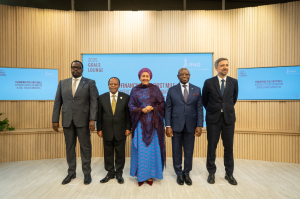
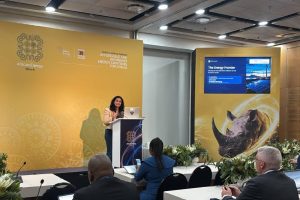
This week more than 5,000 leaders, investors, scientists and young entrepreneurs are gathered in Kigali for the 20th Africa Food Systems Forum. The theme is the right one: investing in Africa’s agri-food systems to nourish nations, grow jobs and build resilience. The timing is also right. A new continental agricultural strategy for 2026–2035 has just come into force. Year one of a decade is when budgets, pipelines and political choices are set.
What the continent cannot afford is another week of panels that end in a polished statement while hunger, climate shocks and stunting continue on their current path.
The numbers that should sit on every table in the Kigali Convention Centre
Africa now has the largest number of hungry people of any region. In 2025, about 309 million people on the continent did not get enough to eat — more than in Asia — even after a small drop in the share of the population facing hunger, from 20.3 percent to 20.0 percent. More than half of Africans faced moderate or severe food insecurity. Two-thirds could not afford a healthy diet. Rapid population growth means a modest improvement in percentages can still leave more people hungry in absolute terms. By 2030, Africa is projected to account for more than half of the world’s remaining hunger.
Malnutrition is not only about empty plates. Stunting still affects about three in ten African children under five, well above the global average. In Central Africa the figure is near 40 percent. Africa is the only region where the number of stunted children has risen even as prevalence has slowly fallen elsewhere. Roughly two in five of the world’s stunted children now live in Africa. Stunting is not a statistic. It is permanently reduced cognitive development, weaker immunity, lower lifetime earnings, and a tax on the next generation of farmers, nurses and engineers.
Climate is already in the field. About 90 percent of agriculture in sub-Saharan Africa depends on rainfall. Only around 6 percent of arable land is irrigated. Climate change has already cut agricultural productivity growth in Africa more than in any other region. Yields of maize, wheat and cassava face further losses this century without adaptation. A strengthening El Niño is another reminder that resilience cannot remain a conference word.
Production has not been standing still. Farm output has roughly doubled in real terms over the past two decades and cereal yields have risen. Farmer incomes have improved in many places. Those gains have not closed the hunger gap, have not stopped the food import bill from remaining enormous, and have not put a healthy diet within reach of most households. More tonnes without better markets, storage, processing, water and nutrition is not a food system.
Twenty years of forums have produced ideas. They have not produced enough last-mile delivery.
The Africa Food Systems Forum has value. It puts finance ministers in the same room as agriculture ministers. It surfaces bankable projects. Past editions have announced investment programmes, deal rooms and partnerships worth billions. That is not nothing.
It is also not enough. If announcements were the metric, Africa would already be food-secure. The gap is between the stage and the smallholder: quality seed that never reaches the village, irrigation schemes that stay on paper, climate-finance proposals that never become investment-ready projects, and nutrition programmes that treat stunting as a health-only problem after the damage is done.
The new continental targets make the test clear: raise agrifood output by 45 percent by 2035, cut post-harvest losses in half, mobilise $100 billion, move toward zero hunger, reduce stunting by a quarter, and put a healthy diet within reach of 60 percent of people. Those targets will not be met by another round of commitments to commit.
What “tangible” should mean before the forum closes
Tangible is not a slogan. It is a package that can be audited in 12 months.
1. Water and irrigation as food policy, not an afterthought.
Africa has the land and a large share of the world’s unused irrigation potential. It does not have the right mix of small-scale, farmer-managed systems, solar pumping and basin-level planning. Kigali should not leave with another session titled “why water matters.” It should leave with country pipelines: hectares to be brought under reliable water next year, who pays, which farmers are first, and how groundwater will be protected.
2. Seed, storage and markets that cut losses before new land is cleared.
Counterfeit seed, over-reliance on maize and heavy post-harvest losses are structural, not accidental. Expanding the seed portfolio, commercialising clean planting material, and financing storage and rural aggregation are cheaper than importing calories later.
3. Nutrition targets attached to agricultural investment, not parked in a side event.
A food systems forum that treats stunting as someone else’s file will fail its own theme. Every major investment announced in Kigali should state how it improves dietary diversity for women and children under two — more diverse crops, animal-source foods, indigenous foods and healthier food environments in towns — not only cereal tonnage. A 25 percent cut in stunting will not happen if agriculture only counts bags of maize.
4. Climate finance that is project-ready, not ambition-ready.
Africa is not short of climate speeches. It is short of proposals that can actually be financed. The useful output from Kigali is a shortlist of investment-ready projects with agriculture, finance and environment ministries on the same page — not another declaration that climate matters.
5. Capital that reaches women and youth as producers, not as photo opportunities.
Women already hold much of African food production together and still face the steepest barriers to land, working capital and markets. Youth want agribusinesses, not only inclusion language. Tangible here means credit lines, land-tenure reforms and procurement that actually buy from women- and youth-led enterprises.
6. A public scoreboard, not a closed communiqué.
Before the week ends, the forum should publish which countries tabled funded programmes; how much is signed rather than “in discussion”; the hectares, farmers and nutrition outcomes attached to each; and a 12-month review date. If last year’s big country programmes cannot be tracked into delivery, the model is the problem.
The test is not whether Kigali was well organised
Rwanda is a serious host. Spaces for youth, field visits to seed stations and regenerative farms, and attention to women farmers are the right signals. The question for the rest of the continent is simpler.
Will a farmer in a rain-fed district get better seed, water and a market next season? Will a two-year-old in Central or Eastern Africa be less likely to be stunted in two years because of decisions taken this week? Will the next climate shock meet irrigation, storage and social protection that already exist, or another appeal?
Africa does not lack potential, people or policy frameworks. It lacks the habit of treating a continental summit as a delivery contract. Kigali should be the year the Africa Food Systems Forum stops measuring success by attendance and starts measuring it by hectares irrigated, losses cut, diets improved and children who grow to their full height.
The hungry, the climate-stressed farm and the stunted child will not read the communiqué. They will live with whatever this week actually decides.
About The Author


SUBSCRIBE TO OUR NEWSLETTER