Bugesera: Farmers Turn Chili Farming into a Profitable Enterprise
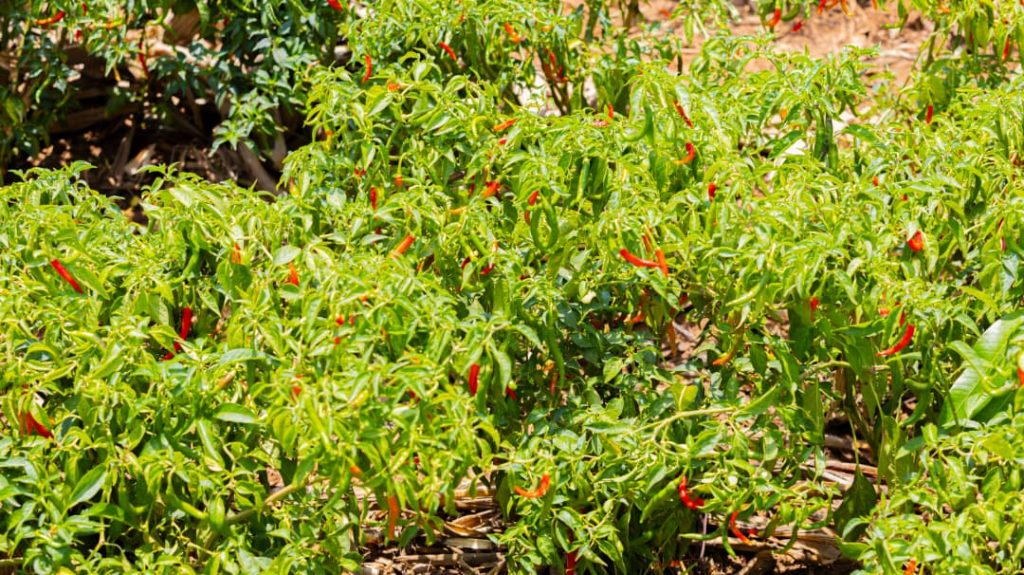
Farmers in Bugesera district are turning chili farming into a more profitable agricultural enterprise after support from the Commercialization and De-Risking for Agricultural Transformation (CDAT) Project helped them improve production, strengthen market access and increase the value of their harvests.
IZMGM Cooperative, based in Mareba Sector, Bugesera District, has 470 members, including 282 women and 188 men, who collectively manage approximately 210 hectares of agricultural land. About 40 hectares are dedicated to vegetable production, with chili occupying 15 hectares, tomatoes five hectares and French beans two hectares, alongside other vegetables.
Before receiving support from CDAT, farmers faced several challenges that limited both production and earnings. Most members cultivated and marketed their crops individually, with farmers deciding what to grow and searching for buyers on their own.
The fragmented approach weakened their ability to negotiate better prices and made it difficult to secure reliable markets. When buyers were unavailable, some farmers had to sell at low prices, while others risked losing part of their harvest.
CDAT introduced a more coordinated approach by supporting farmers with technical training, improved seed, learning visits, organic fertilizer production skills, better crop-management practices and market linkages.
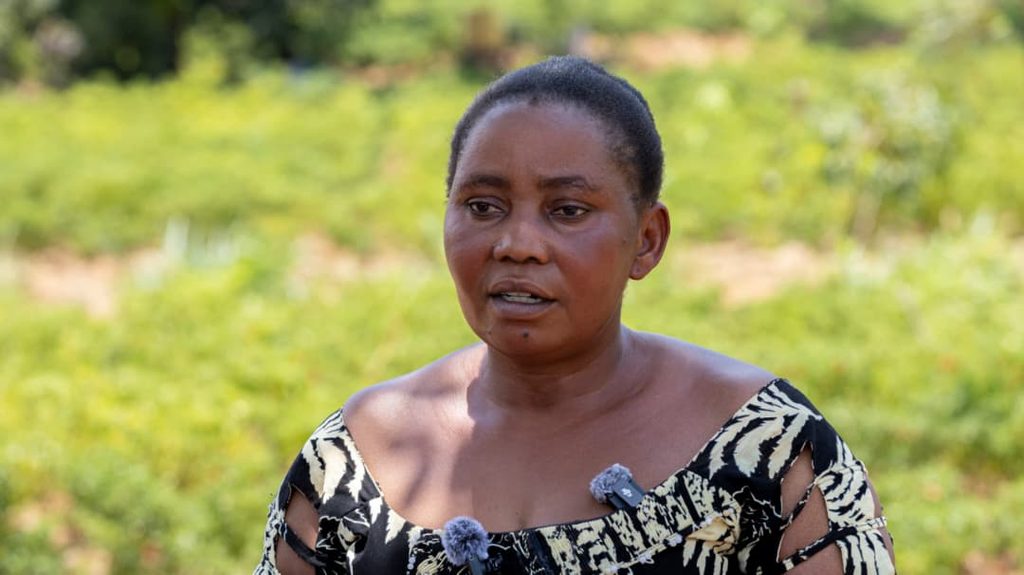
For IZMGM Cooperative President NTABANGANYIMANA Beatha, one of the most important changes has been the transition from individual production to collective farming and marketing.
She explained that CDAT did more than provide agricultural inputs; it helped farmers understand the importance of working together, producing larger volumes and approaching markets as an organized cooperative.
“The project trained us, took us on learning visits, provided quality seed and helped connect us with buyers. These interventions changed the way we work as farmers,” Beatha said.
She noted that farmers previously operated independently, making it difficult to assemble enough produce to satisfy larger buyers. Collective production has since enabled members to coordinate their activities and bring larger volumes to the market.
“Before, every member was producing and selling individually. Now we work together, which means we can produce larger quantities and approach buyers as a cooperative,” she said.
According to Beatha, the stronger organization and improved market access have also contributed to a substantial increase in the cooperative’s reported seasonal income.
“Before CDAT, our cooperative could generate no more than about RWF5 million in a season. Today, we can reach up to RWF32 million,” she said.
She attributed the change partly to the cooperative’s improved ability to access buyers willing to pay better prices for their produce.
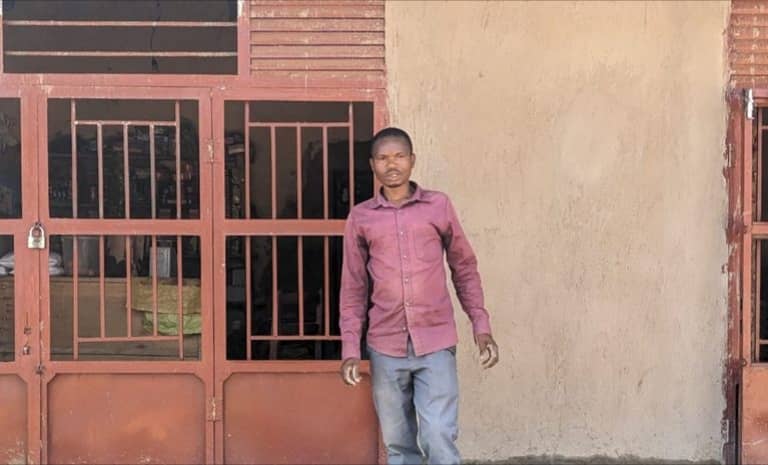
The transformation is also evident at household level, particularly for chili farmer Edouard Bamporiki from Bushenyi Cell, Mareba Sector.
Bamporiki has been growing chili for about five years and is a member of IZMGM Cooperative. His experience illustrates how improved production practices and stronger market connections can turn a crop that once generated modest returns into a source of investment and asset accumulation.
Before benefiting from CDAT-linked support, Bamporiki cultivated chili on about 20 ares. Even after transporting his produce to potential buyers himself, he often struggled to find reliable markets and sometimes received only RWF300 to RWF350 per kilogram.
“Finding a dependable market was one of the major difficulties we faced. Even when I took my chili to buyers myself, the price could be as low as RWF300 or RWF350 per kilogram,” Bamporiki said.
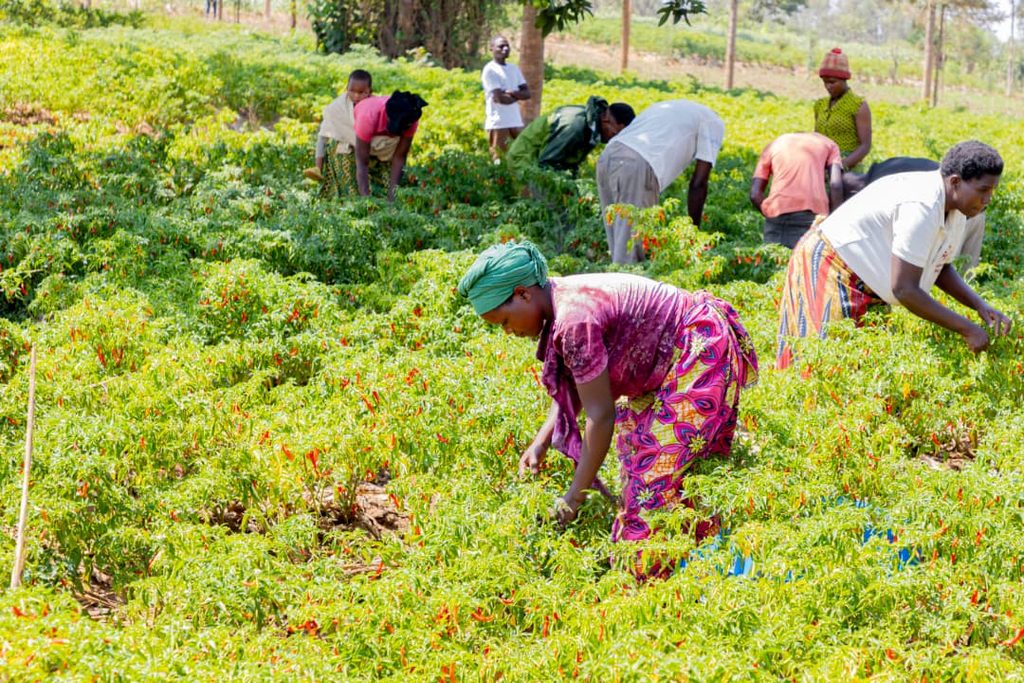
The situation changed after farmers were connected to buyers, including Spices Rwanda Company. Bamporiki now produces the Teja chili variety and sells through the market connections established with the company.
He said the price initially reached about RWF450 per kilogram before increasing to approximately RWF600 per kilogram for fresh chili.
“Once we gained access to a more reliable market, the price improved. We started at around RWF450 per kilogram, and it has now reached about RWF600 for fresh chili,” he said.
The improved market prospects encouraged Bamporiki to expand his cultivated area from 20 ares to 1.2 hectares. At the same time, training and access to improved seed helped him increase productivity considerably.
“Previously, I harvested about four to 4.5 tonnes per hectare. With the improved practices and seed, I am now harvesting around 11 tonnes per hectare,” he said.
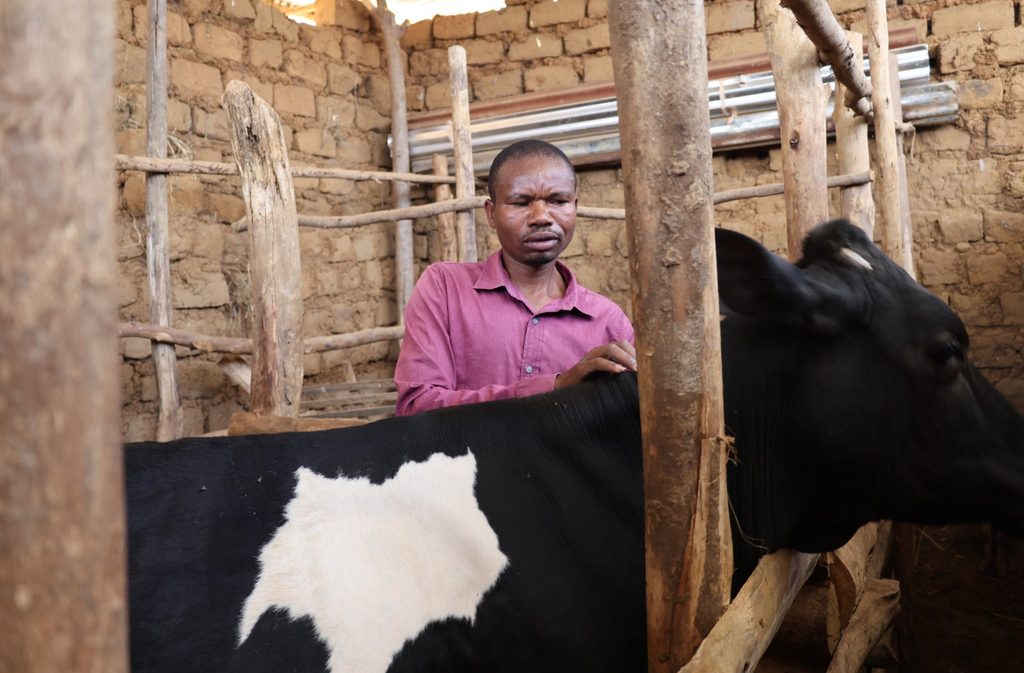
Bamporiki said the increase was not the result of a single intervention but of several changes introduced through the project, including better soil-fertility management, crop-care practices, learning visits and improved seed.
The higher returns from chili farming have allowed him to diversify his household assets and invest in livestock. He owns a cow bought for RWF1 million, which has since produced a calf, as well as three pigs valued at approximately RWF200,000 each and two goats with their offspring, each goat valued at about RWF80,000.
His most significant investment so far is a property he purchased with proceeds from chili farming.
Bamporiki paid RWF6 million for the property, which includes a house and a plot of land. He is now renovating it into a commercial building with two rooms that he plans to rent to businesses.
He estimates that completing the renovation will require another RWF9 million, bringing the total value of the property and investment to about RWF15 million.
“The income from chili gave me the ability to make a major investment. When I learned that my neighbour was selling the property, I had enough money from chili sales to buy it,” he said.
The investment demonstrates how agricultural income can extend beyond meeting immediate household needs when farmers have access to productive technologies and dependable markets.
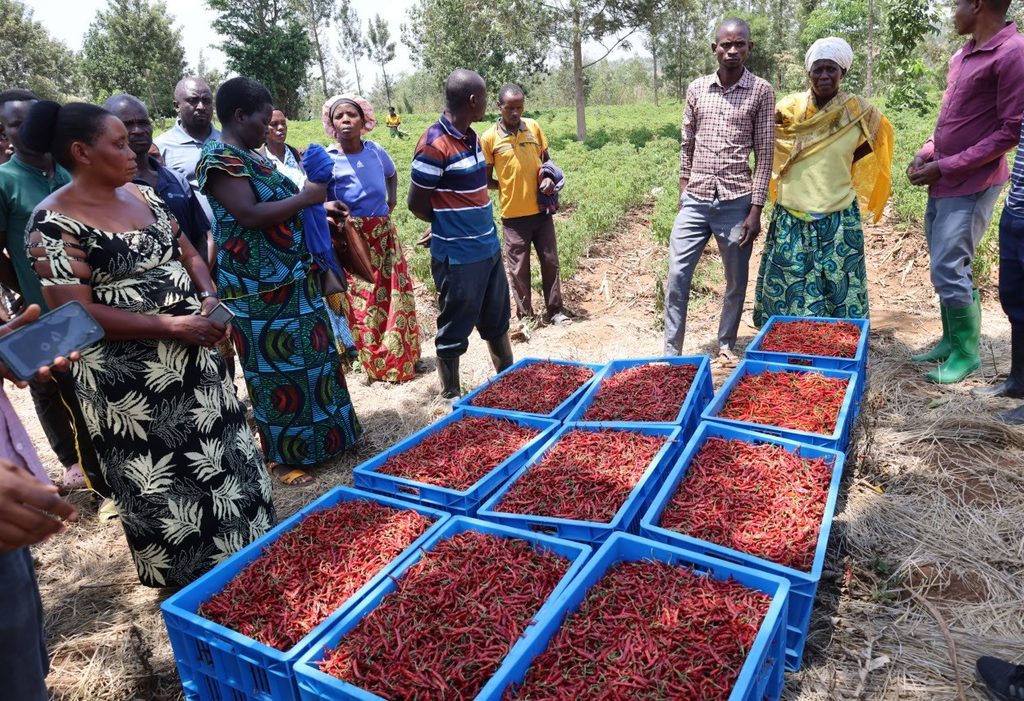
At the cooperative level, CDAT’s interventions have similarly sought to address challenges that previously limited the commercialization of horticulture.
Chantal Muhoza, a horticulture specialist under the CDAT Project, said farmers initially faced several interconnected constraints, including limited market access, difficulties transporting produce, inadequate information about markets and agricultural inputs, and insufficient knowledge of improved agronomic practices.
She explained that the project responded by combining technical support with practical market-oriented interventions rather than focusing only on production.
“Farmers needed more than improved seed. They also needed knowledge, demonstrations, market information and connections with buyers. That is why CDAT combined training with field demonstrations, learning visits and market linkages,” Muhoza said.
She said the project also encouraged farmers to organize themselves into stronger cooperatives, while supporting interventions such as erosion control and matching grants to improve agricultural productivity and commercialization.
“The cooperative approach gives farmers a stronger position because they can coordinate production, mobilize larger volumes and engage buyers more effectively than when they operate individually,” Muhoza said.
She added that market-oriented agriculture requires farmers to understand both production and business aspects, including crop management, quality requirements, volumes and relationships with buyers.
“CDAT is helping farmers move toward commercial horticulture by strengthening their technical knowledge while creating opportunities to connect production with actual market demand,” Muhoza said.
Project figures show the scale of support provided across participating cooperatives. About 4.5 tonnes of seed have been distributed, while approximately 354 hectares of demonstration farms have been established among cooperatives in 15 districts.
About The Author


SUBSCRIBE TO OUR NEWSLETTER