The Forest That Came Back
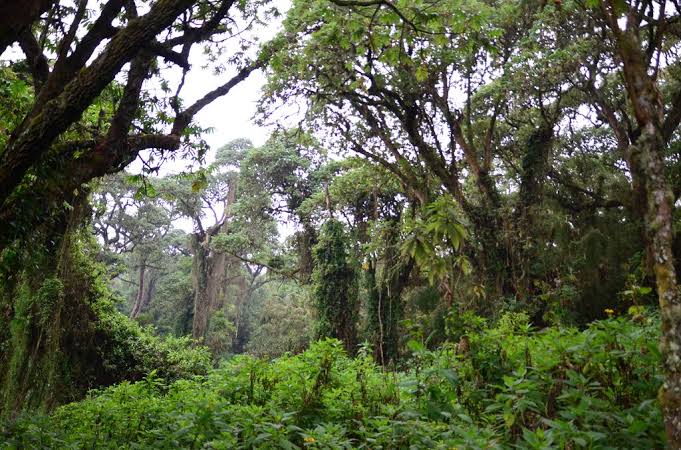
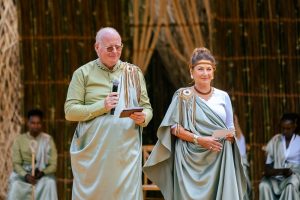
On Friday, Rwanda will name twenty-two infant mountain gorillas at the foot of Volcanoes National Park. The ceremony is called Kwita Izina—to give a name. It looks like a festival. It is also a public accounting of a species that was not supposed to survive.
In the early 1980s, mountain gorillas numbered only a few hundred across the entire Virunga chain. Poachers killed silverbacks for trophies and stole infants for a trade that rarely delivered a living animal. Cattle pushed into the park. Snares set for antelope took gorilla hands and feet. War later emptied ranger posts. Dian Fossey, who had made these animals known to the world from a camp between Karisimbi and Bisoke, was murdered in 1985. The population hovered near collapse.
It did not collapse. Mountain gorillas are now the only great ape whose numbers are known to be rising. A little more than a thousand remain in the wild. About six hundred live in the Virunga Massif shared by Rwanda, Uganda and the Democratic Republic of the Congo. The rest live in Uganda’s Bwindi forest and a sliver of adjoining reserve. In 2018 they were moved from critically endangered to endangered. That is not safety. It is a reprieve earned on wet trails, one patrol at a time.
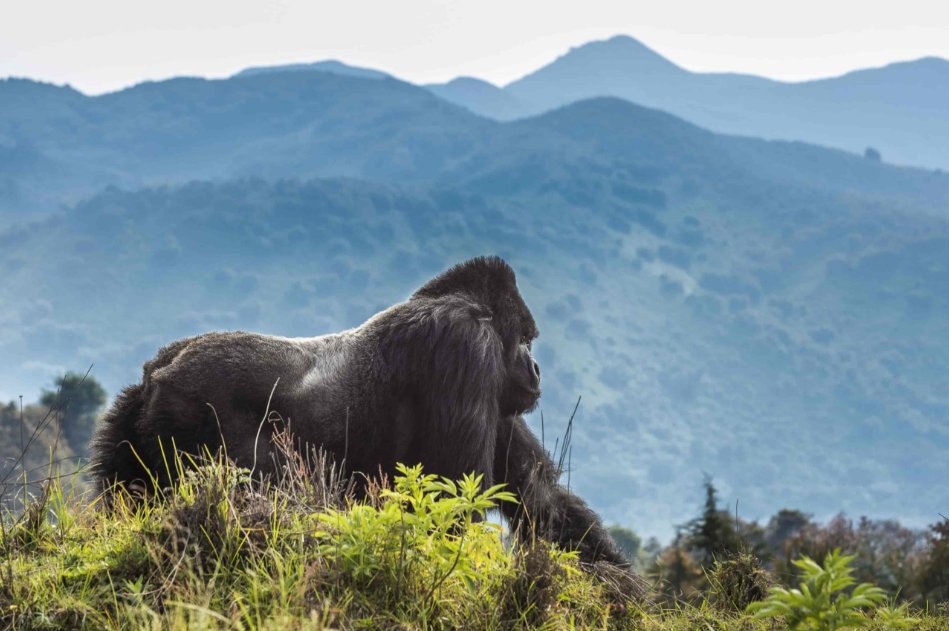
A silverback on the Virunga slopes.
A species with almost no room
Mountain gorillas exist only in two highland forests separated by farmland. They cannot be moved to another mountain range. They cannot be farmed in zoos as a substitute for a wild population; the wild population is the species. Their entire range would fit inside a modest province, and much of it is steep, cold, and already crowded with gorilla groups.
Volcanoes National Park, the Rwandan sector of the Virungas, covers about 160 square kilometres. After independence it was cut roughly in half from its earlier extent. Gorillas now live against a hard edge of smallholder farms in one of Africa’s most densely settled rural landscapes. Families forage on bamboo, thistles, wild celery and other montane plants. Silverbacks defend overlapping home ranges. When the forest fills up, groups meet and fight, and the infants of the losing side often die. Habitat, not poaching, is becoming the binding constraint on further recovery. Expanding the park is expected to allow the population to grow further and to cut infant deaths sharply.
That is the paradox of this success: the animals outgrew the sanctuary built to save them.
What actually worked
The recovery was not a slogan. It was a system.
Rangers and trackers walk the same ridges every day. They know individual gorillas by face and family. They cut snares before an animal steps into them. In recent years teams have pulled thousands of wires from the undergrowth—not because the forest suddenly filled with poachers, but because patrols cover more ground and map every find. A stone wall and trenches now run along much of the boundary to keep buffalo out of fields and people out of the forest. Cross-border poaching is harder to stop. The park’s western and northern edges open onto insecure ground in eastern Congo.
Veterinarians treat snares, respiratory infections and trauma. Because habituated groups are visited daily, a wire on a wrist can be removed before gangrene sets in. That kind of individual medicine is unusual in wildlife work. For a population this small, each saved infant matters.
Science never left. Fossey founded Karisoke in 1967. Researchers still monitor families from a campus in Kinigi. A new genomics lab means kinship, paternity and census genetics can be read in-country. Continuity is the unglamorous core of the story: the same animals, the same ridges, decades of notebooks.
Rwanda chose a high-price, low-volume tourism model. International visitors pay a steep permit fee. Eight people may visit a habituated family for one hour. About a dozen families are open to tourism; the rest are reserved for research. The scarcity is the point. Fees pay rangers. A share of park revenue returns to neighbouring communities for schools, clinics, water and cooperatives. The arrangement is imperfect, and a four-figure ticket is easy to criticise. It has also given farmers a reason to treat a gorilla in a potato field as an asset rather than a pest.
Gorillas do not recognise the lines between Rwanda, Uganda and Congo. The three countries coordinate counts, veterinary protocols and some joint patrols. That machinery is rare, and it is one reason the Virunga animals can be treated as a single population rather than three disconnected anecdotes. Instability in eastern Congo still punches holes in the system. The collaboration exists anyway.
None of this is romantic. It is labour: wet boots, snare wires, faecal samples, budget lines, and the decision, repeated every morning, to go back into the forest.
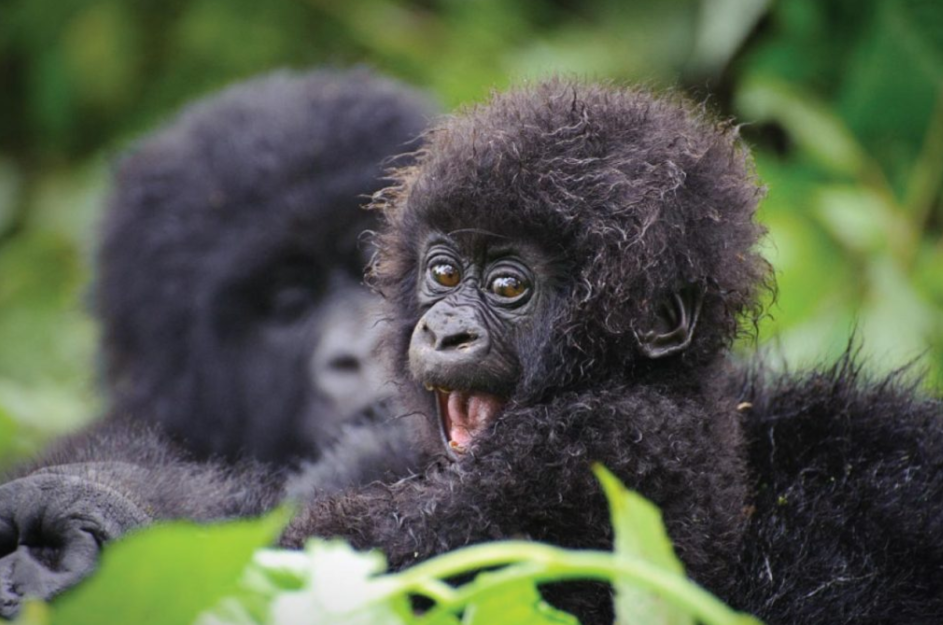
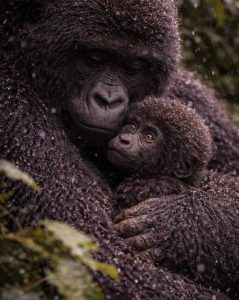
An infant in Volcanoes National Park. Survival of the young is now limited as much by space as by snares.
People at the boundary
Conservation here is a land question. Rwanda is expanding Volcanoes National Park by about a quarter—roughly 37 square kilometres of new habitat—plus a wider managed buffer between farms and wildlife. The full landscape programme is planned over a decade and is meant to reach thousands of households. In late August, work began on a new village in Kinigi for the first wave of relocated families.
Resettlement is the hardest part of the next chapter. Done badly, it recreates the old grievance that the park belongs to foreigners and gorillas, not to the people who were told to move. Done carefully—secure land, working farms, water, schools, tourism jobs—it can convert a boundary war into a larger commons. That is the test. Habitat without consent will not hold.
Disease is the other quiet threat. Gorillas have little immunity to human respiratory viruses. A visitor with a cold can start an outbreak in a family that researchers have followed for fifty years. Rules about distance, and about staying home when ill, exist for that reason. Outbreaks of dangerous human viruses in the wider region have not reached Rwanda’s gorilla sector, but teams treat such events as a standing risk. The closer people and gorillas live, the more human and animal health become the same problem.
What the ceremony is for
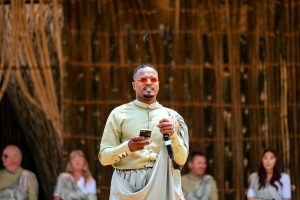
Kwita Izina borrows a Rwandan custom: a child is named in public so the community accepts responsibility for it. Since 2005 the state has applied that logic to gorilla infants. Hundreds have been named. The twenty-first ceremony, on 4 September 2026 in Kinigi, will add twenty-two more. The names are theatre. The ledger behind them is not. Each infant is a data point in a population that still numbers in the low thousands and still occupies a forest you can walk out of in an afternoon.
Mountain gorilla conservation is often sold as a miracle. It is better understood as a maintenance regime. Patrols must continue. Permits must stay limited. Veterinary kits must reach a wounded animal the same day. Communities must see cash and services, not only fences. The park must grow without turning neighbours into enemies. And the three countries that share the Virungas must keep counting the same animals by the same methods, even when politics does not.
The gorillas Fossey sat with are gone. Their descendants are not. That is the whole achievement, and the whole unfinished task: a species brought back from the edge, now waiting to see whether the forest can be made large enough to hold it.
About The Author


SUBSCRIBE TO OUR NEWSLETTER