RBC Urges Districts to Register Dogs as Rwanda Scales Up Rabies Elimination Efforts

Rwanda Biomedical Centre (RBC) has called on all districts to conduct systematic dog registration, saying accurate data on dog populations is critical for planning vaccines and accelerating the elimination of rabies in Rwanda.
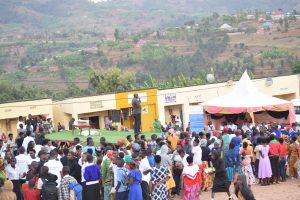
The call was made during a community awareness campaign organized by RBC in collaboration with the Rwanda NGOs Forum on HIV/AIDS, aimed at preventing Neglected Tropical Diseases (NTDs), including rabies. The campaign was held in Ngoma District, one of the areas already implementing dog registration and vaccination initiatives.
Nathan Hitiyaremye, NTD-WASH Coordinator Officer at RBC, said dog population data remains the backbone of Rwanda’s rabies prevention strategy.

“Dog registration is the foundation of rabies prevention. It allows the country to know the target population and plan vaccines accordingly,” Hitiyaremye said.
According to RBC, 3,227 people were bitten by dogs in 2025, with five confirmed cases of rabies, including one reported in Ngoma District.
Hitiyaremye warned that rabies remains one of the deadliest infectious diseases once symptoms appear.
“Once rabies symptoms begin, the patient cannot recover. Nearly 99 percent of people who develop rabies die. The World Health Organization reports that only 19 people worldwide have ever survived the disease after symptoms appeared,” he said.
In Ngoma District, two rabies cases were reported, one resulting in death while the other patient survived after receiving timely medical care.
Ngoma is among the top ten districts with reported dog bites, registering 176 cases, but it has also distinguished itself as the first district to conduct dog registration, a move that has enabled effective vaccination coverage.
WHO sets 70% vaccination target

RBC urged other districts to follow Ngoma’s example, noting that the World Health Organization (WHO) recommends vaccinating at least 70 percent of a country’s dog population to effectively interrupt rabies transmission.
“You cannot vaccinate what you have not counted,” Hitiyaremye said. “Registration allows us to meet the WHO target and protect communities.”
National data show that no district in Rwanda is free from dog bites, though the numbers vary significantly. Nyagatare District leads with 392 reported dog bite cases, followed by Huye District with 352 cases. Some districts recorded as few as six cases.
RBC emphasized that all dogs, whether domestic or stray, must be vaccinated to ensure community protection.
“If every dog is vaccinated, even when a bite occurs, treatment would focus on wound care, knowing that rabies transmission is unlikely,” Hitiyaremye explained.
Children remain the most vulnerable, with 40 percent of rabies-related deaths occurring among those under 15 years of age.
Prevention starts at community level
Beyond vaccination, RBC highlighted public awareness as a key pillar of rabies prevention.
“Dogs do not bite unless provoked. Communities need to understand how to interact safely with animals,” Hitiyaremye said.
He also stressed the importance of immediate first aid following a dog bite.
“Washing the wound thoroughly with clean running water and soap can reduce the risk of infection by up to 90 percent. Victims should then seek medical care within 24 hours,” he advised.
Ngoma District authorities say they have strengthened preventive measures, including public awareness campaigns and enforcement of responsible pet ownership.

Cyriaque Nyiridandi Mapambano, Ngoma District Vice Mayor in charge of Economic Development, said 948 dogs have already been registered and vaccinated in the district.
“We also have programs to control and manage stray dogs. Residents should be aware that penalties apply to those who fail to properly care for their dogs and cats,” Mapambano said.
Rwanda’s progress toward elimination
WHO recommends mass dog vaccination as the most cost-effective way to interrupt rabies transmission. Once a person is bitten, immediate access to post-exposure prophylaxis (PEP) is essential to prevent infection.
RBC reports that in 2024, Rwanda recorded 2,688 dog bite cases, including two confirmed rabies cases, one of which resulted in death. An estimated 90 percent of human rabies cases originate from dog bites.
Rwanda is currently at Stage Zero in the global rabies elimination pathway under the NTD framework, with renewed efforts underway to strengthen surveillance, vaccination, and community awareness.
Globally, rabies kills more than 59,000 people every year and carries an estimated economic burden of USD 8.6 billion annually, including healthcare costs, lost livelihoods, and livestock losses, which account for about 6 percent of total economic impacts.

About The Author


SUBSCRIBE TO OUR NEWSLETTER