BUILDING HOPE AMIDST CORONAVIRUS EPIDEMIC (Fr. Lazar Arasu, 18 August 2020)

Fr. Lazar Arasu, Priest and School Administrator.
COVID-19 has affected everyone in the world, both poor and rich alike. It continues to make a strong impact on the world. Besides appearing as an epidemic caused by a virus, in many places it has become a political tool in the hands of unscrupulous leaders to coerce people and make gains in their favour.
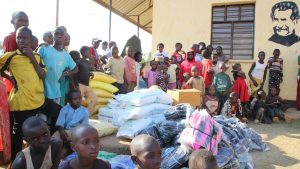
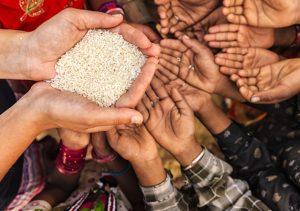
In any large scale catastrophe, be it natural calamity or tragedy created by war, the poor and the marginalized suffer more than the rich and the privileged. Those who are already in the periphery of the society are pushed more to the margins. COVID-19 has robbed the poor of the little that they had. The vulnerable of the society such as the migrants, refugees, slum dwellers, daily wage earners and all those whose income is only hand to mouth ought to be remembered. For instance, the monthly food ration of the refugees is reduced to seven kilos of maize flour, four kilos of beans and less than a liter of oil. Having already locked down in refugee camps and settlements, now they seem to be further locked down in misery.
During this epidemic, the big surge of teenage pregnancies, numerous induced abortions, increase in domestic violence, suicides and self-immolations are only tip of the iceberg. At this lockdown period moving through the villages and towns of Uganda having schools closed, we see children roaming the streets aimlessly, young people playing Lotto throughout the day, after losing jobs, the mothers and fathers of children seated in front of their homes hopelessly. Due to redundancy, young people have resorted to cheap drugs and drinking local brews to ‘loose themselves’ into passing ecstasy which would only push them to greater misery.
Having schools closed for months, teachers have even resorted to ride boda boda (motorcycle taxi) or even make chapatti and pancakes on the roadside. This new forced world order calls for serious reflection and deeper analysis and offers appropriate responses to ourselves. Without faith in God and higher values we can be further pushed against the wall. I need to strengthen my faith and strengthen the faith of others, who perhaps is in greater need. It is for this reason restrictions placed on the places of worship needs to be relaxed with proper procedures.
We all need to ask simple questions: What is happening? Why is it happening? How shall I (we) respond? What does it mean? Even if we become poor in means, we cannot afford to become poor in spirit.
When Jesus said, the poor will be with us always (Mark 14.7), is also an invitation to be close to them, feel their presence and come to know their challenges and deprivations. Poor reveal to us the reality that is around us. They help us to focus our gaze. They teach us how to keep a normal and healthy pace in our life and service. Everyone in the world comes across the poor in one way or another. But often many see them ‘by chance’ or only have a vague glimpse of them or look at them in disgust. Poor may not touch many people or make any impact on them. This is the great catastrophe of our time. In a dramatic way COVID-19 has given a big opportunity to encounter the world of the poor.
But when we look at the poor with eyes of compassion and encounter them with a concern we learn more about ourselves. We need to allow the need and deprivation of others to shake us. We are taught not to get stuck in our own routine life or merely have a glimpse on the realities around us, but we are helped to refocus on our own life. This is the beginning of human sensitivity and the feeling of solidarity with the needy. The poor and sharpen our sensitivity and make us more available. This can certainly deepen our love for life and strengthen our faith in ourselves, others and God.
When we are faced with a catastrophe on a large scale, needing communitarian response. We cannot fight it alone. We need to look at it with a global eye—universal brotherhood and sisterhood. An epidemic such as COVID-19 should not leave anyone as a spectator or a loner, we need to look for a global solution, often may be needing localized applications. The problem seems to be one, though the symptoms, repercussions, and aftermath effects could be different.
The epidemic is teaching us that we are all pilgrims and not tourists. A tourist looks for things only to be amused, but a pilgrim wants to be strengthened and be a witness. We don’t need to be victims but actual players in finding solutions. We may be taking different modes of transport, may even take a little different route, but we want to reach the same destination.
Let our aspiration of reaching that destination bring us together. It is possible through greater sharing of resources, let go of certain profits and returns for the sake of another who is in need more than us. Making an offering that would deprive us of something, but making a little gain for a hungry. It is a time to make our life as simple as possible, as modest as possible, all in the interest of our needy neighbours. Let our aspiration be, to build One World, One Humanity, for we all have One God who is the Father and Mother of us all.
Fr. Lazar Arasu SDB
Palabek, Uganda.
About The Author


SUBSCRIBE TO OUR NEWSLETTER