Beyond the Bite: When Snakebite Survivors Are Left With More Than a Scar
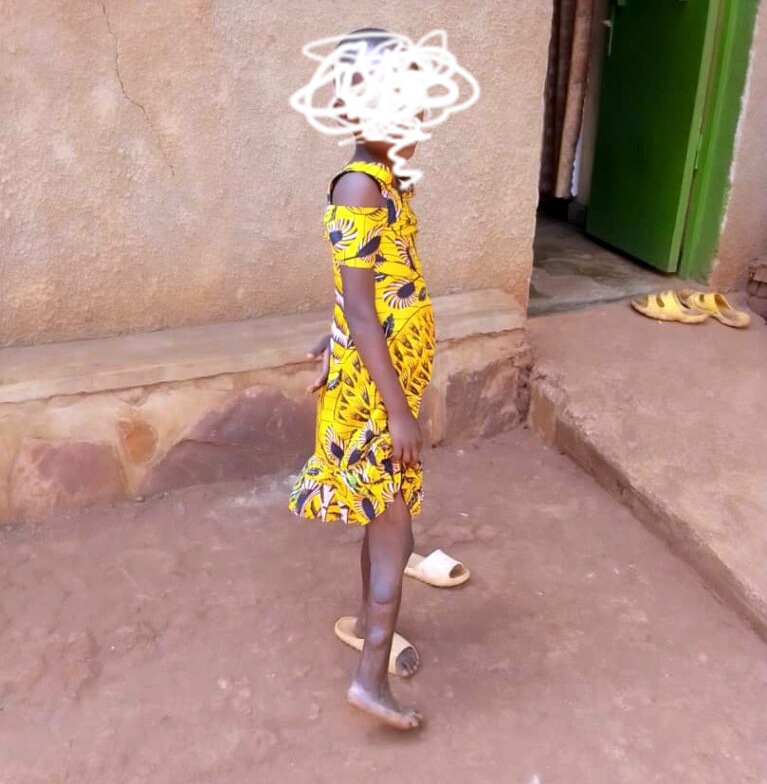
RWAMAGANA, Rwanda – For some snakebite victims, the danger does not end when the snake disappears.
In September 2015, Niyogisubizo Kevine was bitten by a snake in Rwamagana District. What began as a medical emergency became a years-long struggle for treatment, money and recovery—leaving her family to navigate a health problem that went far beyond the initial bite.
Her story, first reported by TOP AFRICA NEWS, offers a human face to a public-health challenge that Rwanda continues to confront.
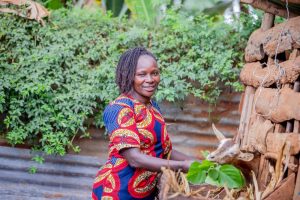
Kevine’s mother, Mukandayambaje Josephine, a 44-year-old widow living in Rwinka Village, Karenge Sector, Rwamagana District, initially sought help from traditional healers after her daughter was bitten.
When the treatment did not help, she took Kevine to a nearby health facility. The child was eventually referred to CHUK, where doctors conducted examinations and performed surgery.
But treatment created another crisis.
Josephine, who herself lives with visual impairment, could not afford the medical costs or the medicines prescribed for her daughter. She accumulated a hospital debt and was directed to seek assistance from local authorities.
She says that when she approached the district authorities, she explained the situation but was unable to secure the support needed to continue her daughter’s treatment.
Eventually, Kevine was discharged after spending weeks receiving care, with the family advised to seek assistance and return for further treatment when they could obtain it. Since then the family still struggling to get treatment as the mother told this website today.
A Story That Raises a Bigger Question
Kevine’s experience raises an uncomfortable question:
What happens to a snakebite survivor after the emergency treatment is over?
Snakebite is often presented as an acute medical emergency—someone is bitten, taken to hospital, treated and discharged. But the consequences can be much longer-lasting, particularly when treatment is delayed, incomplete or financially inaccessible.
Rwanda’s own health authorities have identified snakebite envenoming as a public-health concern requiring prevention, timely treatment, community awareness and stronger health-system responses. Rwanda’s earlier national NTD strategy identified gaps including limited health-worker capacity in snakebite management, weaknesses in antivenom supply chains and insufficient community awareness about prevention and first aid. (RBC)
The challenge is not only about the number of people bitten. It is also about how quickly they receive appropriate treatment and what happens to those who survive with lasting complications.
The Numbers May Not Tell the Whole Story
Research into snakebite in Rwanda has shown that the burden extends well beyond cases recorded at hospitals.
A study examining hospital records from 2017 and 2018 identified 363 snakebite envenoming patients who sought care at district and provincial hospitals. Farmers accounted for 82% of cases in the available demographic data, women represented 61%, and the Eastern Province recorded the largest share of cases at 37%. (PubMed Central (PMC))
But those figures were explicitly considered a minimum estimate, because people who died in communities or sought treatment outside the formal health system were not captured. (PubMed)
A later community-based study in Eastern Province revealed an even wider picture.
Researchers surveyed more than 390,000 people across 763 villages and recorded 2,545 snakebite cases through community health workers. Only 13% of victims initially sought formal healthcare, while 87% first sought help from informal sources such as family members, pharmacists or traditional healers. (PubMed Central (PMC))
The study also found that only 24 of 1,098 victims whose treatment information was available received antivenom. (PubMed Central (PMC))
These findings suggest that hospital statistics alone cannot fully describe the country’s snakebite burden.
The First Treatment Can Change the Outcome
For families like Josephine’s, the first decision after a snakebite can be critical.
The Eastern Province study documented practices including wound cutting or burning, tourniquet application, use of black stones and attempts to extract venom. Researchers warned that such practices can cause additional injury and contribute to long-term disability. (PubMed Central (PMC))
The earlier national NTD strategy also identified the need for stronger community awareness of snakebite prevention and first-aid measures. (RBC)
This makes public education particularly important in rural communities, where farmers and others working outdoors face greater exposure.
The Forgotten Part of the Response: Survivors
The story of Kevine also points toward a part of snakebite policy that deserves greater attention: what happens after survival.
A person who survives a severe bite may still require follow-up care, wound management, surgery, rehabilitation or other forms of support. For a poor household, prolonged treatment can also mean debt, missed work and reduced household income.
This is why snakebite should not be viewed only as a question of emergency medicine.
It is also a question of disability prevention, rehabilitation, social protection and household economic resilience.
Rwanda’s current public-health approach to neglected tropical diseases continues to emphasize community action, prevention and early care, with the Rwanda Biomedical Centre calling for coordinated efforts to address snakebites alongside other neglected diseases. In its 2026 NTD activities, RBC highlighted community awareness and protective measures as part of the country’s efforts toward the 2030 NTD targets. (RBC)
From Counting Bites to Following Lives
Kevine’s story should therefore not simply be remembered as a case of a girl bitten by a snake in 2015.
It should raise a broader question for Rwanda’s health system:
Are we following snakebite victims after they leave the hospital?
How many return to work?
How many require surgery?
How many develop permanent physical complications?
How many families fall into debt while seeking treatment?
And how many victims never appear in official statistics because they never reach a health facility?
These are important questions because the available research already shows that formal health-facility data can significantly underestimate the true burden of snakebite in Rwanda. (PubMed Central (PMC))
A Call for a Survivor-Centred Response
Rwanda has made progress in recognizing snakebite as a public-health issue. But the next step should be to look beyond the emergency room.
A stronger response would connect prevention, rapid referral, appropriate antivenom, affordable treatment, follow-up care, rehabilitation and community awareness.
Health workers need the capacity to manage snakebite. Communities need clear information on what to do immediately after a bite. Health facilities need reliable access to appropriate antivenom. And survivors who suffer lasting complications need a pathway back to health, work and independent living.
For families such as Josephine’s, the issue is not an abstract health statistic.
It is a daughter whose life changed after one encounter with a snake—and a mother who spent years searching for a way to help her.
The real measure of Rwanda’s snakebite response should not only be how many people survive the bite. It should also be how many survivors are able to rebuild their lives after it.
TOP AFRICA NEWS previously reported the case of Niyogisubizo Kevine and her mother, Mukandayambaje Josephine. The case is used here as a human-interest example of the long-term challenges that can follow snakebite; it should not be interpreted as evidence that her individual experience represents all snakebite survivors in Rwanda.
About The Author


SUBSCRIBE TO OUR NEWSLETTER