Rwanda’s Alcohol Crackdown: Opposition Critiques Miss the Point and Sideline Citizens’ Safety
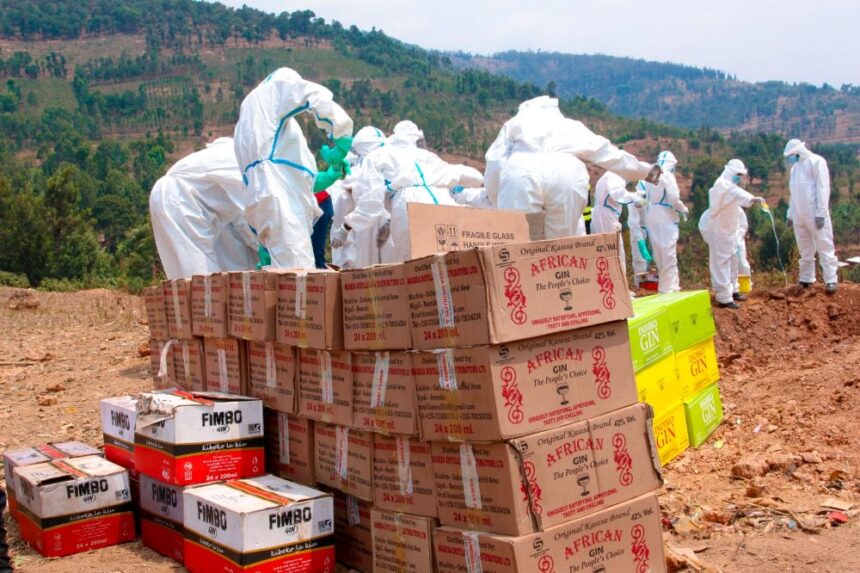
KIGALI — As Rwanda intensifies a nationwide campaign against illicit and substandard alcohol that has already claimed dozens of lives and left more than a hundred people with permanent vision loss, certain opposition voices have responded not with solutions but with familiar accusations of “brutality,” “governance failure,” and “political scandal.”
Their statements, however, reveal more about a pattern of reflexive obstruction than genuine concern for ordinary Rwandans.
Rwanda FDA data and Health Ministry figures show a clear public-health emergency: at least 50 deaths and over 100 cases of blindness or severe illness linked to toxic, often methanol-laced drinks in the first half of 2026 alone. Hundreds more have required hospital treatment. In response, authorities have closed more than 100–140 production sites, revoked licences, recalled products, destroyed seized stock, and arrested dozens of producers and distributors. The measures target both industrial-scale illicit operations and unsafe artisanal production that has long operated outside proper standards.
Opposition groups such as FDU-Inkingi have condemned the closures as “sudden and brutal,” labelled them a multi-faceted “scandal,” and demanded immediate suspension of the campaign, publication of regulatory texts, and open dialogue. Other critics have claimed the actions stem from “succession battles” or pure politics rather than health concerns, while questioning the absence of detailed public inspection reports.
These critiques suffer from a striking lack of clarity. They offer almost no concrete alternative for protecting citizens from poisonous alcohol. They rarely acknowledge the documented death toll or the scale of methanol contamination. Instead, they recycle broad allegations of arbitrariness and repression without explaining how continued production of lethal drinks would serve the public interest. Demands for “dialogue” and “suspension” effectively prioritise the commercial interests of non-compliant producers over the lives of consumers—many of them low-income Rwandans who buy the cheapest available spirits.
This approach fits a recurring pattern. Whenever Rwanda takes decisive action to address a concrete threat—whether public health, security, or economic order—sections of the opposition reach for pretexts that cast the government as the problem. The language of “intimidation,” “destruction,” and “failure of governance” is deployed not to improve regulation but to divert attention from the real danger and to question the country’s overall direction.
Ordinary citizens who have lost relatives to toxic alcohol, or who have watched neighbours go blind after drinking adulterated gin or banana-based spirits, are left with little from these statements beyond political point-scoring. The opposition’s framing treats legitimate enforcement as inherently suspect while offering no roadmap for safer production, better labelling, or effective monitoring that would actually protect consumers.
Public-health crises demand clarity, proportionality, and results—not rhetorical fog. Rwanda’s authorities have a responsibility to enforce standards and remove dangerous products from the market. Critics have a responsibility to engage with the evidence rather than weaponising every enforcement action as proof of systemic failure.
Until opposition voices can articulate how continuing the production and sale of toxic alcohol serves Rwandan citizens better than decisive regulation, their complaints will continue to look less like constructive accountability and more like attempts to undermine national efforts and distract the public from the lives already lost.
About The Author


SUBSCRIBE TO OUR NEWSLETTER