How to Boost Horticulture for Rwandan Exports
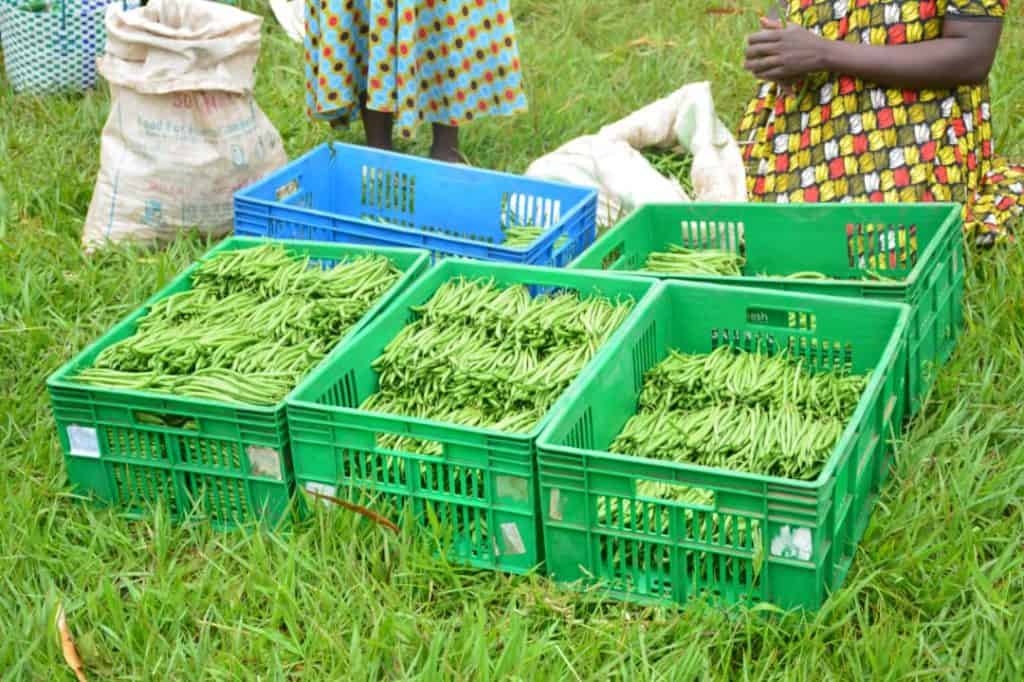
Horticulture in Rwanda
Horticulture in Rwanda is emerging as a source of income, employment and export earnings for Rwandan farmers.
The Commercialization and De – risking for Agriculture Transformation (CDAT) interventions are implemented by the Rwanda Agriculture and Animal Resources Development Board (RAB).
Additionally, they help producers increase yields, expand cultivated land, and connect with higher-value markets beyond Rwanda.
For farmers in Nyagatare district, the transformation is already visible in both the scale of production and the livelihoods built around horticulture.

RUKUNDO Venant is a farmer affiliated with KABOKU Cooperative in Kagutumba Sector, Nyagatare district. He cultivates French beans on four hectares on his family farm, applying steady work and careful soil management to sustain yields and harvest quality across seasons.
He attributes part of this improvement to CDAT, which has helped address challenges that previously limited production. The program offers targeted training and guidance on best practices and provides support in accessing buyers and local markets for farmers across Nyagatare.
Before CDAT came, we farmed mainly for food and sold our produce in small markets around us. We relied on traditional methods and modest harvests, which limited our income and opportunities. The community hoped for better access to markets and more stable prices.
CDAT trained us on land preparation, preparing and using organic manure, and helped us access international markets. This progress reflects Horticulture in Rwanda and demonstrates how training can expand farmer connections and improve yields.
Our production increased, and we are now selling to the international market,” Rukundo said. This improvement shows how support programs can lift smallholders into broader trade channels and sustain longer-term growth.
He said the increase in production has encouraged him to expand his farming activities significantly.
Previously, we harvested five tonnes, but now we are harvesting nearly 15 tonnes. The difference is clear. The change reflects improved efficiency, broader adoption of best practices, and better market access over recent seasons. By comparing these figures, observers can see substantial gains in productivity and output across our farming operations.
I started by cultivating half a hectare, but now I cultivate four hectares. It has not even been two years, he said.
Rukundo added that the project helped farmers establish links with financial institutions.
This gave them opportunities to access financing and invest more in Horticulture in Rwanda.
The benefits of horticulture are not limited to export markets. Farmers also supply vegetables to nearby markets, where they can earn income from regular sales. For Rukundo, the increased earnings have translated into tangible improvements in his household and farming business.
He now owns a motorcycle, supports his children’s education and provides employment to 35 permanent workers, in addition to casual laborers hired when needed.
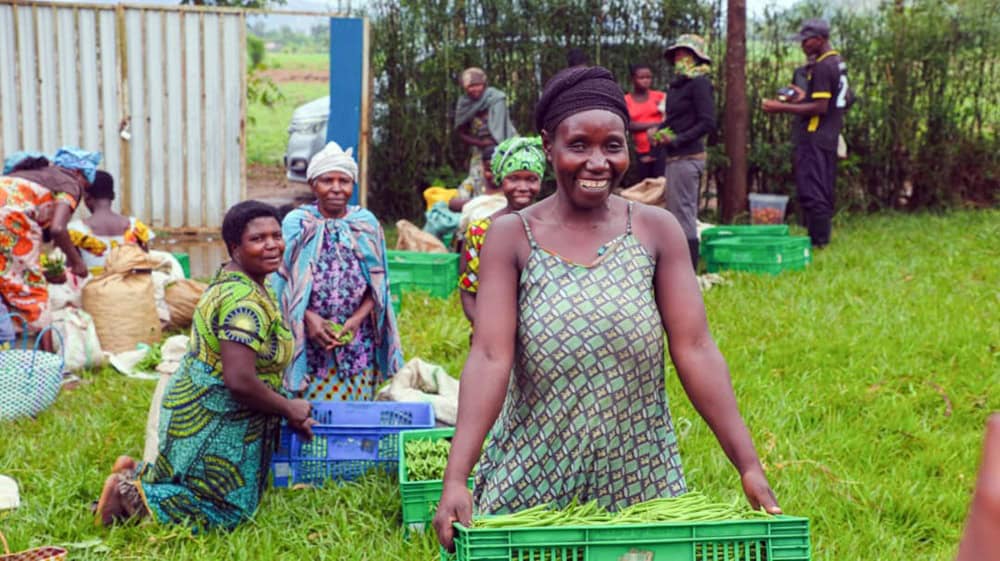
For NYIRATUZA Julienne, a resident of Cyembogo Village, Byimana Cell, Matimba Sector, Nyagatare district, horticulture has provided a pathway to employment and improved household welfare.
She has worked in French bean farming for eight years, and says the income has enabled her children to progress from primary to secondary school.
“This work has helped us move forward. I have been working in French beans for eight years. My children started in primary school, and now they are in secondary school. All of this has been made possible by this work,” Nyiratuza said.
She said that before horticulture created employment opportunities in her community, she had limited means of earning a living and often struggled to meet basic needs.
Today, she says she is able to earn, save and contribute to different community schemes using income from French bean farming.
“Today, no one can look down on us. I belong to a daily savings group where I contribute Rwf1,000 a day. I also contribute Rwf3,000 every week to the community-based health insurance and Rwf1,200 to the burial support group. I get all this money from French beans,” she said.
Nyiratuza said she previously traveled to Uganda to earn a living by carrying bananas, but horticulture has given her a more stable source of income closer to home.
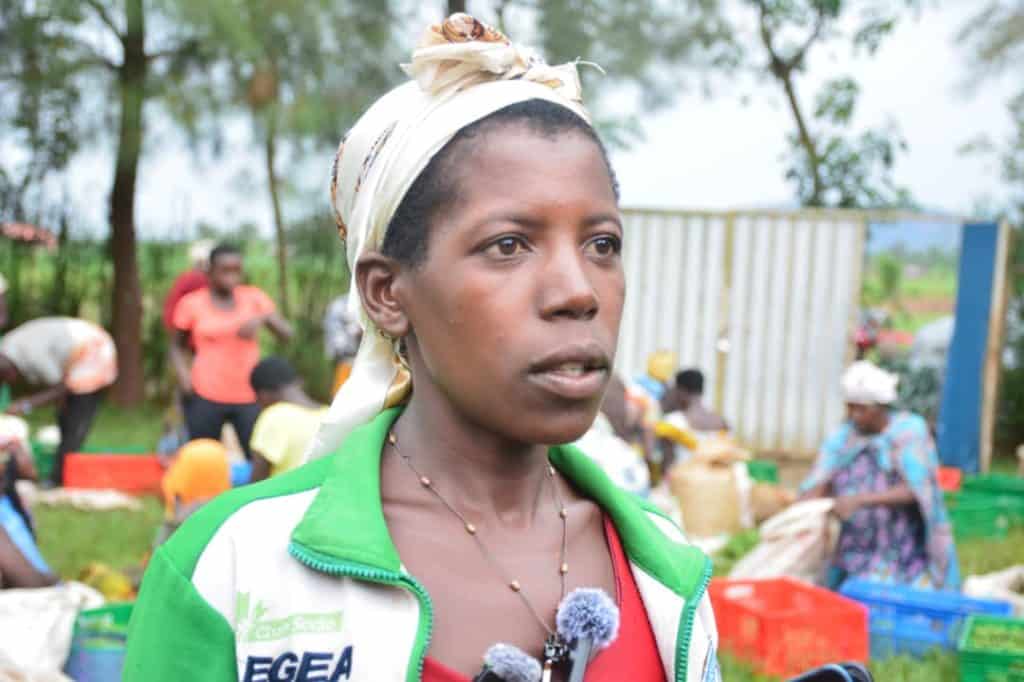
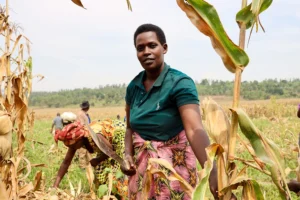
MUKESHIMANA Joyeuse, from Kagera Village, Kagutumba Cell, Matimba Sector, also says the expansion of irrigated agriculture has created employment opportunities while encouraging farmers to invest in commercially valuable crops.
Before irrigation equipment became available, she said, she depended mainly on casual work. The introduction of irrigation, however, enabled farmers to cultivate crops throughout different periods and invest more in horticulture.
“Since irrigation machines became available, farmers have been growing different crops, including French beans, chili, guava, maize, potatoes and others. We get jobs, and I am able to earn money to support myself and my children and pay school fees,” Mukeshimana said.
She said she can sometimes earn between Rwf10,000 and Rwf15,000 a day and is able to save part of her income.
Her earnings also allow her to rent land for cultivation, purchase fertilizer, hire workers and buy pesticides needed to protect crops from pests.
Mukeshimana also cultivated chili on half a hectare, from which she made a profit of more than Rwf100,000.
Beyond income, horticulture has also helped improve food security at household level.
“With French beans, we sell some of what we harvest and keep some for consumption at home. They are good vegetables for our health,” she said.
She added that income from horticulture has enabled her to meet other household needs, including contributing to health insurance and savings.
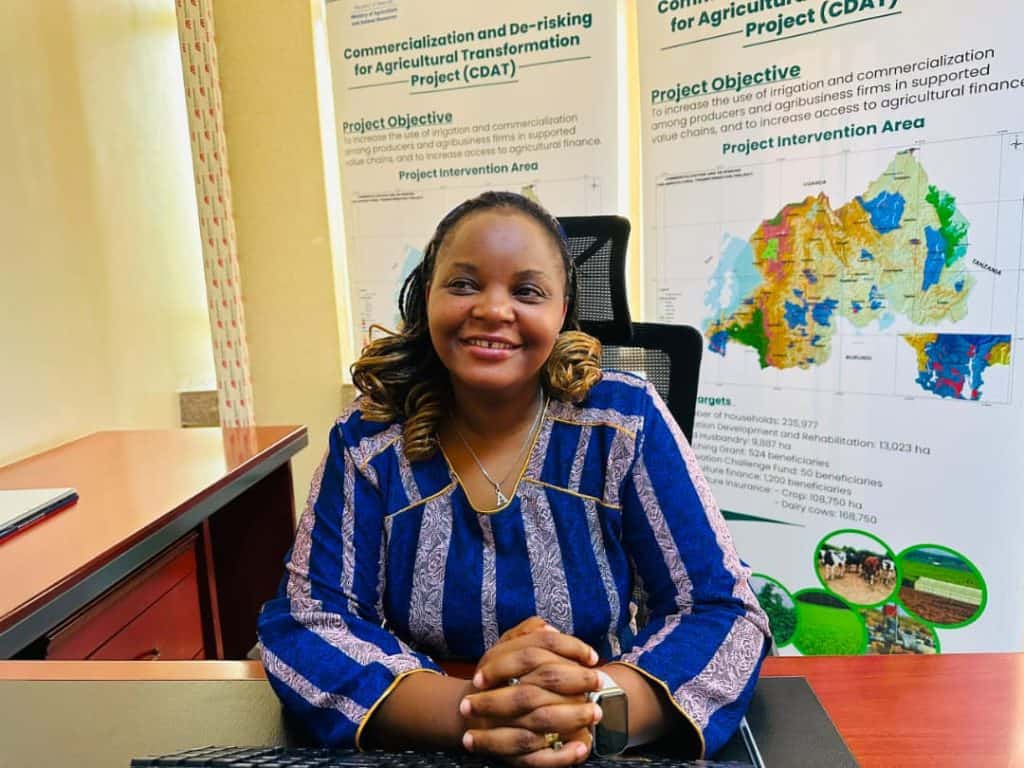
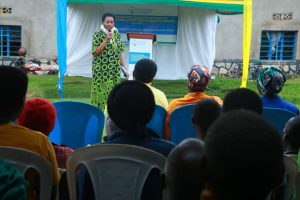
MUHOZA Chantal, a Horticulture Specialist at RAB/CDAT, said the project was established to promote commercial agriculture, particularly horticulture and fruit production, while addressing challenges related to climate change, soil erosion, farmers’ technical knowledge and access to markets.
She said farmers received training designed to strengthen their capacity to manage these challenges and improve productivity.
The project also provided support for the establishment and implementation of horticultural enterprises.
“Another thing CDAT did was to establish support mechanisms to facilitate the implementation of horticultural and fruit production projects,” Muhoza said.
According to Muhoza, CDAT also supported farmers in organizing themselves into cooperatives, helping them pool resources, share knowledge and access services collectively.
The project worked with 74 cooperatives operating in 16 districts across the country.
The impact is reflected in productivity figures recorded across different farming seasons.
In Season A, chili productivity increased by 20.3%, from 7.4 tonnes per hectare in 2023 to 8.9 tonnes in 2025. French bean productivity also increased by 28.8%, rising from eight tonnes to 10.3 tonnes per hectare during the same period.
In Season B, chili productivity rose by 14.3%, from seven tonnes per hectare in 2023 to eight tonnes in 2025. French beans recorded a 47.5% increase, from eight tonnes to 11.8 tonnes per hectare.
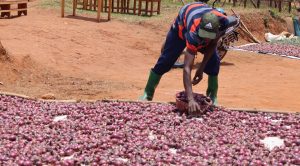
Onion productivity also increased, rising from 13 tonnes per hectare in 2024 to 14.8 tonnes in 2025, representing a 13.8% increase.
The strongest growth was recorded in Season C, when chili productivity increased from six tonnes per hectare in 2023 to 10 tonnes in 2025, representing a 66.7% increase.
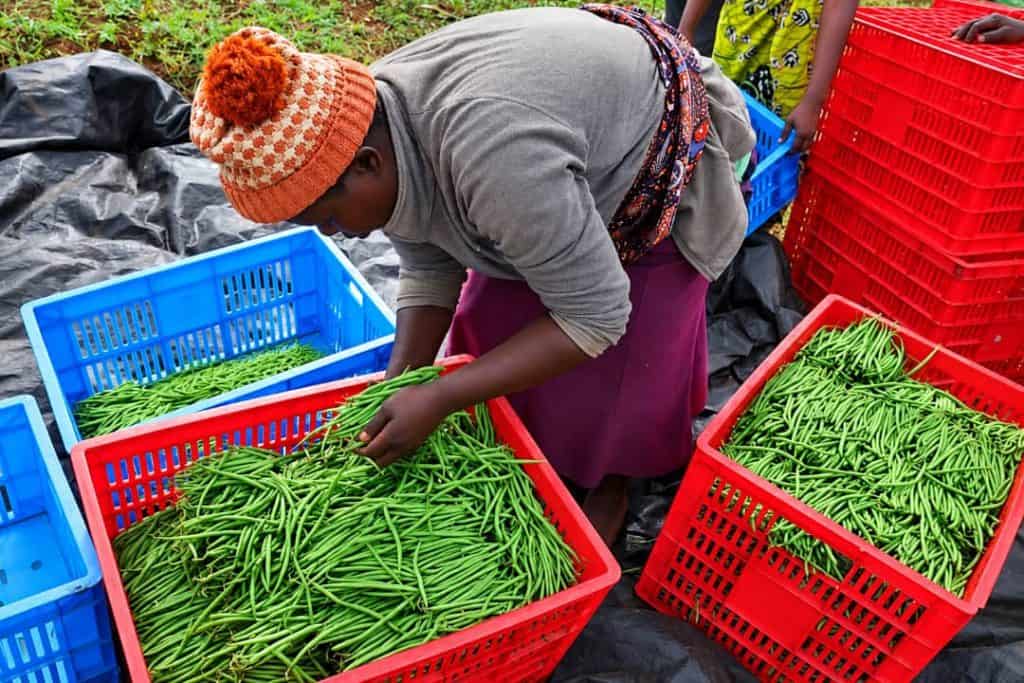
The figures indicate that farmers are producing more from each hectare of land, creating greater opportunities to increase farm revenues while supplying growing domestic and international markets.
The export earnings further demonstrate the economic value of horticulture. A total of 4,000 tonnes and 319 kilograms of chili produced by 10 cooperatives generated Rwf2.1595 billion for farmers.
Meanwhile, 3,294 tonnes of French beans produced by 17 cooperatives generated Rwf1.6245 billion in earnings for farmers.
About The Author


SUBSCRIBE TO OUR NEWSLETTER