Ruhango-Nyanza: Farmers Set to Turn Shared Knowledge into Profitable Agribusinesses and Bigger Markets
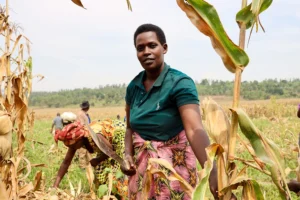
Farmers in Rwanda’s Ruhango and Nyanza districts are poised to turn shared knowledge and practical farming experiences into profitable agribusinesses, higher agricultural productivity and expanded market opportunities, as the Sustainable Agricultural Intensification and Food Security Project (SAIP II) empowers them to adopt improved farming techniques, diversify production, strengthen cooperative management and transform agriculture into a sustainable source of income.
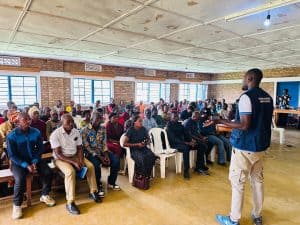
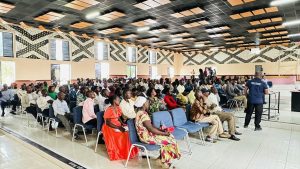
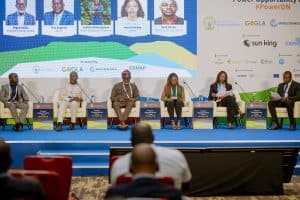
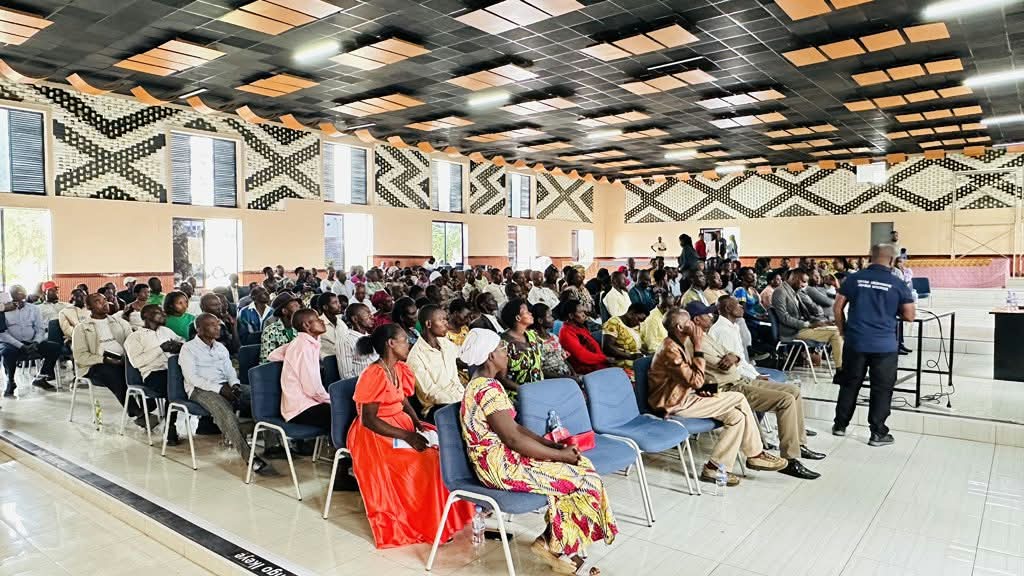
The progress was highlighted during knowledge-sharing sessions that brought together farmers, cooperative representatives, project leaders and district officials from the two districts to exchange experiences, assess achievements and identify practical solutions to challenges affecting agricultural productivity, cooperative management and access to markets.

For HAKIZIMANA Samuel, a member of KOWARU Cooperative in Ruhango district, the initiative has broadened farmers’ understanding of modern agricultural practices and encouraged them to explore new income-generating activities.
The cooperative has 293 members and cultivates 87 hectares of land, mainly producing beans and maize. As members prepare for the bean-growing season in line with their crop rotation practices, Samuel says training and study visits facilitated through SAIP II have helped them discover practical approaches to improving production.
“SAIP II organised study visits that opened our eyes to the progress other cooperatives were making. We visited different parts of the country, learned from their experiences and identified practices that we could adopt to improve our own farming activities,” He said.
Among the lessons he found particularly valuable were making organic manure using locally available materials, growing vegetables and using small-scale irrigation to improve production. These experiences have also encouraged the cooperative to consider diversifying into vegetable and fruit farming to take advantage of commercial markets.
Samuel said farmers increasingly recognise that horticulture can provide additional income beyond their traditional crops. He called on local authorities to build on the achievements made through SAIP II by continuing to support farmers as they expand their agricultural enterprises.

In neighbouring Nyanza district, the experience of MUSABYIMANA Gloria demonstrates how knowledge, collective investment and access to agricultural support can help young people turn modest savings into a growing agribusiness.
Gloria is a member of Youth TUZAMURANE, a group based in Rwabicuma Sector comprising 25 young people, including 17 women. The group currently grows chili peppers on two hectares, supplying a commercial crop that has become a major source of income for its members.
Their journey began with small savings, with each member contributing between Rwf250 and Rwf1,000. When they realised that saving alone would not significantly improve their livelihoods, they decided to pool their resources and invest in farming.
The group initially rented irrigable marshland and planted peas. An initial investment of Rwf322,000 generated more than Rwf1.2 million in revenue, giving the young entrepreneurs confidence to expand their activities and pursue more ambitious goals.
A major breakthrough came when SAIP II organised a competition for youth groups, in which Youth TUZAMURANE emerged among the winners and received agricultural equipment valued at Rwf2.2 million. The package included bicycles, hoes, raincoats, irrigation equipment, water pumps and other essential tools.
The support strengthened the group’s capacity to expand production and manage farming activities more effectively, helping its members view agriculture as a business with the potential to generate sustainable income and employment.
The group subsequently concentrated on chili production and accessed further support through SAIP II’s Matching Grant scheme, which helps farmers invest in agricultural enterprises. Under the arrangement, the project contributes 60 per cent of eligible investment costs, while beneficiaries cover the remaining 40 per cent.
Gloria estimates that the value of the group’s agricultural activities has grown from approximately Rwf3 million when SAIP II began supporting them to between Rwf8 million and Rwf15 million.
“Our chili now reaches international markets, and we also grow French beans to generate additional income. Agriculture has become a genuine business for us, rather than simply an activity to support our daily needs,” she said.
Participation in the knowledge-sharing sessions involving farmers from Ruhango and Nyanza has provided the group with further opportunities to learn from other producers, identify new approaches and improve its agricultural operations.
Gloria believes the exchanges are particularly important because farmers can learn practical lessons from one another and return to their farms with ideas they can implement. She encourages young people to have confidence in agriculture, describing it as an opportunity to create jobs, earn income and contribute to Rwanda’s economic development.
“We learned that when farmers share knowledge, everyone benefits. We return home with new ideas that we are committed to putting into practice,” she said.
She added that young people should not be discouraged from investing in agriculture because the sector offers opportunities for those willing to work hard, remain committed and approach farming with a business mindset.

Gatete Jean Bosco, professional farmer who also participated in the knowledge-sharing sessions, said the project had helped him move from informal farming towards a more professional and commercially oriented approach.
He said: “One of the most important things SAIP has helped me achieve is professionalising my farming. Previously, I grew vegetables and fruits without managing the activity professionally, but today, I earn money consistently, just like someone running a shop.”
Previously, he grew fruits and vegetables without applying the level of business planning and management he considers essential today. He says he now manages his agricultural activities more systematically, allowing him to reinvest and expand his operations.
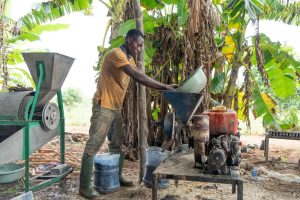
Gatete has completed the construction of a processing facility intended to produce juice from tree tomatoes, sugarcane and passion fruits, among other crops he grows. He attributes part of his progress to the matching-grant support, which has helped him increase his investment capacity and undertake activities that would otherwise have been difficult to finance.
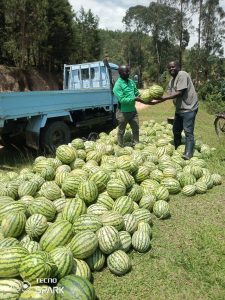
Irrigation has also been central to his production strategy. By using water from streams to irrigate his crops, he says he can harvest approximately 60 tonnes of watermelons during a three-month growing season. He also staggers planting to maintain supplies at different times of the year and reduce the risk of having no produce available when buyers need it.
Gatete called on local authorities to continue working with farmers to build on the project’s achievements, strengthen cooperation and ensure that the investments already made continue generating benefits.
Across Ruhango and Nyanza, SAIP II has complemented farmer training and investment support with demonstration plots designed to promote improved production techniques and the use of quality agricultural inputs.
In Nyanza, the project has promoted chili production through a 30-hectare demonstration in a marshland area. Additional demonstration plots covering 10 hectares were established on upland fields, where farmers received seeds and organic manure to support crop production.
In Ruhango, four cooperatives working with the project received bean seeds and organic manure for demonstration plots covering approximately 24 hectares.
Project information for the 2027A agricultural season records 34 hectares of demonstration plots across the two districts, comprising 24 hectares in Ruhango and 10 hectares in Nyanza, with a reported combined allocation of 1.7 tonnes of bean seed.
These demonstration activities are intended to help farmers apply improved production methods, assess their effectiveness and share lessons that can be replicated across other farms and cooperatives.
Improving access to water has also been a priority. In Nyanza, solar-powered irrigation infrastructure was established on 25 hectares cultivated by KOABWEKI Cooperative. Small-scale irrigation equipment was also provided to six farmers in Ruhango and two in Nyanza, helping them improve water access and sustain production.
The project has further supported post-harvest management and market access through the rehabilitation of the Mucubira produce selling point and the repair of the Rwabicuma crop storage facility in Gacurabwenge sector, Nyanza district.
The improvements are intended to provide farmers with better facilities for handling and storing produce, reducing post-harvest challenges and making it easier to supply markets.
Local authorities in Ruhango say SAIP’s interventions have also contributed to efforts to strengthen food security and address malnutrition by improving access to agricultural inputs, irrigation, suitable seeds and market connections.

Ruhango district’s corporate services division manager, SINDAHERA Olivier commended the government of Rwanda for investing in initiatives that improve citizens’ livelihoods, noting that the project had helped farmers access quality seeds, adequate fertilisers, irrigation and connections with buyers.
“I commend the Government of Rwanda for its continued efforts to help citizens achieve food security. Through SAIP, we have received adequate fertilisers and quality seeds suited to different seasons. The project has also supported irrigation, helping us cope with the effects of climate variability, connected us with buyers to access markets, and improved our ability to store our produce properly.” He said
The official emphasised that farmers and local authorities must work together to preserve the gains achieved through SAIP II, particularly as the project approaches the end of its implementation period.
The manager also urged farmers to maintain their commitment to hard work and continue applying the skills and practices acquired through the initiative.
Through the combination of knowledge sharing, agricultural demonstrations, matching grants and improved infrastructure, SAIP II is helping farmers build stronger enterprises, create opportunities for young people and contribute to Rwanda’s broader efforts to strengthen food security and increase agricultural incomes.
About The Author


SUBSCRIBE TO OUR NEWSLETTER