Rwanda is Leading the Charge in Empowering Women for Climate Change Action

Participants at a workshop for women’s organizations on Rwanda’s climate change Gender Action Plan.
The Government of Rwanda through the Ministry of Environment, in partnership with the International Union for Conservation of Nature (IUCN) and the USAID-funded AGENT Program, is working on developing Rwanda’s climate change Gender Action Plan (ccGAP).
This plan aims to make the country’s climate programs more inclusive and resilient for both men and women. Starting on September 30, 2024, a series of workshops were held to gather input from various stakeholders on the development of the ccGAP. The goal is to ensure that women are equally involved in addressing climate change issues and that tangible results are achieved.
Women play a crucial role in the fight against climate change, and it is essential to empower them to actively participate in mitigation and adaptation efforts. This week’s capacity-building workshop and multistakeholder consultations organized by the Ministry of Environment in Rwanda, in collaboration with the IUCN Global Gender Office’s AGENT initiative, aimed to do just that.

Recognizing women as agents of change, and the value of diverse knowledge, experiences and capacities of women and men alike, AGENT envisions a world that approaches environmental work at all levels with gender-responsive policy and action.
On 1st October, 2024, the workshop, which is part of the development of Rwanda’s climate change Gender Action Plan (ccGAP), brought together over 70 women’s organizations from across the country. The goal was to enhance their technical knowledge and confidence on climate change issues, as well as to identify priorities, ideas, and proposals to address relevant challenges.
As reported by Lorena Aguilar, a gender expert, the ccGAP for Rwanda is focusing on sectors such as Forests, Energy, Agriculture and Health, which are mainly highliglighted in the Government’s NDCs.
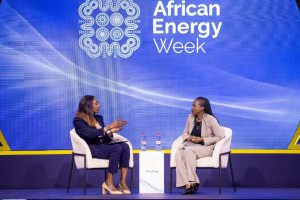
Speaking at the third day of the workshop which was held virtually, Ms. Beatrice Cyiza, the Permanent Secretary of the Ministry of the Environment emphasized the importance of bringing ideas from different backgrounds to tackle climate challenges and empower women.

She called upon all participants to support consultants in collecting ideas that would help develop programs and projects to build resilience and mitigate the impact of climate change. She urged the youth to bring their ideas to the table so that their voices could be heard in the country’s climate change action plan.
Mrs. Beatrice Cyiza and Ms. Kaori Yasuda, the IUCN Country Representative both highlighted the crucial role of women in combating the effects of climate change. They emphasized the need to empower women to create stronger, more equitable solutions for a sustainable future.
“Climate change affects everyone, but it doesn’t impact everyone equally. Women often face higher risks and greater burdens from the impacts of climate change than men. Empowering women leads to stronger, more equitable solutions for a sustainable future.” Ms Kaori said
Empowering women and women’s organizations is not only a matter of social justice but also a strategic approach to building a more sustainable and resilient future for all. It is essential to involve women in climate change initiatives, as they often bear the brunt of its impacts, especially in rural areas where they are responsible for gathering water and food for their families.
According to experts, Empowering women and women’s organizations is not only a matter of social justice but also a strategic approach to building a more sustainable and resilient future for all.

Ms. Kaori Yasuda, the IUCN Country Representative


About The Author


SUBSCRIBE TO OUR NEWSLETTER