Gicumbi Farmers Turn to Organic ‘Worm Tea’ to Boost Vegetable Yields

In the hills of Byumba Sector, a quiet agricultural shift is taking root. At the Center for Agroecological Practices and Conservation of Nature (CAPCN) in Kibari Cell, farmers are abandoning chemical inputs and embracing an unexpected organic solution to improve vegetable production: worm tea.
The liquid fertilizer, collected from earthworms as they break down organic waste, is now becoming one of the center’s most effective tools for boosting yields, restoring soil health, and reducing dependency on synthetic fertilizers.
“We get two products from worms: the solid vermicompost and the liquid we call worm tea,” explained Isaac Mubashankwaya, regenerative agriculture pioneer and founder of the Center for Agroecological Practices and Conservation of Nature (CAPCN). “The worm tea acts both as a fertilizer and as a natural pesticide. When we spray it on vegetables, the crops grow faster, healthier, and the yields are very satisfying.”
From Waste to Liquid Gold

At CAPCN, vermicomposting begins with collecting weeds, crop residues, and cow dung from the farm. The mix is fed to worms kept in specially designed sloping containers. The worms gradually break down the material into fine, nutrient rich compost.
As they feed, the worms also release liquid, partly urine and partly water used to maintain humidity in the containers. This liquid drains into a collecting tank. Once a week, farmers harvest it and apply it directly to their crops.
“There is no need to mix it with anything,” Mubashankwaya said. “Worm tea is used as it is. It fertilizes the crops and also repels pests without harming beneficial insects.”

Unlike chemical pesticides, which kill all insects including pollinators and soil organisms, worm tea supports biodiversity.
“In agroecology, we protect the birds, bees, and insects that keep the ecosystem alive,” he said. “Organic pesticides and worm tea don’t kill them. But synthetic ones do.”
Stronger Growth, Healthier Produce
While synthetic fertilizers give quick results, their effects are short lived. Organic fertilizers work more gradually but enrich the soil for much longer.
“With vermicompost, the growth is fast and strong,” Mubashankwaya noted. “It boosts the plants in a short time, even faster than compost made from animal or crop waste. And it stays in the soil for the next season.”

In addition to promoting organic fertilizers, the center is strengthening its work through technical assistance from the World Resources Institute (WRI), which leads the Circular Food Systems for Rwanda program. The support includes training, business development guidance and exposure visits designed to help small and medium enterprises adopt circular and sustainable agricultural practices.
Mubashankwaya said the collaboration is already helping to expand CAPCN’s impact.
“WRI helps us in capacity building to increase the capacity of SMEs. There are workshops that we attend that they have prepared for us. They also provide us with technical assistance. They provide us with companies that follow us in matters of finance, in matters of SME operations, and even sometimes in exposure visits,” he said.
With this assistance, CAPCN is preparing to introduce agroecotourism activities, where visitors will soon be able to learn hands-on about agroecology, soil regeneration, and circular farming.

Farmers also report improved yields. Illdephonse Nteziryayo, an agronomist at the center since 2012, has seen this firsthand.
“Even Irish potatoes fertilized with worm tea yield more than those grown with chemical fertilizers,” he said. “Two rows of potatoes can give you 1 kilogram, and sometimes one row can produce a kilogram depending on the fertilizer used.”
For Nteziryayo, agroecology has transformed more than crops, it improved his life.
“This work helped me build a house, and even start a family,” he said. “Farmers also pay me when I train them. It’s more than just a salary.”
Training a New Generation of Organic Farmers
Since its establishment, CAPCN has trained more than 250 farmers in organic agriculture, composting, and natural pesticide production using plants like marigold, papaya, tobacco, onion, and garlic.
Many trainees return to report improvements in soil health, reduced chemical costs, and better yields.

“Our expectation is that the community will continue producing their own organic fertilizers and pesticides,” Mubashankwaya said. “We already see a positive impact. Farmers are applying what they learned.”
He emphasizes that organic farming is not just an agricultural technique but a public health issue.
“We know the intensive use of synthetic chemicals has negative effects on health,” he said. “Organic produce is safer for people and for the environment.”
Expanding Organic Vegetable Production
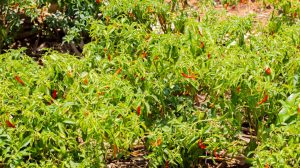
CAPCN operates on four hectares, with about a quarter dedicated to vegetables. While most families in the surrounding rural area grow their own vegetables, the center plans to scale up production, especially during the dry season.

“We’re setting up rainwater harvesting and underground water systems so we can irrigate during June to August,” Mubashankwaya said. “That is when vegetables are scarce countrywide. We want to expand and produce more.”
He said the center also plans to introduce agro ecotourism, student internships, and turn part of the farm into a business oriented vegetable production unit.
“We want visitors to come, stay here, learn, and see how agroecology works,” he said.
Worms at the Heart of a Circular Economy

Although exotic worm species from abroad exist, CAPCN intentionally relies on local earthworms, protecting biodiversity and demonstrating that sustainable solutions already exist within Rwanda’s natural ecosystems.
He said. “We got them from a friend at Kinihira Tea Factory. Local worms adapt better here.”
Whether through solid vermicompost or the power of worm tea, Gicumbi farmers are proving that organic farming is not just environmentally sound, it is practical, affordable, and productive.
“Our job is to show farmers that they can increase yields without destroying the soil or endangering their health,” Mubashankwaya said. “Worm tea is one way we are doing exactly that.”


About The Author


SUBSCRIBE TO OUR NEWSLETTER